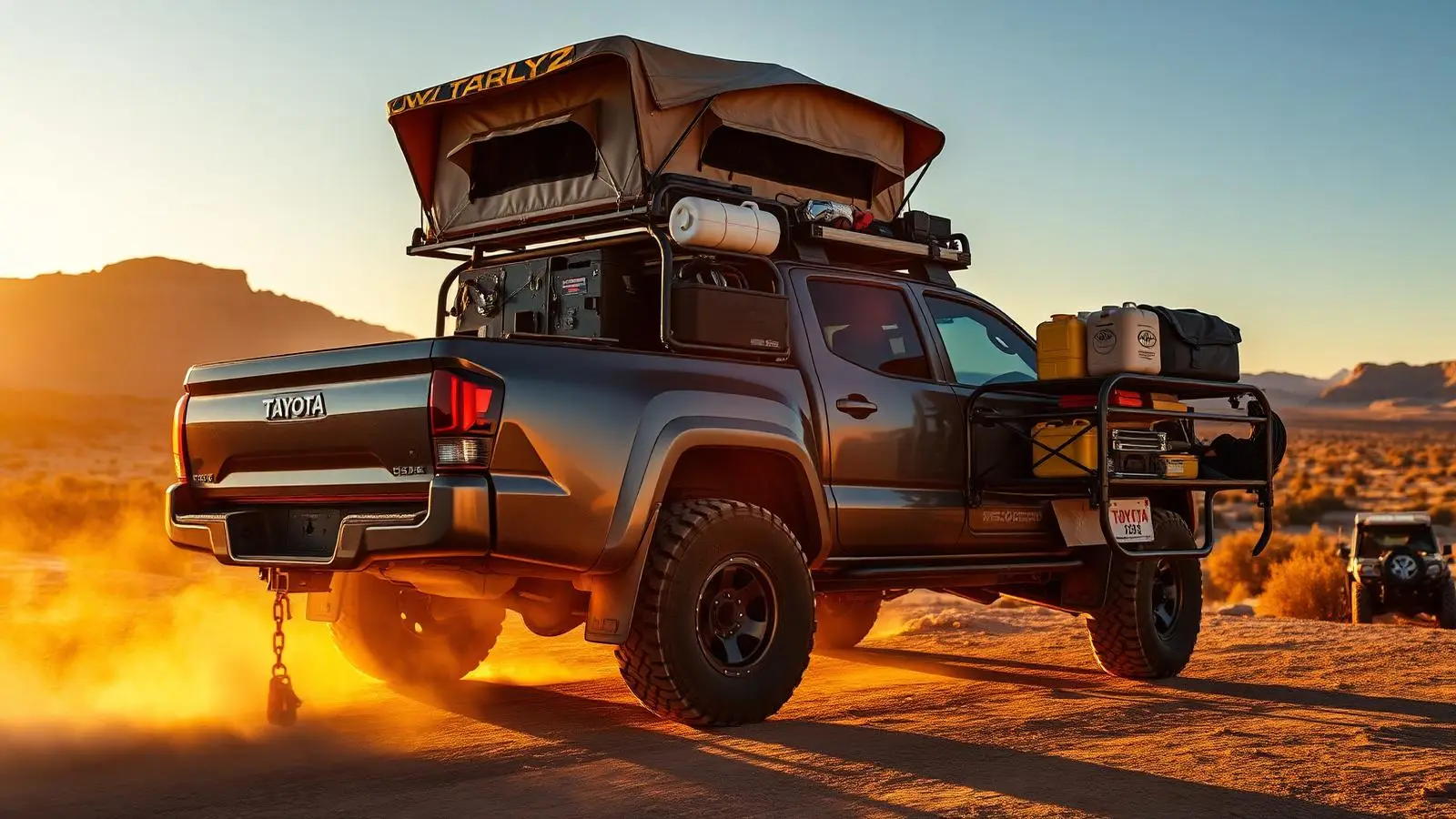
Here is an uncomfortable truth about overlanding: a huge percentage of built rigs on the trail are over their weight rating, and most of their owners have no idea. The bumper, the winch, the rooftop tent, the drawers, the fridge, the water, the recovery gear, and two adults add up faster than anyone expects. On a midsize truck or an SUV, it takes surprisingly little to blow past the limit.
This guide explains what payload and GVWR actually mean, how to find your real numbers, what a typical build weighs, and what to do if you are over. None of it requires math beyond addition, and all of it matters more than your tire choice.
The Terms That Actually Matter
Curb weight is what your vehicle weighs empty, with full fluids and fuel, before you add people or gear.
GVWR (Gross Vehicle Weight Rating) is the maximum your loaded vehicle is allowed to weigh, set by the manufacturer. It covers the truck plus everything in it and on it: passengers, fuel, accessories, cargo, and the tongue weight of anything you tow.
Payload is the difference between the two. GVWR minus curb weight equals payload, and it is the number that matters for a build. Every pound of armor, gear, water, and human comes out of it.
GAWR (Gross Axle Weight Rating) is the maximum each axle can carry. You can be under GVWR overall and still overload the rear axle with a heavy tongue weight and loaded drawers. Both numbers count.
Payload Includes You
A 5,000 pound GVWR does not mean 5,000 pounds of gear. It means the whole rolling package, driver included, stays under 5,000 pounds.
Where to Find Your Numbers
Open the driver's door and look at the sticker on the jamb. The tire and loading placard says something like "the combined weight of occupants and cargo should never exceed XXX lbs." That is your payload as the truck left the factory, and it is specific to your exact configuration, not the best-case number from the brochure.
This matters because marketing payload and real payload are different. A stripped work-trim pickup posts the headline number. The loaded trim you actually bought, with the bigger wheels, the sunroof, the premium package, and the four-wheel-drive hardware, can be hundreds of pounds lower. Trust the sticker, not the ad.
For reference, typical payloads look like this. A midsize truck like a Tacoma or Frontier generally lands between about 1,100 and 1,700 pounds depending on trim, with the heavy off-road trims at the low end because their factory equipment already ate the margin. A Wrangler Rubicon or a 4Runner sits around 1,000 to 1,500 pounds. Half-ton trucks run roughly 1,400 to 2,300. If those numbers sound small, that is the point of this article.
What a Real Build Actually Weighs
Add up a common overland setup and watch the payload disappear.
A steel front bumper runs 80 to 150 pounds, and a winch with synthetic line adds another 70 to 100. Rock sliders are 100 to 150 pounds, and a set of skid plates adds 50 to 150 depending on coverage and material. A roof rack is 50 to 150 pounds, and the rooftop tent on top of it adds 100 to 200 more. A drawer system with a sleeping platform runs 100 to 250 pounds empty. A 12v fridge is 40 to 60 pounds before you fill it, a dual battery setup adds 30 to 70, and a loaded recovery bag with a hi-lift or traction boards adds another 50 to 80.
That is roughly 700 to 1,300 pounds of build before anyone gets in the truck.
Now add consumables. Water weighs 8.3 pounds per gallon, so a 10 gallon tank is 83 pounds. Extra fuel is about 6 pounds per gallon for gas. Firewood, food, camp chairs, tools, and clothing for two people add 150 to 300 pounds. Then add the humans: two adults are 300 to 400 pounds, and kids and a dog stack on top.
Run the honest total on a midsize truck with a 1,200 pound payload and a full build, and you are not close to the line. You are hundreds of pounds past it. This is why so many fully built Tacomas, 4Runners, and Wranglers ride on their bump stops and wander under braking. They are overweight, not badly aligned.
Why It Matters on the Trail
Overloading is not a paperwork problem. It changes how the vehicle behaves in exactly the situations overlanding puts you in.
Braking distance grows with weight, and it grows worst on descents, where an overloaded rig cooks its brakes on a long downhill grade. Handling degrades because the suspension is riding near the end of its travel, so the truck pitches harder, leans more, and recovers slower from washboard and ruts. Steering feel goes vague when the rear is squatting and the front is light.
The mechanical costs come later. Overloading accelerates wear on wheel bearings, ball joints, springs, U-joints, and transmission components, and it does so quietly over months. Tires matter too: every tire has a load rating, and a heavy rig aired down on undersized tires is asking for sidewall trouble.
There is also a practical liability point worth knowing. GVWR is a federal safety rating. Running over it can complicate an insurance claim after a crash and can get a commercial-looking rig flagged at a scale. This is not the main reason to care, but it is real.
None of this means the truck breaks the day you cross the line. GVWR is not a cliff. It means margin is gone, wear accelerates, and the vehicle is worse at the emergency maneuver you hope you never need.
Weigh Your Rig: The 20 Minute Reality Check
Stop estimating. Go weigh the truck.
Find a CAT scale at a truck stop, which costs about $15 and takes ten minutes. Weigh the rig fully loaded for a trip: gear packed, water full, fuel full, everyone in their seats. The ticket gives you front axle, rear axle, and total weight, which lets you check GVWR and both GAWRs in one pass.
Compare the total against the GVWR on your door sticker and each axle weight against its GAWR. Most people who do this for the first time find two things: they are heavier than they guessed by 300 to 500 pounds, and the rear axle is carrying a disproportionate share.
Do this once with your normal trip load and you know your truth. Do it again after any major addition. It is the cheapest diagnostic in overlanding.
If You Are Over: What Actually Helps
The honest fix is subtraction, and it works better than any product.
Start with redundancy. Two recovery straps, three light bars, a second spare, the "just in case" tool duplication, and the kitchen gear you have never once used are the easy first 100 pounds. Water is the next lever: carry what the trip needs plus a margin, not the maximum the tank holds, because 20 gallons you did not need is 166 pounds of dead weight.
Then question the heavy hitters. Aluminum bumpers and skids save 40 to 60 percent over steel. A ground tent instead of a rooftop tent removes 150 to 300 pounds from the worst possible location, the roof, where weight raises your center of gravity and hurts handling twice as much. A wedge camper or drawer build on a truck that cannot afford the payload is a build planned in the wrong order.
What does not help: springs. Heavier springs, airbags, and a leveling kit fix the squat, not the weight. They make an overloaded truck sit level while the brakes, bearings, axles, and tires still carry every pound. Nothing you bolt on changes the GVWR on the sticker. Upgraded suspension is a good tool for carrying a legitimate load well, and a terrible tool for pretending a load does not exist.
The structural fix, if subtraction is not enough, is buying the right platform. This is the strongest argument for a half-ton or heavy-duty truck as an overland base, and it is why families running full builds keep migrating from midsize trucks to F-150s, Tundras, and Rams. Payload is the spec that should drive that decision, not horsepower.
Plan the Build Backwards
The best time to manage weight is before the first part goes on.
Start with your sticker payload. Subtract the people, the dog, and a realistic consumables number for your trips. Whatever remains is your build budget, and it is usually 400 to 700 pounds on a midsize platform. Spend it like money. Every part gets weighed against the question "what does this do for how I actually camp," which is the same discipline that applies to every gear category, just with higher stakes.
Prioritize weight low and centered. Drawers beat roof loads, and water stored low beats jerry cans on the rack. Keep the roof for the light stuff. Choose aluminum where it exists. And accept that a midsize truck carries a midsize build: the best Tacoma overland rigs are the restrained ones, and that restraint is exactly why they still drive well after 100,000 miles.