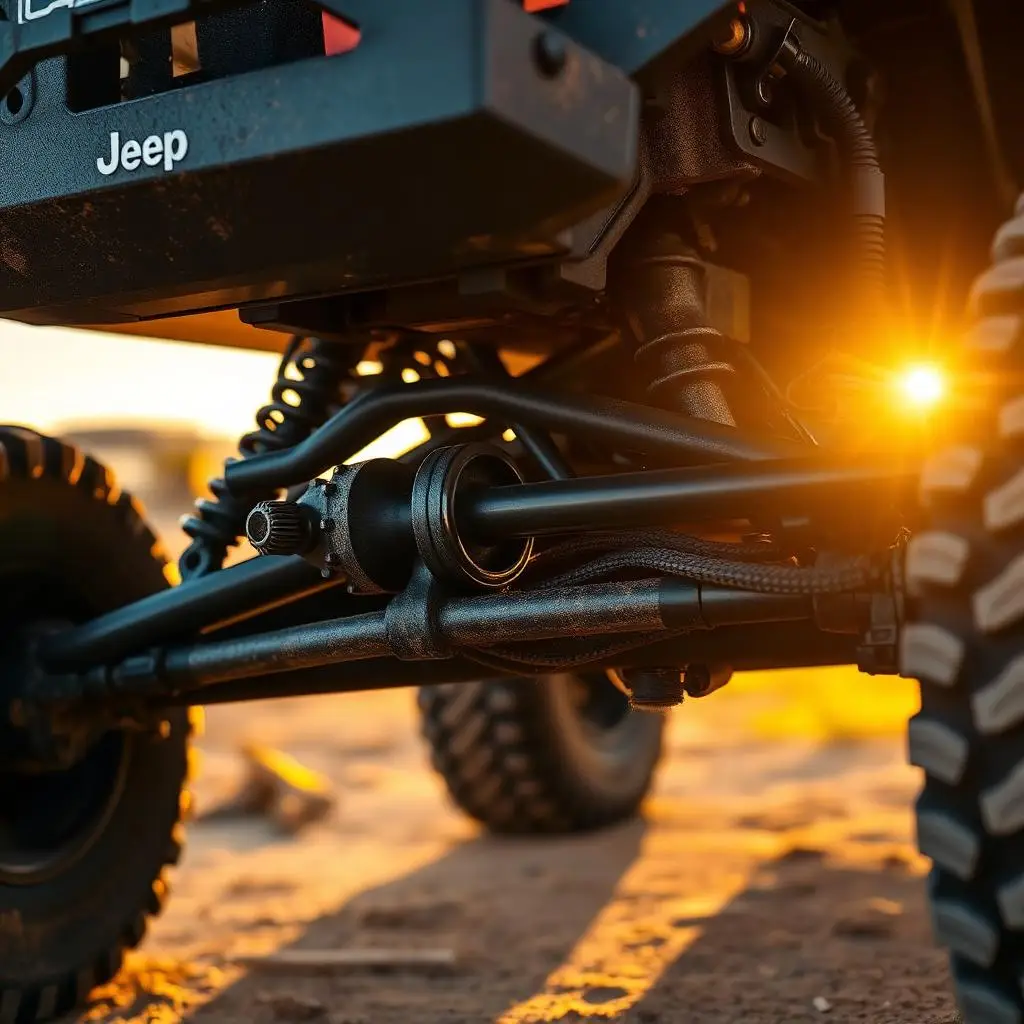
You hit a seam in the highway at 62 miles an hour, the wheel gives a little twitch, and for half a second your hands are having a conversation with the front axle that you did not start. Maybe it settles. Maybe it builds into that violent shimmy that makes you grab the wheel with both hands and stab the brakes. Either way, somebody in a forum thread is about to tell you the fix is a steering stabilizer, probably a dual kit, probably the expensive one.
They are usually wrong, and the reason matters. A steering stabilizer is one of the most misunderstood parts on a lifted truck or a solid axle Jeep. It is sold as a cure, installed as a bandage, and blamed when the real problem was somewhere else the whole time. This guide covers what a steering stabilizer actually does, the one thing it absolutely cannot fix, when it is worth buying, and why throwing a dual kit at a wobble is the most expensive way to not solve your problem.
The Short Version
A steering stabilizer is a shock absorber for your steering. It calms big tires, bump steer, and highway darting on a healthy front end. It cannot fix death wobble, and using one to mask a shimmy hides a worn track bar or bad ball joint until it becomes dangerous. Diagnose and repair the front end first, then add a quality single stabilizer as a finishing touch.
What a Steering Stabilizer Actually Is
A steering stabilizer is a shock absorber for your steering. That is the entire concept. It is a small hydraulic damper, built exactly like the shocks on your suspension, mounted between a fixed point on the axle and the moving tie rod or drag link. As the steering linkage moves side to side, the stabilizer resists sudden motion and soaks up the small, fast inputs.
Notice the word: damper. It damps motion, the same way a suspension shock damps the bounce of a spring. It does not hold anything in place, it does not tighten anything, and it does not add strength to the steering system. It just slows down fast movement and takes the edge off feedback coming up from the tires.
On a solid front axle, which most trucks pull and every Wrangler and older heavy duty truck runs, the steering linkage is exposed to a lot of road input. A stabilizer smooths out bump steer, quiets the tug you feel when one front tire hits a pothole, and calms the darting that big aggressive tires can cause. That is a real job and it does it well.
The One Thing It Cannot Do, and Why Everyone Gets This Wrong
Here is the honest section, the part the parts counter will not lead with. A steering stabilizer cannot fix death wobble. It can hide it, briefly, which is far worse.
Death wobble is that violent, self-feeding shimmy in a solid front axle, usually triggered by a bump at speed. It is not caused by a lack of damping. It is caused by slop and looseness somewhere in the front end that lets a small vibration feed on itself: a worn track bar or a loose track bar bracket, tired tie rod ends, bad ball joints, a failing wheel bearing, control arm bushings that are shot, or an alignment and driveline geometry knocked out by a lift. The wobble is a symptom. The looseness is the disease.
A fresh, beefy stabilizer can mask that looseness for a while by damping the shimmy before it fully builds. That is exactly the trap. You spend the money, the wobble quiets down, you tell yourself it is fixed, and the worn track bar or dying ball joint keeps getting worse under a part that is now hiding the warning. Then one day the stabilizer is overwhelmed, or it fades on a hot day, and the full wobble comes back at highway speed with a family in the truck. A stabilizer that masks death wobble does not make you safer. It delays the diagnosis and lets the real fault grow.
The rule to carry out of this article: if your truck wobbles, you have a worn or loose part to find, not a stabilizer to buy. Fix the front end first. Always.
So When Is a Steering Stabilizer Actually Worth It?
Plenty of situations, once the front end is healthy and tight. This is where a stabilizer earns its place instead of covering for a problem.
Big tires are the classic case. Move from stock rubber to 35s or 37s and you have added a lot of rotating mass and a wider contact patch out at the end of the steering linkage. Every seam, rut, and crosswind now tugs harder on the wheel. A stabilizer takes that constant low-level fight out of your hands and makes a big-tire rig relaxing to drive on the highway again.
A lift that changed your steering geometry is another. Once the front end is realigned and the parts are good, a stabilizer helps settle the busier feedback that taller geometry can introduce.
Heavy trail and washboard use counts too. On long stretches of corrugated dirt, a stabilizer keeps the wheel from hammering your hands and reduces fatigue over a long day. Some hardcore rigs also run a stabilizer to protect the linkage from the sharp kickback of hitting a rock at the wrong angle.
And plain highway comfort on any solid axle rig is a legitimate reason. If the truck is mechanically sound and you just want to calm road feel and darting, a good single stabilizer is a reasonable, honest upgrade. The key word in every one of these is that the front end is already tight. The stabilizer is the finishing touch, never the repair.
Single vs Dual Stabilizers: The Marketing and the Reality
Walk through any lift catalog and you will see dual steering stabilizer kits sold as the serious-builder choice, two dampers mounted side by side on a beefy tie rod clamp. They look aggressive and they cost real money. Here is the honest read on when they make sense and when they are selling you a feeling.
A single stabilizer is enough for the large majority of trucks and Jeeps, even on 35s, as long as the front end is healthy. Do not let a picture of a dual kit convince you that one damper is inadequate. For most street-and-trail rigs, it is not.
A dual kit adds more damping force, which genuinely helps a specific group: very heavy tires in the 37 inch and up range, high-speed desert running where the linkage takes constant hard hits, and competition or chase-truck use. If that is your rig, a dual setup is a real tool, not a costume.
For everyone else, a dual kit has a downside people ignore. More steering damping means slightly heavier, slower steering feel and less feedback from the road, which some drivers dislike on the street. You are also adding weight and another clamp on the linkage to inspect. Buying a dual kit to solve a wobble is the worst version of this mistake, because now you have doubled down on masking a loose front end instead of fixing it. Twice the damping on a bad track bar is still a bad track bar.
How to Diagnose Before You Spend a Dollar
Before you buy any stabilizer, spend twenty minutes underneath the truck. This is the checklist that separates a real fix from a bandage.
With the truck safely supported, grab the front tires at 3 and 9 o'clock and push and pull. Any play there points to worn tie rod ends or a loose steering linkage. Then grab at 12 and 6 o'clock and rock. Any play there points to ball joints or wheel bearings.
Have someone rock the steering wheel back and forth a few degrees while you watch the track bar and its bracket. Any movement in the bracket or the bar's mounting points is a prime death wobble suspect and needs to be fixed before anything else.
Check the tie rod and drag link ends for torn boots and any looseness. Look at the control arm bushings for cracking and separation. And confirm your alignment, especially caster, is correct for your lift, because a lift can pull caster out of spec and make the front end dart and wander in a way no stabilizer will cure.
If everything up there is tight and correct and the truck still feels busy or darty on big tires, now a stabilizer is the right call. If anything is loose, that is your project, and it is almost always cheaper and always safer than living with the problem.
What to Look For When You Do Buy One
Once you have earned the upgrade, a few things separate a good stabilizer from a throwaway.
Buy a name you can get warranty and rebuild support from, since a stabilizer is a wear item that fades and eventually leaks like any shock. Look for a solid mounting bracket designed for your specific vehicle and lift height, because a universal clamp that slips is worse than nothing. Match the valving to your use, a firmer damper for desert and washboard, a milder one for mostly street. And whatever you run, add it to your regular inspection: check the mount, check for leaks, and grab it to feel that it still offers resistance. A dead stabilizer that has quietly failed is just extra weight pretending to help.
The Bottom Line
A steering stabilizer is a shock absorber for your steering, and that is all it is. On a mechanically sound solid axle rig, it is a genuinely good upgrade that calms big tires, quiets bump steer, and takes the fatigue out of a washboard road. On a truck with a worn track bar or dying ball joints, it is a bandage that hides a growing danger, and a dual kit is just a more expensive bandage. Diagnose the front end first, fix what is loose, get the alignment right for your lift, and then, if the truck is tight and you still want calmer road feel, buy a quality single stabilizer and call it a finishing touch. That order is the difference between a rig you trust at highway speed and one that is quietly waiting to surprise you.