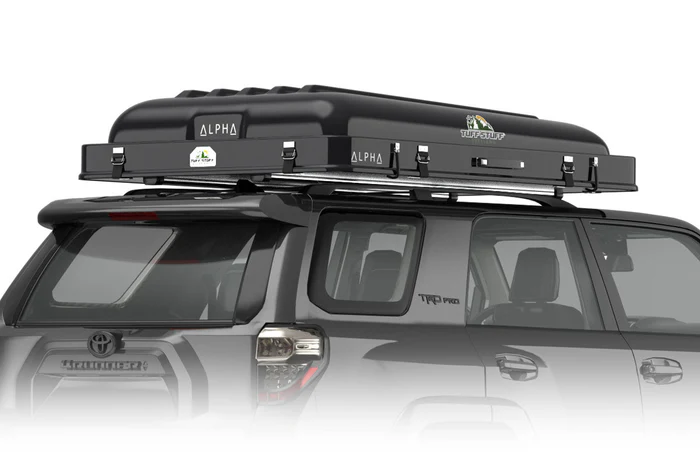
You are standing in the driveway with a brand new hardshell tent still in the box, a fresh roof rack bolted down, and a number in your head that says you are fine. The tent weighs 165 pounds. The rack is rated for 700. Plenty of room. So you mount it, load the bedding, and point the rig at the trail.
The number in your head is the wrong number. The one that actually governs whether that tent belongs on your roof is buried in your owner's manual, it is a lot smaller than 700, and almost nobody checks it before they buy. This is the guide that saves you from finding out the hard way, on a washboard descent, with too much weight up high.
The One Thing Nobody Tells You Before You Buy
Here is the honest truth the tent listings and the rack marketing both leave out: your rack rating is not your limit. Your vehicle's roof is.
A rooftop tent brand advertises the tent's weight capacity. A rack brand advertises the rack's dynamic load. Both numbers are real, and both are almost always higher than the number that decides your setup, which is the dynamic roof load rating of your specific vehicle. That figure is set by the automaker, it lives in the manual, and on most overlanding rigs it lands somewhere between 100 and 176 pounds. Not 700. Not 1,100. Roughly a third of what a serious rack advertises.
The whole game is finding that one small number and staying under it. Everything else in this guide is how.
Two Roof Numbers, and Only One Is About Driving
Your roof has two separate ratings, and people mix them up constantly.
Dynamic load is what the roof can carry while the vehicle is moving. It bakes in the forces that motion adds: braking, cornering, wind, and the endless hammering of washboard and potholes. Those forces multiply the effective weight of anything mounted high, so the automaker keeps this number conservative on purpose.
Static load is what the roof holds while parked. Take motion out and the structure carries far more, commonly three to six times the dynamic figure.
The reason both exist for a tent is simple once you see it. Driving to camp is a dynamic problem. Sleeping in the tent is a static problem. The tent plus two adults might hit 500 pounds, which would flatten any dynamic limit but sits comfortably inside a static one, and that is fine, because the people only load the roof when the truck is parked. The weight that has to respect the small dynamic number is the tent, its rack, and whatever bedding and gear ride inside while you drive.
What Real Dynamic Ratings Look Like
These are representative dynamic and static figures for common overlanding platforms. Ratings shift between generations and trims, so confirm your own in the manual, but the pattern is the point.
| Vehicle | Dynamic roof load | Static roof load |
|---|---|---|
| Toyota 4Runner | about 165 lbs | about 770 lbs |
| Subaru Outback | about 176 lbs | about 700 lbs |
| Jeep Wrangler | about 150 lbs (hardtop) | about 600 lbs |
| Ford Bronco | about 150 lbs | varies by hardtop |
| Toyota Tacoma | as low as 100 lbs (cab) | varies |
Look at the left column. A stock Outback roof carries 176 pounds in motion, less than most people carry in a full cooler and a passenger. A Tacoma cab is rated as low as 100. Now line that up against tent weights: a Tuff Stuff Overland Alpha hardshell has an actual weight of 176 pounds, an Alpha II runs 141, a softshell like the Ranger 65 comes in around 154. The heaviest tents in a lineup will meet or beat the dynamic rating of a mainstream SUV before you have added a single crossbar. That gap, tent weight versus dynamic roof rating, is where overloaded setups are born.
Why the Big Rack Does Not Save You
Buy a burly aftermarket platform rack rated for 700 pounds dynamic, and it is tempting to think you just bought 700 pounds of headroom. You did not.
Your working limit is the weakest link in a stack: the vehicle roof structure, the mounting points, the crossbars or platform, and the tent hardware. If the roof underneath is rated for 150 pounds in motion, then 150 is your ceiling no matter what the rack sticker says. A strong rack does not upgrade the sheet metal and mounting points it bolts to.
What a good rack does earn you is real, just different. It spreads the load properly, it gives the tent a solid mount, and it takes itself off the table as the weak link so the vehicle roof is the only number you have to manage. It also hands you a huge static margin, which is why you and a passenger sleeping up top is never the worry. For the drive, though, the vehicle's dynamic rating almost always wins.
The one genuine escape is to stop using the cab roof. A bed rack on a pickup carries load into the frame and bed instead of the roof, which sidesteps a low cab rating entirely and usually opens up far more capacity. If your dynamic roof number is painfully small and you want a heavy tent, the bed is the answer, not a bigger roof rack.
Add Up Everything That Rides Up There
When you check a tent against your dynamic limit, weigh the whole system, not the tent box alone. The mattress is heavier than you think. The bedding you leave zipped inside counts. So does an annex or an awning bolted to the side.
Count the tent's dry weight, the rack or crossbars, the mattress, any bedding or bags stored inside for travel, and any attached annex or awning. A tent listed at 165 pounds routinely becomes 230 pounds of mounted, loaded, moving weight once the rack and contents go on. Compare that combined number to your dynamic rating. This is the arithmetic that keeps you safe and legal, and it is the step that gets skipped most.
The Math, Run for Real: Tuff Stuff Alpha on a 4Runner
Take a rig you see at every trailhead. A Toyota 4Runner, rated near 165 pounds dynamic and 770 static, wearing a Tuff Stuff Overland Alpha hardshell with an actual weight of 176 pounds.
Run the drive first. The Alpha alone is 176 pounds against a 165 pound dynamic ceiling. You are over before the crossbars, before the mattress, before a single stuff sack goes in the tent. This is not a knock on the Alpha, which is a well built, popular tent that plenty of people run happily. It is a knock on the assumption that a mainstream SUV roof can take any hardshell you like. It cannot.
Now run the night. Alpha at 176, two adults at roughly 350, mattress and bedding around 50, and you are near 576 pounds against a 770 pound static rating. Comfortable. Nobody is in danger sleeping up there.
That split is the whole lesson. The parked weight was never the problem. Getting the tent to camp without blowing past the far smaller dynamic number is the problem. Which is exactly why a heavy hardshell like the Alpha is a better match for a pickup bed rack, or a vehicle with a higher dynamic figure, than for a stock SUV roof. If your roof is on the low end and you want to stay in the same lineup, the lighter Alpha II at 141 pounds, which Tuff Stuff positions for smaller SUVs, keeps you much closer to the budget.
Find Your Actual Numbers
Do not run on a forum guess for your own rig. Confirm the real ones, in this order. Start with the owner's manual, in the specifications or loading section, under roof load or maximum roof weight. That is the authoritative source for your year and trim. Then get the dynamic and static ratings for your exact rack from the maker. Then pull the tent's dry weight and its occupied capacity from the spec sheet. If the manual is vague, a dealer parts department can usually confirm the roof rating against your VIN.
Write down the lowest dynamic number in that chain. That is your budget. Subtract the rack, and make sure the tent plus its contents fits in what is left.
What Overloading Actually Does
Weight up high changes how the truck fails
Going over the dynamic limit is not a paperwork problem. Weight mounted high changes how the truck behaves and how it fails. It loads the mounting points and roof structure in the conditions the rating was written to survive. And if it ever ends in a claim, an overloaded roof beyond the stated limit can complicate warranty and insurance.
The Verdict
| Question | The short answer |
|---|---|
| Which number governs the drive? | Your vehicle's dynamic roof load rating, not the rack's |
| Does a 700 lb rack give me 700 lbs? | No. The lowest rating in the stack wins, usually the roof |
| What weighs against the dynamic limit? | Tent, rack, mattress, stored bedding, annex, awning |
| What weighs against static? | The tent plus the people sleeping in it, and that is rarely the problem |
| Roof rating too low for the tent I want? | Move to a pickup bed rack, or pick a lighter tent |
Who Can Run What
If you drive a small SUV or crossover, you have the tightest budget, sometimes under 150 pounds once the rack is on. A light tent may fit, a heavy hardshell often will not, and an interior sleeping platform is frequently the smarter and cheaper call.
If you run a midsize or full-size SUV like a 4Runner or Bronco with a real platform rack, a mainstream hardshell is usually workable, as long as the loaded moving weight stays under the vehicle's dynamic number.
If you own a pickup, you hold the best card in the deck. A bed rack puts the tent's weight into the frame and bed instead of the cab roof, dodges a low cab rating, and hands you far more room to work with.
The rule holds no matter what you drive. Find your dynamic roof rating, add up everything that rides up there in motion, and stay under it. Get that right and the static side, the part everyone worries about, takes care of itself.