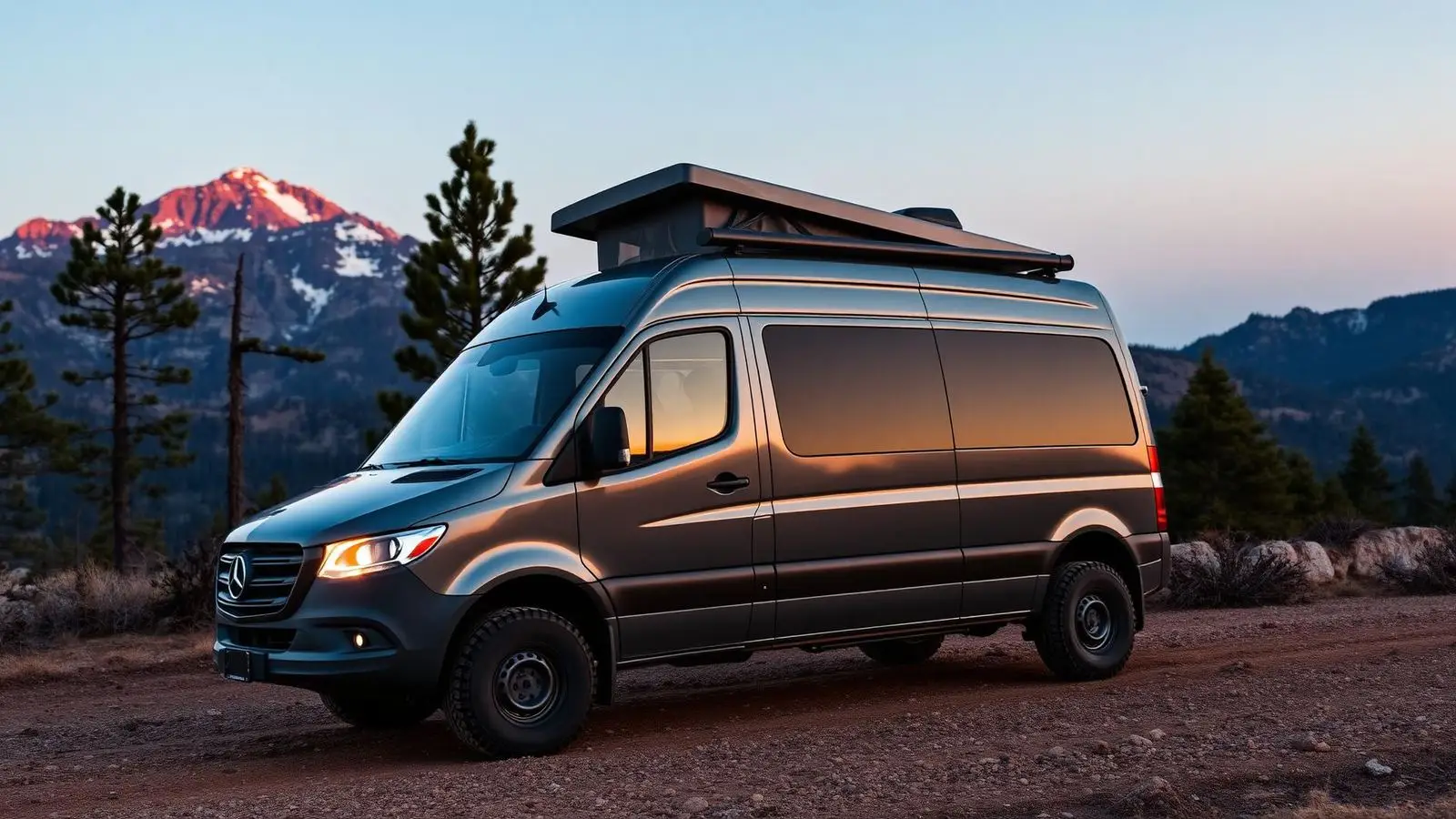
There are vehicles people buy with a calculator. Then there are vehicles people buy with a pulse. The Mercedes-Benz Sprinter AWD lives in the second category.
Not because the numbers don't matter. They do. They always do. Payload matters. Power matters. Interior dimensions matter. Service intervals matter. Build quality matters. If you ignore the math, the math will eventually collect its money.
But the Sprinter has always sold something beyond math. It sells an image of motion. A promise of long roads. A tastefully expensive answer to the ancient question of how to leave home without feeling like you left comfort behind. It carries the aura of alpine roads, European engineering, and the kind of travel life that makes strangers say, "That's exactly what I would do if I ever got my life together."
The Sprinter is not just a van. It is a genre. And when people ask what is the best premium overland van, the Mercedes-Benz Sprinter AWD is usually the name hovering over the conversation before anyone says it out loud.
There are reasons for that. Let's look at all of them, including the ones the brochure skips.
The Sprinter AWD Spec Sheet (What Actually Matters)
Before the philosophy, the numbers.
| Spec | Detail |
|---|---|
| Engine | 2.0L turbodiesel inline-4 (OM654) |
| Output (high) | 211 hp / 332 lb-ft torque |
| Transmission | 9G-TRONIC 9-speed automatic |
| AWD System | Torque-on-demand, up to 50% front split |
| Wheelbase options | 144" and 170" |
| Roof options | Standard and High Roof |
| Payload capacity | Up to ~3,800 lbs depending on config |
| Service interval (diesel) | Up to 20,000 miles |
| Ground clearance | ~7.5 inches (stock) |
| Starting MSRP (Cargo AWD) | ~$65,000 (2025, before options) |
The 332 lb-ft of torque is the number that matters most for overland use. Overland vans get heavy, not by accident but inevitably. Bed platform, cabinetry, water tanks, lithium battery bank, solar, fridge, insulation, windows, ventilation, heater, recovery gear, clothing, food, passenger weight. A modest build adds 1,500 to 2,000 pounds. A serious one adds more. Torque is what makes that weight feel manageable on a long climb at altitude.
The 9G-TRONIC is a real gearbox. It shifts cleanly, responds predictably under load, and doesn't require the driver to think about it. That's exactly what you want in a van.
What the AWD System Actually Does (And Doesn't Do)
The Sprinter AWD is not a trail system. It is not designed to imitate a short-wheelbase rock crawler. It is not going to the Rubicon. Let's be honest about that upfront.
What it does is meaningful for the kind of terrain a full-size van actually encounters. The system operates on torque-on-demand logic. Under normal conditions, the van runs on rear-wheel drive for fuel efficiency. When sensors detect slip or predict reduced traction, the front axle receives up to 50% of available torque automatically, no mode switching required, no driver input needed. The transition is seamless.
Where Sprinter AWD Shines
What it won't do: get you down technical four-wheel-drive trails with serious approach angle demands, water crossings above the running boards, or boulder fields where articulation is the variable. For those situations, the Sprinter isn't the right vehicle regardless of drivetrain. The platform's wheelbase, body length, and ~7.5 inches of stock ground clearance set the terrain ceiling. The AWD lifts the floor.
Why the Sprinter Became the Aspirational Overland Icon
Some vehicles dominate because they're cheap. Some dominate because they're everywhere. The Sprinter became iconic because it reached a rare cultural sweet spot: it looked premium, felt premium, built like a premium product, and still offered the blank-canvas practicality that adventure builders need.
You saw it in luxury camper conversions. You saw it in ski-town driveways and surf videos and high-altitude camp cinematics and "one day I'm going to live differently" mood boards. And once a vehicle becomes a symbol, momentum follows. Builders specialize in it. Accessories multiply around it. Buyers trust it. Entire sub-industries quietly organize themselves around the assumption that somebody, somewhere, is turning a Sprinter into a rolling kingdom.
That cultural gravity matters. When a platform becomes the premium default, it attracts the kind of craftsmanship and community knowledge that keeps reinforcing its position. The Sprinter aftermarket is not just large, it's culturally mature. More layout ideas, more component solutions, more wheel and tire conversations, more real-world data from people who've already spent the money and made the mistakes.
The Honest Cost Breakdown: What a Sprinter AWD Overland Build Actually Costs
This is the section that separates serious buyers from fantasy shoppers. Nobody publishes this math clearly. Here it is.
The Vehicle
A 2025 Mercedes-Benz Sprinter 2500 Cargo Van AWD in high-roof, 144-inch wheelbase configuration starts around $65,000 MSRP. The 170-inch wheelbase pushes $70,000 and above. Add destination, dealer fees, and options and the realistic pre-tax cost of a properly configured Sprinter AWD is $68,000 to $78,000 before you put a single tool inside it.
The Build
| Build Tier | What You Get | Estimated Cost |
|---|---|---|
| DIY Basic | Insulation, platform bed, basic electrical, cargo floor | $5,000, $12,000 |
| DIY Mid-Level | Bed, kitchen, 100 to 200Ah lithium, 200 to 400W solar, ventilation fan | $15,000, $28,000 |
| Semi-Pro Hybrid | Partial custom cabinetry, 300 to 400Ah lithium, solar, diesel heater | $25,000, $45,000 |
| Full Professional | Custom cabinetry, 400 to 800Ah lithium, 600W+ solar, full kitchen, shower | $60,000, $120,000 |
| Premium Custom Builder | Full interior design, high-end materials, turnkey delivery | $80,000, $200,000+ |
Budget Reality Check
Ongoing Costs
Diesel prices vary by region. At current diesel costs, a Sprinter AWD averaging 18 to 22 MPG on mixed driving (realistic for a loaded build) will spend $0.18 to $0.28 per mile on fuel.
Mercedes diesel service intervals reach up to 20,000 miles, which is a genuine ownership advantage. A standard service runs $300 to $600 at an independent Mercedes shop. The 20,000-mile interval compared to 5,000 to 7,500-mile intervals on gasoline vans means roughly half the service visits over a year of heavy driving.
Insurance for a high-value custom van (insured at replacement value) runs $1,800 to $4,000 per year depending on the declared value. Most standard auto policies won't cover a custom conversion at its actual worth, get a specialty RV or custom vehicle policy.
What "Premium" Actually Means in a Van Build
Premium is one of those words that gets abused until it sounds like wallpaper. So what does it actually mean in the context of a Sprinter overland build?
It means the vehicle feels considered. It means the cabin experience, the road feel, the engineering language, and the overall ownership vibe push the van beyond simple utility. It means the base platform carries emotional weight that a lot of buyers are happy to pay for.
But in a built van, premium also means the fatigue multiplier works in your favor instead of against you. A drawer that works every time. A dinette that doesn't feel like a punishment. A shower setup that doesn't require a spiritual journey. Lighting that feels warm instead of clinical. Storage that keeps the van calm instead of chaotic. Insulation that makes the space genuinely quiet at highway speed.
These aren't just lifestyle luxuries. They're experience multipliers. Fatigue compounds in small spaces. A premium Sprinter build reduces friction in ways that are hard to appreciate until you've spent real time living and traveling inside a van.
144 vs 170: The Premium Buyer's Real Decision
One of the most important Sprinter conversations has nothing to do with brand mystique and everything to do with self-control. How much van do you actually need?
A lot of premium builds quietly go wrong here. The buyer falls in love with the idea of endless interior room and forgets that longer vans take up more mental bandwidth everywhere else. Tighter turns. Parking lots. City streets. Ferry lines. Rough access roads. Backing into strange campsites after dark when everybody in the van is already hungry and someone is already annoyed.
The 144-inch wheelbase has a loyal following for a reason. It often represents the sweeter balance between livability and maneuverability. The 170 can feel glorious inside, especially for full-time travel or elaborate two-person interiors, but that space gets paid for in footprint. Every day, everywhere.
The best premium overland van build is not the one with the most cabinetry. It's the one whose size still makes sense three months after the excitement wears off.
Sprinter AWD vs Ford Transit AWD: What Actually Decides It
The Ford Transit AWD is the pragmatic answer. The Sprinter AWD is the answer many buyers really want. That's not an evasion, it's the honest frame.
| Factor | Sprinter AWD | Transit AWD |
|---|---|---|
| Base price | ~$65,000+ | ~$50,000+ |
| Powertrain | 2.0L turbo diesel, 332 lb-ft | 3.5L EcoBoost V6 gas, 400 lb-ft |
| Fuel economy (loaded) | 18 to 22 MPG diesel | 14 to 18 MPG gas |
| Service interval | Up to 20,000 miles | 7,500 to 10,000 miles |
| Interior height (high roof) | 66" standing room | 66" standing room |
| Aftermarket ecosystem | Mature, premium-focused | Large, more budget-friendly |
| Parts availability (US) | Improving; fewer dealers | Wide dealer network |
| Prestige / resale demand | High in premium segment | Moderate |
| Drivetrain type | Rear-bias, torque-on-demand | Front-bias, torque-on-demand |
The Transit wins on initial acquisition cost, American dealer availability, and parts proximity. The Sprinter wins on diesel efficiency, longer service intervals, premium brand pull, and access to the more established high-end conversion ecosystem.
If your top priority is maximizing build budget and minimizing ownership anxiety around dealer access, the Transit is a legitimate choice. If what you're building needs to feel right, not just function right, the Sprinter earns the premium.
Best Use Cases for a Sprinter AWD Overland Build
The Premium Long-Distance Traveler
The buyer who values comfort, refinement, and a build that feels substantial, who may drive huge highway distances and wants the van to feel composed and civilized while still being capable enough for remote roads. The diesel torque and long service intervals suit exactly this profile.
The High-End Full-Time Vanlifer
For people living in the van for extended periods, the emotional quality of the space matters. The Sprinter is a strong base for high-comfort builds that feel less like survival and more like deliberate mobile living.
The Serious Custom-Build Client
Working with a premium builder or planning a fully integrated custom interior? The Sprinter's status and ecosystem make it an attractive foundation. Premium builders have more Sprinter-specific knowledge than any other van platform. The institutional knowledge base is deeper.
The Buyer Who Needs Honesty
If stretching the build budget, minimizing complexity, and keeping total ownership cost rational are the real priorities, the Sprinter may be the wrong answer. The vehicle demands a build quality that matches it. Half-measures are expensive mistakes on an expensive platform.
Weaknesses Worth Knowing Before You Sign
No platform above criticism.
- The Sprinter's US dealer network, while improving, is still thinner than Ford's, a real operational consideration for remote travel
- Higher acquisition cost creates an emotional tax, every rock chip and parking lot ding costs more to ignore
- The Sprinter's image can trick buyers into thinking the platform fits them better than it actually does
- Finding a qualified independent Mercedes diesel mechanic before you need one is essential
- DPF regeneration issues on models that don't get regular highway driving
The best overland van is the one that honestly matches the way you actually travel, not the one that looks best in campsite photos.
Final Verdict
Bottom Line
The AWD system is real and genuinely useful for the terrain a full-size van actually encounters. The diesel torque is real. The build ecosystem is real. The 20,000-mile service intervals are real. The resale pull in the premium segment is real.
And the emotional premium is real too. Not irrational, real. Some vehicles help you travel. Some vehicles help you imagine a better version of how you travel. The Sprinter has stayed at the top of the premium overland van category because it does both.
It's aspirational, yes. But unlike many aspirational products, it can actually earn the dream.