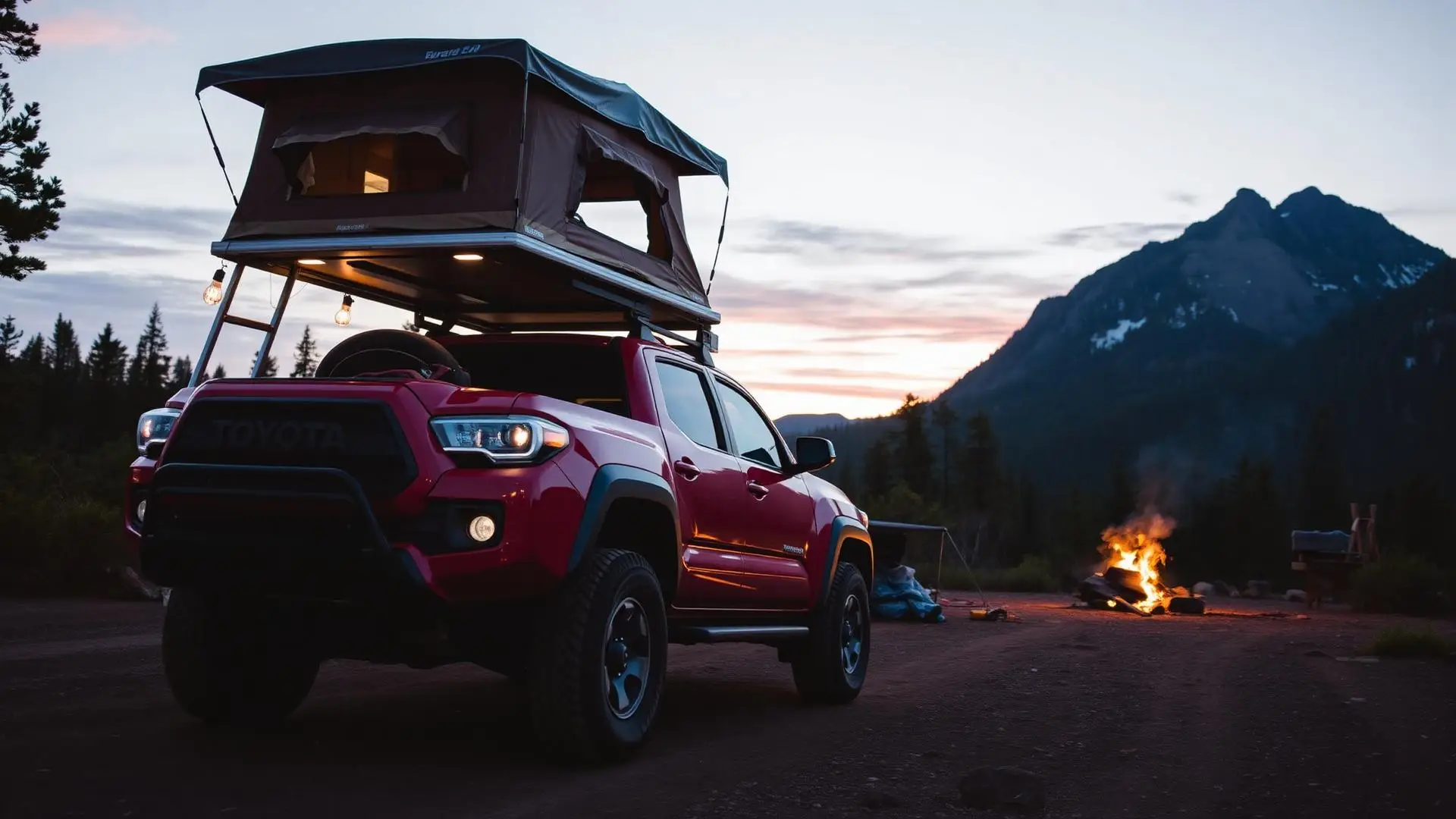
So you want to start overlanding. Maybe you've been scrolling through Instagram watching rigs parked on ridgelines at sunset, or maybe a buddy just got back from a week in the backcountry and won't shut up about it. Either way, something clicked, you want in.
Here's the good news: overlanding isn't some exclusive club that requires an $80,000 rig and a garage full of gear. It's one of the most accessible outdoor adventures you can get into, and you can realistically take your first overlanding trip this month with the vehicle sitting in your driveway right now.
No Gatekeeping Here
What Is Overlanding, Exactly?
Overlanding is vehicle-based, self-reliant adventure travel where the journey is the destination. You're packing your rig with everything you need to survive and be comfortable, driving to remote places, camping along the way, and soaking in the experience of getting there.
Here's where people get tripped up. Overlanding is not the same thing as off-roading, and it's not the same thing as car camping, though it borrows from both.
Overlanding vs. Off-Roading vs. Car Camping
| Off-Roading | Car Camping | Overlanding | |
|---|---|---|---|
| Focus | The vehicle & trail | The destination | The journey |
| Duration | Day trips | Weekend stays | Multi-day travel |
| Self-Reliance | Moderate | Low | High |
| Terrain | Technical trails | Paved to campsite | Varied, highways to dirt roads |
| Key Gear | Recovery, armor | Comfort items | Everything you need to survive |
The key distinction is self-reliance. When you're overlanding, you're carrying your shelter, food, water, tools, and your ability to get yourself out of trouble. You're not relying on nearby services or cell coverage.
Do You Need a 4x4 to Start Overlanding?
This is hands-down the most common question beginners ask, and the answer might surprise you: no, you absolutely do not need a 4x4 to start overlanding.
The vast majority of public lands, national forests, BLM land, and backcountry roads in the United States are accessible on well-maintained gravel and dirt roads. A stock Subaru Outback, a Honda CR-V, or even a two-wheel-drive pickup truck can handle them without breaking a sweat.
Reality Check
Best Vehicles for Overlanding (If You're Shopping)
If you are in the market for a dedicated overlanding vehicle, here are the rigs that have earned their reputation:
- Toyota Tacoma, The gold standard for mid-size overland builds. Unmatched reliability, massive aftermarket support, holds resale value like nothing else.
- Toyota 4Runner, More interior space than a Tacoma with similar off-road DNA. The fifth-gen aftermarket is deep.
- Jeep Wrangler, The most capable stock off-road vehicle you can buy. Trade-off: highway comfort and reliability.
- Ford Bronco, Excellent off-road capability, surprisingly comfortable on-road. The Sasquatch package is basically overland-ready.
- Toyota Land Cruiser, The king. Goes anywhere, carries anything, outlasts everything. Look at 100-series and 200-series.
- Full-Size Trucks (F-150, Silverado, Ram 1500), Payload capacity for days, comfortable cabs, endless bed build options.
Budget picks: Older Tacomas and 4Runners (pre-2005), Jeep Cherokees (XJ), Nissan Xterras, and Mitsubishi Monteros can all be picked up for well under $10,000 and built into seriously capable overland rigs.
How Much Does It Cost to Start Overlanding?
Let's talk money, because this is where a lot of people psych themselves out. The good news: overlanding on a budget is not only possible, it's how most experienced overlanders actually started.
The "Just Get Out There" Budget: $200, $500
A tent (borrow one or grab a used one for $50, $100), sleeping bag and pad ($50, $100), camp stove and basic cookware ($30, $50), a cooler you already own, a first-aid kit ($20, $30), a headlamp ($15), and basic recovery items like a tow strap and shovel ($30, $50). Download Gaia GPS on your phone. Done.
The "Comfortable Starter" Budget: $1,000, $2,500
A quality tent or budget rooftop tent ($800, $1,200), better cooking gear, a portable power station, a proper recovery kit with kinetic rope and shackles, upgraded tires, and some storage organization.
The "Fully Kitted" Budget: $5,000, $15,000
A quality rooftop tent or camper, fridge/freezer, dual-battery or lithium power system with solar, full recovery kit including a winch, suspension upgrades, skid plates, storage drawers, and auxiliary lighting.
The Golden Rule of Overlanding Gear
The Essential Overlanding Gear List
Tier 1: Non-Negotiable Essentials
These come with you on every single trip, no exceptions:
- Navigation, Offline maps (Gaia GPS, onX Offroad), paper map backup. When you're 40 miles down a forest service road with no cell service, Google Maps won't help.
- Water, Minimum one gallon per person per day, plus extra for cooking. Carry a water filter as backup.
- First Aid Kit, A real kit with trauma supplies: nitrile gloves, gauze, compression bandages, tourniquet, SAM splints, medical tape, and personal medications.
- Recovery Gear, Kinetic recovery rope (never a chain), D-ring shackles, folding shovel, tire repair kit. Add traction boards and an air compressor as you build your kit.
- Tools, Wrenches, sockets, screwdrivers, pliers, zip ties, duct tape, JB Weld, extra fuses, spare fluids.
- Communication, A satellite communicator (Garmin inReach) is strongly recommended. At minimum, share your route before every trip.
Tier 2: Camp Comfort
- Shelter, A ground tent works perfectly fine. Don't let anyone tell you that you need a rooftop tent to overland.
- Sleep System, Sleeping bag rated 20°F below your expected low, quality sleeping pad, camp pillow.
- Kitchen, Two-burner propane stove, cast iron skillet or camp cookware, kettle, utensils, biodegradable soap, quality cooler.
- Lighting, Good headlamp (your most useful camp gear), a lantern, flashlight backup, extra batteries.
- Camp Furniture, Folding chair and small table. Don't overthink this.
Tier 3: Nice-to-Have Upgrades
Don't buy any of this until you've done a few trips:
- Power, Portable power station (Jackery, EcoFlow, Bluetti) with a solar panel.
- Awning, Side-mounted shade and rain protection.
- Fridge/Freezer, Probably the single most impactful comfort upgrade you'll eventually make.
- Upgraded Storage, Drawer systems, cargo boxes, modular organization.
- Auxiliary Lighting, Ditch lights, light bars, or rock lights for driving unlit backcountry roads.
Planning Your First Overlanding Trip
Choose the Right Destination
- Stay close to home. First trip should be 2 to 4 hours max. If something goes wrong, you want to be able to bail.
- Stick to well-traveled routes. National forests and BLM land are your best friends, maintained roads, other people around, stunning scenery.
- Know the terrain difficulty. Stick to easy or moderate rated roads for your first trip.
- Check regulations. Permits, fire restrictions, seasonal road closures, do your homework.
Build Your Route
Plot your route in Gaia GPS or onX Offroad. Identify fuel stops. Mark water sources. Identify bail-out points, alternate roads that get you back to pavement if needed.
Fuel range rule of thumb: Calculate your range on a full tank, subtract 20% as a safety buffer, and make sure you can reach the next fuel stop within that number. Carry a jerry can if the math is tight.
Timing and Weather
- Arrive at camp before dark. Plan to arrive at least two hours before sunset.
- Check weather obsessively. Dirt roads become dangerous when wet.
- Understand the season. Spring = mud. Summer = heat and fire restrictions. Fall = arguably the best overlanding season. Winter = significantly more preparation required.
Non-Negotiable Safety Rule
Essential Skills Every Overlander Needs
Vehicle Recovery
Getting stuck is not a matter of if, it's a matter of when. Key recovery skills:
- Airing down tires, Drop to 18 to 22 PSI for dirt. Increases contact patch dramatically. Air back up before pavement.
- Recovery straps, Use kinetic rope, never chain. Attach to proper recovery points, not bumpers. Apply steady, progressive force.
- Traction boards, Slide under tires for grip in sand, mud, or snow. Lightweight, inexpensive, and they've saved more trips than any other single piece of gear.
- Winching, Learn proper rigging, tree protectors, snatch blocks, and always use a winch damper.
Basic Vehicle Maintenance
Before every trip: check oil, coolant, brake fluid, tire pressure (including spare), and all lights. Look underneath for leaks. In the field: know how to change a tire, check fluids, replace a fuse, and jump-start your vehicle.
Navigation Skills
Practice reading topographic maps. Understand contour lines and scale. Know your GPS app's features, waypoints, tracks, route planning, before you're in the field.
Leave No Trace
Pack out everything. Don't drive off established roads. Camp on durable surfaces. Bury human waste 200+ feet from water. Respect fire restrictions. Leave every campsite cleaner than you found it. If overlanders trash public lands, they get shut down.
Common Overlanding Mistakes to Avoid
- Overpacking, The #1 beginner mistake. After each trip, separate what you used from what you didn't. Leave the unused pile home next time.
- Buying gear before knowing what you need, Don't buy anything expensive until you've done at least three trips and personally felt the absence of that item.
- Underestimating travel time, Plan for 15 to 25 MPH on dirt roads, even slower on rough trails.
- Skipping vehicle prep, 30 minutes of pre-trip inspection prevents getting stranded.
- Going too hard too fast, Build skills progressively. There's no rush.
- Ignoring weather, Flash floods and sudden storms are real dangers in the backcountry.
- No communication plan, "I'll just use my cell phone" is not a plan. Carry a satellite communicator.
Where to Go Overlanding: Best Beginner Destinations
You don't need to fly to Moab for your first trip. Some of the best overlanding is probably within a few hours of where you live.
- National Forests, 154 forests covering 193 million acres. Most allow dispersed camping with extensive forest service road networks.
- BLM Land, 245 million acres, mostly in western states. Generally open to dispersed camping with few restrictions.
- State Parks and Forests, Many have backcountry roads and camping. Check regulations by state.
Beginner-friendly picks: Ozark National Forest (AR), Pisgah National Forest (NC), Ouachita National Forest (OK/AR), Big Bend area (TX), Coconino National Forest (AZ), and Ocala National Forest (FL).
Use FreeCampsites.net, iOverlander, and Campendium to find dispersed camping spots. Motor Vehicle Use Maps (MVUMs) from the USFS are the definitive guide to open roads, free to download.
Solo vs. Group Overlanding
Solo offers complete freedom and builds self-reliance fast, but requires extra diligence on vehicle prep, communication, and recovery skills. Group overlanding is safer, more social, and gives you a built-in recovery team.
For your first trip, bring a buddy. A second vehicle is a safety net. As you build confidence, solo trips become incredibly rewarding.
Your First Trip: Quick-Start Action Plan
This Week: Check your vehicle's fluids, tires, and condition. Download Gaia GPS. Gather camping gear you already own.
This Weekend: Research a national forest or BLM area within 2 to 3 hours. Check road conditions. Download offline maps. Tell a friend your plan.
The Night Before: Pack gear. Fill water jugs. Check weather. Set your alarm.
The Day Of: Drive. Find a campsite. Set up. Explore. Cook dinner. Watch the sun go down.
Congratulations