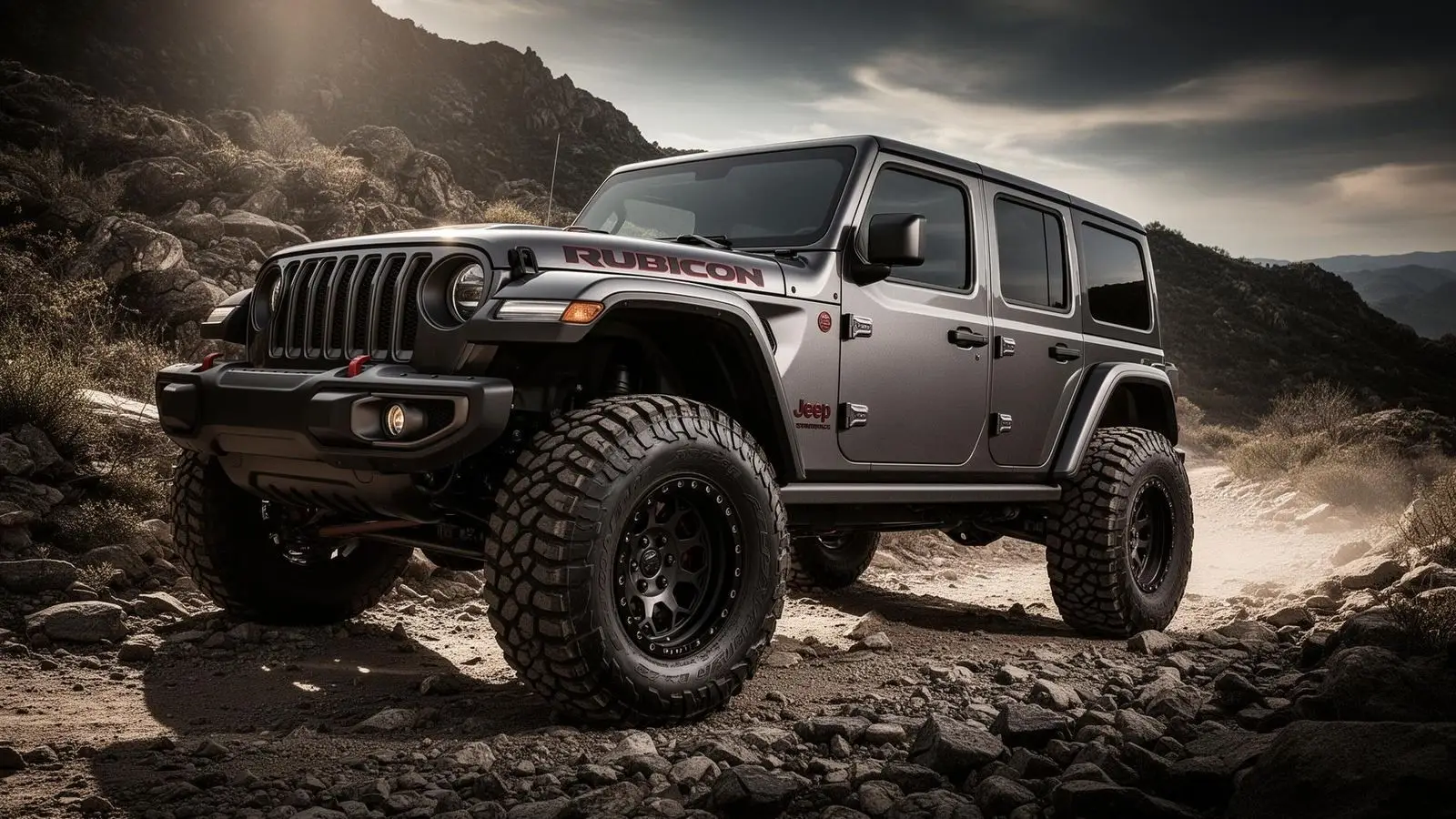
The JL Wrangler Rubicon came from the factory more capable than any Wrangler before it. But if you want to step up to 37-inch tires, the question isn't whether you can, it's how much lift you actually need and what else comes with the territory.
We've seen builds claiming "37s on stock height" and others insisting you need 4+ inches. The truth is somewhere in between, and it depends heavily on how you plan to use your Jeep. Here's what we found after testing multiple JL Rubicon setups with 37s.
The JL Rubicon Advantage
Before diving into lift heights, it's worth understanding what the Rubicon gives you out of the box that makes 37s more achievable:
- High-line fenders: More clearance than Sport or Sahara trims
- Electronic sway bar disconnect: More articulation on the trail
- Dana 44 axles: Stronger foundation for larger tires
- 4.10 gears (optional): Better than the base 3.45 or 3.73 for bigger rubber
- Rock-Trac transfer case: 4:1 low range for crawling
These factory upgrades mean a Rubicon needs less modification than a Sport to run the same tire size. But "less" doesn't mean "none." If you are still deciding on size, start with 33s vs 35s vs 37s.
The Tire: 37x12.50R17
For this test, we focused on the most common 37-inch size: 37x12.50R17. This tire fits 17-inch wheels (which are lighter and more readily available in beadlock options) and provides a good balance of width and height.
Why 17-Inch Wheels?
Lift Height Breakdown: What Actually Works
Here's the honest breakdown based on real builds:
No Lift (Stock Height)
| Category | Reality |
|---|---|
| Daily driving | Rubbing at full lock, especially when loaded |
| Trail use | Constant contact during flex,not recommended |
| Required mods | Flat fenders, aggressive trim, 1.5"+ wheel spacers |
| Verdict | Possible but compromised |
Yes, people run 37s on stock-height JLs. But it requires flat fenders (losing the Rubicon's high-lines), extensive pinch seam trimming, wheel spacers, and accepting that you'll rub during any real articulation. For a mall crawler, maybe. For trail use, it's asking for problems.
2.5-Inch Lift (The Sweet Spot)
| Category | Reality |
|---|---|
| Daily driving | No rubbing in normal conditions |
| Trail use | Good flex with minor contact points at extremes |
| Required mods | Pinch seam trim, proper wheel offset |
| Verdict | Recommended for most builds |
A 2.5-inch lift is where 37s start to make sense. You keep the factory high-line fenders, get enough clearance for real flex, and don't open the door to the geometry problems that come with taller lifts.
The 2.5-Inch Rule
3.5 to 4-Inch Lift
| Category | Reality |
|---|---|
| Daily driving | No clearance issues whatsoever |
| Trail use | Full flex without contact |
| Required mods | Control arms, track bar, driveshafts likely needed |
| Verdict | Overkill for 37s,better suited for 40s |
If you're going 3.5 inches or higher, you're in 40-inch tire territory. At this height, 37s look undersized and you're paying for geometry corrections (adjustable control arms, track bars, potentially driveshafts) that 37s don't really demand.
Wheel Specs That Work
Wheel choice matters as much as lift height for making 37s work. Here's what we recommend:
| Spec | Recommended | Why |
|---|---|---|
| Size | 17x9 | Proper width for 12.50 tire, clears brakes |
| Offset | -12 to -18mm | Pushes tire out for inner clearance |
| Backspacing | 4.5" to 4.75" | Matches offset range above |
| Beadlock | Optional but nice | Allows lower trail PSI safely |
Avoid Zero Offset
The Trimming You'll Still Need
Even with a proper lift and wheel setup, expect to do some minor trimming:
- Pinch seam: The factory weld seam at the bottom of the fender opening needs to be folded or trimmed. This is the #1 contact point.
- Inner fender liner: The plastic liner may need trimming at the front corners for full-lock clearance.
- Sway bar links: At full droop, stock links can contact the tire. Longer links or quick-disconnects solve this.
None of these are major surgery. A heat gun and some patience for the pinch seam, a utility knife for the liner, and maybe $100 in sway bar links.
The Regear Question
This is where builds diverge. Here's the honest truth about gearing with 37s:
If You Have 3.73 Gears (Base)
You'll feel sluggish everywhere. Highway merging is frustrating, the transmission hunts for gears constantly, and fuel economy tanks because you're always in boost or higher RPM. Regear to 4.88 or 5.13.
If You Have 4.10 Gears (Rubicon Option)
Livable for daily driving. You'll notice the loss, especially on hills and with A/C running, but it's not miserable. Most people with 4.10s and 37s wait to see how much it bothers them before regearing.
Recommended Gears for 37s
- 4.88: Good balance, recovers most lost power, commonly available
- 5.13: Better for heavier builds, towing, or if you want it to feel stock
Budget Reality
37s are a common choice for expert trails like the Rubicon Trail (22 miles), where our trail guide lists 35-inch tires as the minimum and 37s as recommended.
Real Cost Breakdown
Here's what a proper 37-inch tire setup actually costs on a JL Rubicon:
| Component | Cost Range |
|---|---|
| 37x12.50R17 Tires (5) | $1,800, $2,800 |
| 17x9 Wheels (5) | $1,200, $2,500 |
| 2.5" Lift Kit | $1,500, $4,000 |
| Installation | $500, $1,000 |
| Regear (optional but recommended) | $3,000, $5,000 |
| Total Range | $5,000, $15,300 |
The Bottom Line
For 37s on a JL Wrangler Rubicon, 2.5 inches of lift is the sweet spot. It's enough clearance for real trail use without the complexity and cost of long-arm geometry corrections. Pair it with proper offset wheels (17x9, -12 to -18mm), do the minor trimming, and budget for a regear if you want it to drive right.
Can you run 37s on stock height? Technically. Should you? Not if you actually plan to wheel it.
The JL Rubicon is already the best starting point Jeep has ever offered. A 2.5-inch lift and 37s turns it into a trail machine that can still handle the daily commute without drama.