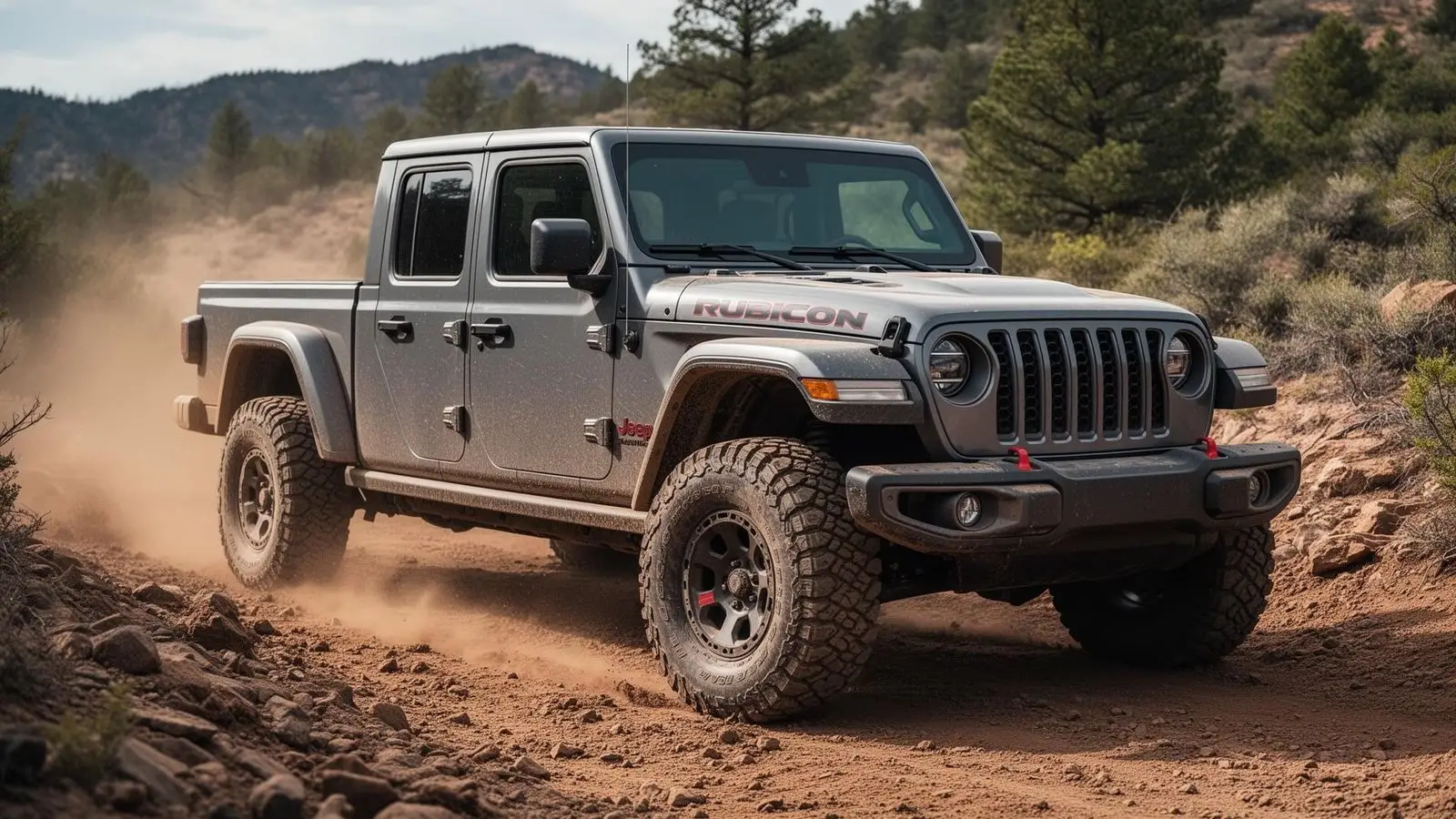
The 2020 Jeep Gladiator shook up the midsize truck world in a big way. For off-road enthusiasts, the Rubicon trim is basically a factory-built head start. The claim has circulated for years: "You can run 35s on a Rubicon with no lift." Here is what published fitment data and owner reports say is realistic, what's tight, and what you should expect.
Why the Gladiator Rubicon Is Different
The Rubicon trim comes with serious off-road hardware straight from the factory:
- Solid axles front and rear, Dana 44s with proper gearing
- Selectable lockers, Front and rear e-lockers
- High-line fenders, Designed with bigger tires in mind
- Disconnecting sway bar, More articulation on the trail
- Rock-Trac 4:1 transfer case, Serious crawl ratio
Those high-line fenders are the key here. They were designed with larger tires in mind, meaning you can step up in size with minimal, or even zero, suspension changes.
The Setup: 35s That Work With Stock Wheels
The fitment below assumes the factory 17x7.5 wheels with a set of35x11.50R17 tires.
Why 11.50 Instead of 12.50?
The bonus: a narrower 35 still fills the Gladiator's wheel wells nicely and adds meaningful ground clearance without turning the truck into a rubbing nightmare.
Test Vehicle Specs
| Component | Specification |
|---|---|
| Vehicle | 2020 Jeep Gladiator Rubicon |
| Suspension | Stock height, no lift |
| Wheels | Factory 17x7.5 |
| Tires | 35x11.50R17 |
| Axle Gears | Stock 4.10 (Rubicon) |
On the Trail: Immediate Gains
Owners airing down to around 12 psi report that the tires hook up well and conform nicely over uneven terrain. For rigs that see mud, loose trails, and mixed surfaces, airing down is still one of the biggest "free upgrades" you can do, especially on a larger tire.
Traction felt confident, and the overall stance and capability bump was noticeable right away. The combination of the Rubicon's factory lockers and the larger tire footprint made quick work of obstacles that would have been more challenging on stock 33s.
Pro Tip
Daily Driver Reality: Miles Add Up Fast
This Gladiator wasn't a weekend-only toy. It saw daily driving duty, which made it easy to rack up miles and get a real feel for the trade-offs.
Here's what stood out over time:
| Aspect | Observation |
|---|---|
| Fuel Economy | Dropped to ~15 mpg (1-2 mpg hit vs stock) |
| Power Feel | Noticeable but not dramatic loss |
| Highway Cruising | Works harder in headwinds to hold top gear |
| City Driving | Slightly slower off the line |
| Braking | Marginally longer stopping distances |
It's not "regear immediately" territory for most people, but it's worth knowing what you're signing up for. The 4.10 gears in the Rubicon help significantly here, a Sport or Overland with 3.73s would feel the tire size more acutely.
Practical Fitment: The Spare Still Fits
One of the best surprises? The full-size spare still fits in the factory location underneath the bed with this size. That matters, because a 35 isn't just for looks. If you're actually wheeling, you want a real spare, not a donut situation pretending to be off-road ready.
Some people even manage larger sizes underneath with certain tricks, but for this setup, it fit without drama.
Full-Size Spare Confirmed
Clearance Check: Tight, But Usable
Trail performance is one thing. Maximum flex is another.
Owner reports on clearance at full articulation say the front can get tight, but the combo is widely considered usable for anyone who wants a clean "35s, no lift" build.
Clearance Notes
- Front inner fender: Tight at full lock + compression, but no hard contact
- Rear wheel wells: Plenty of room, high-line fenders do their job
- Sway bar disconnected: More clearance at full droop
- Full stuff (bump stops): Close but clears with stock crash bars
If you're planning aggressive trails, add-ons like different wheel offset, small spacers, or minor trimming can help. But the bottom line is simple: 35s are doable on a Gladiator Rubicon without lifting it first.
What About Regearing?
The Rubicon's stock 4.10 gears handle 35s reasonably well for most driving. Here's our take:
| Driving Style | Regear Recommendation |
|---|---|
| Mostly highway, light trails | 4.10s are fine, live with it |
| Mixed use, some towing | 4.56s would feel better |
| Heavy off-road, larger tires later | 4.88s future-proofs you |
If you're staying at 35s and don't tow regularly, the stock gears are livable. If you plan to go bigger eventually (37s), budget for a regear at that point.
Cost Breakdown
One of the best parts of this build is how affordable it is compared to a full lift + tire package:
| Component | Cost |
|---|---|
| 35x11.50R17 Tires (set of 5) | $1,200 - $1,800 |
| Mounting & Balancing | $100 - $150 |
| TPMS Sensors (if needed) | $50 - $100 |
| Lift Kit | $0 (not needed) |
| Alignment | $80 - $120 |
| Total | $1,430 - $2,170 |
Compare that to a quality 2.5" lift kit ($1,500-3,000) plus tires, and you're looking at significant savings while still getting real capability gains.
The Takeaway
If you want one of the simplest, most effective upgrades you can make to a Gladiator Rubicon, this is it:
- ✓ Better trail capability
- ✓ More ground clearance
- ✓ A more aggressive stance
- ✓ No lift required
- ✓ Full-size spare still works
Yes, you'll pay a fuel economy penalty, and yes, you'll feel a little more load on the drivetrain. But the fact that you can buy a midsize truck from the factory and bolt on 35s with no lift is still wild.
Bottom Line
Who Should Do This Build?
- New Gladiator owners who want immediate capability without voiding warranties
- Budget-conscious builders who want the most bang for their buck
- Daily drivers who need practicality alongside trail days
- Anyone avoiding the lift rabbit hole (for now)
If you're planning to eventually run 37s or bigger, you'll need a lift anyway. But if 35s meet your needs, this setup proves you don't need to touch the suspension to get there.