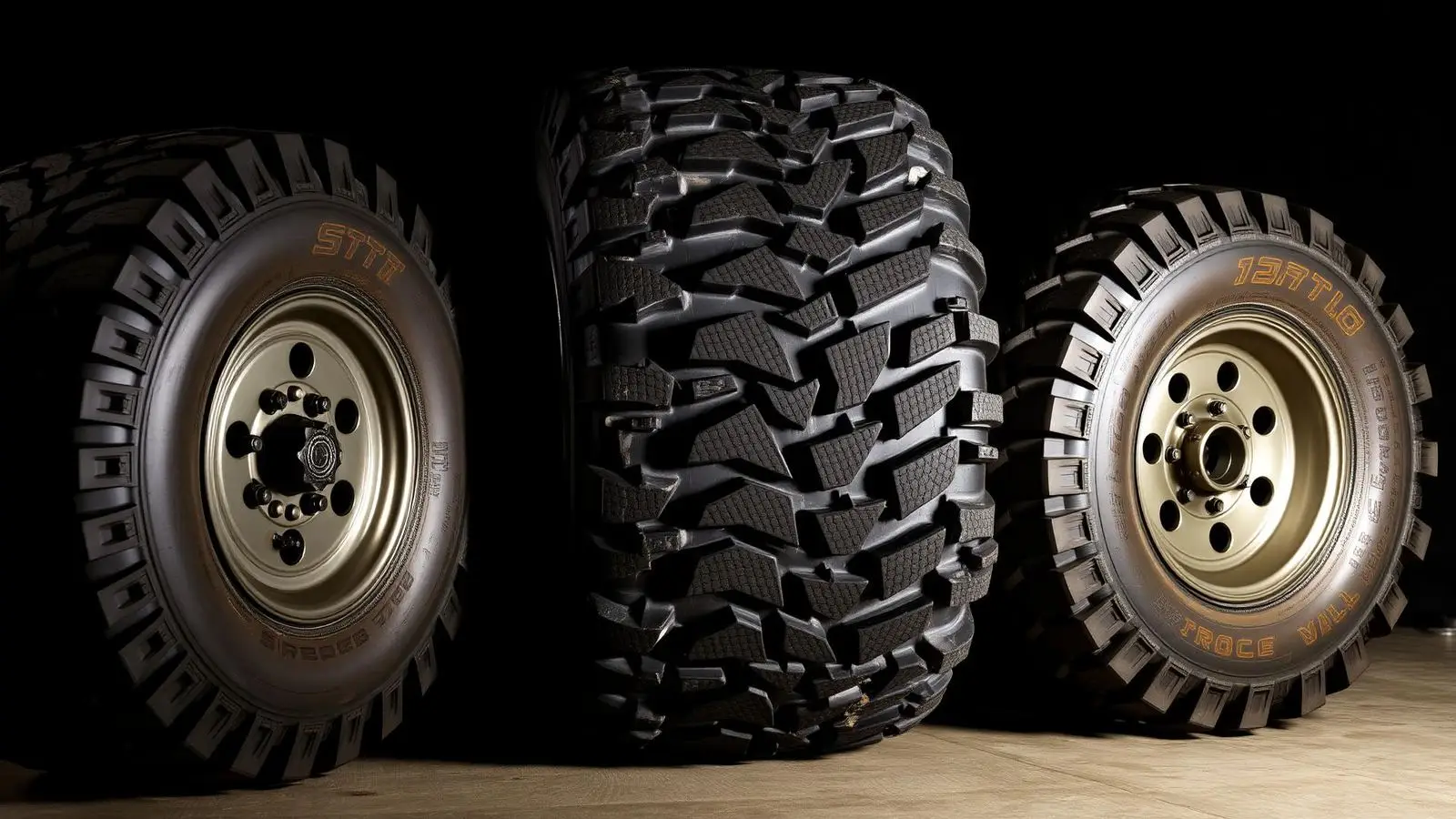
Going up in tire size is one of the best performance upgrades you can make, more ground clearance, better traction, and a look that actually matches how you drive. But bigger tires don't just bolt on. They change your speedometer, kill your fuel economy if you don't re-gear, and require lift to fit without rubbing.
This guide covers everything that actually changes at each size jump, with real numbers so you can make the right call before you buy.
The Three Sizes, What They Mean in Practice
33s, The sweet spot for most daily drivers and weekend warriors. Fits many trucks and Jeeps with a basic 2 to 3" lift. Noticeable improvement over stock without requiring a full rebuild.
35s, The most popular size among serious trail rigs. Requires a proper lift (3 to 4" on most platforms), but unlocks significantly more capability.
37s, The territory of dedicated trail rigs and overland builds. Requires major lift, likely re-gearing, and often axle upgrades. Not a daily driver tire.
1. Ground Clearance
| Tire Size | Diameter | Gain vs. Stock (31") | Clearance Gain* |
|---|---|---|---|
| 33" | 33.0" | +2" | ~1" |
| 35" | 35.0" | +4" | ~2" |
| 37" | 37.0" | +6" | ~3" |
*Use the tire diameter calculator for exact numbers on your setup.
2. Speedometer Error
| Tire Size | Speedometer Error | What It Means |
|---|---|---|
| 33" (vs. 31" stock) | ~3.2% slow | Going 65 mph, speedo reads ~63 |
| 35" (vs. 31" stock) | ~6.5% slow | Going 65 mph, speedo reads ~61 |
| 37" (vs. 31" stock) | ~9.4% slow | Going 65 mph, speedo reads ~59 |
This also throws off your odometer, which affects oil change intervals, lease mileage tracking, and GPS calibration. Plug your exact sizes into the tire diameter calculator to see your error.
3. Gear Ratio Impact
Your factory gear ratio is tuned for stock tire size. When you upsize, your effective gear ratio gets taller, the engine has to work harder to move the bigger, heavier tire.
| Tire Size | Effective Gear Ratio with 4.10s |
|---|---|
| Stock (31") | 4.10 (baseline) |
| 33" | ~3.85 (slightly tall) |
| 35" | ~3.62 (noticeably lazy) |
| 37" | ~3.42 (significant power loss) |
Do you need to re-gear? The short version is below; for the full math, see do you need to regear.
- Going to 33s: Usually not necessary, especially with V8 or diesel engines
- Going to 35s: Depends on your engine and how much you tow, many builds re-gear here
- Going to 37s: Almost always necessary
The most common re-gear target for 35s is 4.56. For 37s, 4.88 or 5.13 depending on the application.
Find Your Target Ratio
4. Fuel Economy Impact
| Tire Size | Estimated MPG Loss |
|---|---|
| 33" | 1 to 3 MPG |
| 35" | 2 to 5 MPG |
| 37" | 3 to 7 MPG |
For the full breakdown, see MPG loss from bigger tires.
Re-gearing recovers most of the MPG loss from bigger tires. If you go to 35s without re-gearing, you lose MPG twice, once from the tire, once from the engine working harder.
5. What Lift You Actually Need
Jeep Wrangler JL
| Tire Size | Minimum Lift | Notes |
|---|---|---|
| 33" | Stock (or 1 to 2" spacers) | Fits cleanly on most JLs stock |
| 35" | 2.5 to 3" lift | Some trimming may still be needed |
| 37" | 3.5 to 4"+ lift | Full lift kit, likely UCA replacement |
Ford F-150
| Tire Size | Minimum Lift | Notes |
|---|---|---|
| 33" | 2" level | Level + small spacer handles 33s well |
| 35" | 3" level + UCAs | Needs UCAs to maintain geometry |
| 37" | 4"+ full lift kit | Full suspension overhaul |
Toyota Tacoma
| Tire Size | Minimum Lift | Notes |
|---|---|---|
| 33" | 2 to 3" lift | Sweet spot for Tacoma builds |
| 35" | 3" lift + minor trimming | Tight but doable on 2nd/3rd gen |
| 37" | 4"+ with significant trimming | Extended wheel wells often needed |
6. The Cost of Each Jump
Going to 33s
| Item | Cost |
|---|---|
| Tires (4+spare) | $800 to $1,400 |
| Wheels (optional) | $500 to $1,200 |
| 2 to 3" lift | $400 to $1,800 |
| Mount & balance | $80 to $150 |
| Total | $1,780 to $4,550 |
Going to 35s
| Item | Cost |
|---|---|
| Tires (4+spare) | $1,100 to $1,800 |
| Wheels | $600 to $1,500 |
| 3 to 4" lift kit | $1,200 to $3,500 |
| Re-gear (optional but recommended) | $2,000 to $4,000 |
| Mount & balance | $100 to $200 |
| Total (without re-gear) | $3,000 to $7,000 |
| Total (with re-gear) | $5,000 to $11,000 |
Going to 37s
| Item | Cost |
|---|---|
| Tires (4+spare) | $1,400 to $2,400 |
| Beadlock-capable wheels | $1,200 to $2,500 |
| 4"+ long-travel suspension | $3,500 to $7,000 |
| Re-gear (front + rear) | $2,500 to $5,000 |
| Axle upgrades (often needed) | $1,500 to $4,000 |
| Total | $10,100 to $20,900 |
37s Are a Serious Commitment
Which Size Is Right for You?
Ask yourself three questions:
1. What trails are you targeting?
Easy to moderate trails: 33s do the job. Hard trails: 35s are the benchmark. Expert terrain: 37s.
2. Is this a daily driver?
If yes, 33s or 35s (re-geared). 37s on a daily driver is a rough life, road noise, wear, and MPG penalty every single day.
3. What's your actual budget?
Factor in the full cost, tires, lift, wheels, re-gear, and installation. 35s with a proper lift and re-gear is a $7,000 to $11,000 investment. 37s is a full build.
Run the Numbers Before You Buy
- Tire Size Calculator, compare your current vs. new size side by side
- Gear Ratio Calculator, find the right re-gear target
- Build Budget Planner, price out the full build by phase