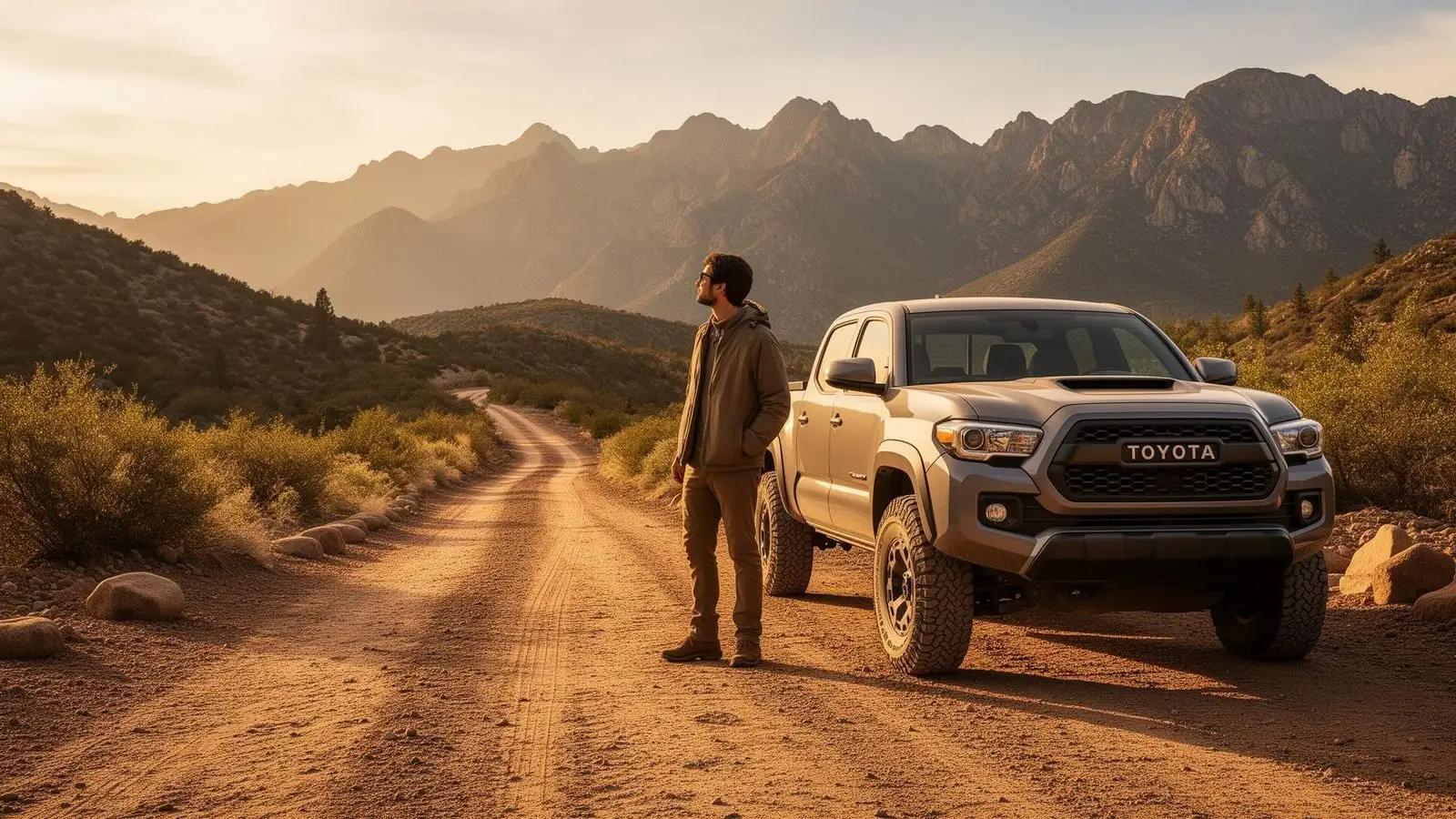
I still remember my first real off-road trip. There I was, sitting in my stock Toyota Tacoma at the trailhead, watching a lifted Jeep with 37s and a snorkel disappear into the dust. I had YouTube knowledge, a prayer, and exactly zero recovery gear. Spoiler alert: I got stuck. Twice. And the second time, I had to wait 45 minutes for that same Jeep guy to come back and yank me out with his winch.
That embarrassing afternoon taught me more than six months of forum lurking ever did. And now, years later, I'm writing the guide I wish someone had handed me before I aired down my tires for the first time.
This isn't going to be another "buy these 47 things before you hit the trail" list. Instead, let's talk about what actually matters when you're getting started, and the stuff nobody warns you about until you're already stuck in a rut wondering if you should've just stayed home and watched Overland Bound videos.
The Truth About Your Stock Truck (It's Better Than You Think)
Here's what the off-road industry doesn't want you to know: your stock truck or SUV can handle way more than you'd expect. That factory skid plate? It's not just for show. Those all-season tires? They'll get you through more trails than you'd believe.
I spent my first year convinced I needed a 3-inch lift, 35s, and a bumper that could survive a moose collision. Meanwhile, the guy camping next to me at Johnson Valley was running stock everything on his 4Runner and having the time of his life.
The Secret
What Your Stock Vehicle Can Actually Do
| Trail Type | Stock Capability |
|---|---|
| Graded dirt roads | No problem. Your Camry could do this. |
| Moderate rocky trails | Doable with good tire placement and patience |
| Mud/sand | Air down first. Momentum is your friend. |
| Water crossings | Walk it first. Know your air intake height. |
The Only Three Things You Actually Need (At First)
Forget the $15,000 build list. When you're starting out, there are exactly three things that will keep you from having a Very Bad Day:
1. A Way to Air Down (and Back Up)
Dropping your tire pressure from 35 PSI to 18-20 PSI transforms your truck. Suddenly you've got traction. The ride smooths out. Those rocks that were jarring your fillings loose become manageable. A $30 tire deflator and a $100 portable compressor will change your life more than any lift kit.
2. Recovery Boards (Traction Boards)
MaxTrax, X-Bull, whatever. Just get some. These flat pieces of plastic have saved more weekends than any winch. Stuck in sand? Boards. Stuck in mud? Boards. Stuck because you tried to show off for your girlfriend? Boards. (Plus you won't have to explain to your girlfriend why you're stuck.)
3. A Rated Recovery Point
This Is Where People Die. Literally.
The Ego Check: Trail Ratings Actually Mean Something
You know what's not fun? Being halfway up a trail rated "difficult" in your stock truck and realizing you can't go forward OR backward. Ask me how I know.
Trail ratings exist for a reason. And here's the thing: underestimating a trail doesn't make you cautious. Overestimating your abilities doesn't make you brave. It makes you the guy everyone has to wait for while you figure out how to un-wedge your differential from that rock you definitely should have gone around.
A Realistic Progression
The Real Skill Nobody Talks About: Reading Terrain
Here's what separates people who wheel for decades from people who break axles their first year: the ability to read terrain before you're on it.
Stop. Get out. Walk the obstacle. Look at it from different angles. Find the line that keeps your tires on solid ground and your undercarriage away from sharp things.
I know, I know. Getting out of the truck feels like admitting defeat. But you know what feels worse? The sound of your oil pan making contact with a rock because you were too proud to scout ahead.
Pro Tips for Reading Terrain
- Look for tire tracks from previous vehicles, they show you proven lines
- Wet rocks are slippery, dry rocks have grip
- If you can't see the bottom of a puddle, assume it's deeper than you think
- And if your gut says "maybe I shouldn't," trust your gut
When Things Go Wrong (And They Will)
Let's talk about getting stuck, because you're going to get stuck. Everyone does. The goal isn't to never get stuck. The goal is to get un-stuck without making things worse.
The Stuck Protocol
- First, stop digging. The moment your tires start spinning and you're not moving, stop. Every second you spin just digs you deeper.
- Second, assess. Are you high-centered? Buried in soft stuff? Wedged on rocks? The solution depends on the problem.
- Third, try the simple stuff first. Can you back out the way you came? Can traction boards help? Sometimes the answer is just: turn around and try a different line.
- Fourth, if you need a tow, know how to do it safely. Strap to recovery points only. Keep everyone clear of the line. Take it slow.
The Community Is Your Best Resource
Here's the best part about this hobby: the community is incredibly welcoming. That Jeep guy who pulled me out? He spent 20 minutes afterward showing me what I'd done wrong and how to approach similar obstacles. He gave me his number and told me to text if I ever needed help.
Join local off-road groups. Go on group runs. Ask stupid questions. Everyone started somewhere. The veterans love teaching newbies because they remember being newbies themselves.
Where to Connect
The Bottom Line
Off-roading isn't about having the most expensive rig or conquering the gnarliest trails. It's about getting out there, learning your vehicle, respecting the terrain, and coming home with stories instead of tow bills.
Start simple. Stay humble. Bring recovery gear. And remember: the trail will always be there next weekend. There's no prize for rushing.
Now get out there and get dirty. Just maybe scout that mud pit before you send it.