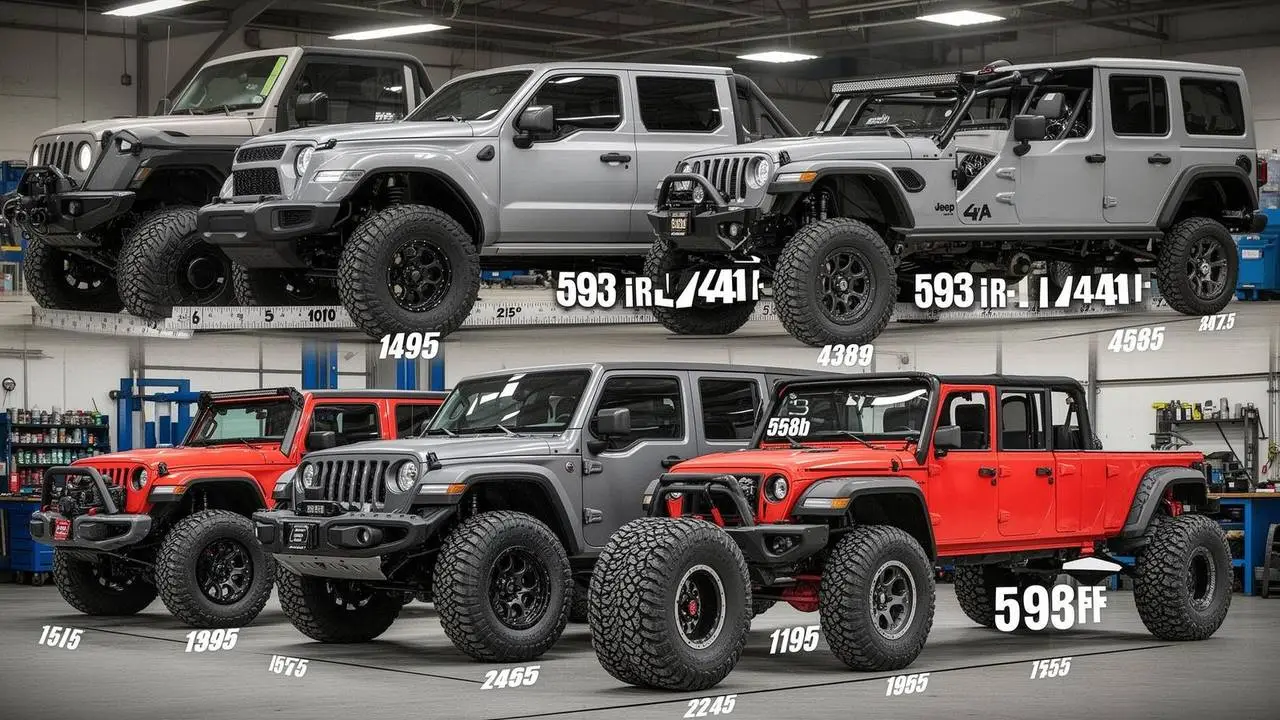
If you've ever bolted on bigger tires and immediately thought, "Did my MPG just fall off a cliff?", you're not imagining it. Going from stock tires to 33s, 35s, or 37s almost always costs fuel economy. The real question is: how much, why, and what you can do to keep the hit reasonable.
This guide breaks it down in a way that actually helps you plan your build.
Quick Answer: Realistic MPG Loss Ranges
Every rig is different, but here's the range most owners experience once everything is dialed in (alignment correct, tire size calibrated, no mechanical issues):
| Tire Size | Typical MPG Loss | Notes |
|---|---|---|
| 33-inch tires | 1 to 3 MPG | Most manageable for daily drivers |
| 35-inch tires | 2 to 5 MPG | Where complaints start |
| 37-inch tires | 3 to 7 MPG | Commitment tier |
You'll find plenty of owner reports showing drops in that ballpark. Tacoma owners running a 3-inch lift with 33s report anything from high teens down to low teens depending on year, engine, commute, and build weight.
Also common: a noticeable highway drop on full-size trucks after leveling and moving to larger, heavier tires.
Why Bigger Tires Hurt MPG (The 5 Real Reasons)
1. Rolling Resistance Goes Up
Bigger, wider, more aggressive tires typically increase rolling resistance. More tread squirm, more contact patch, more energy needed to keep the tire moving.
2. Rotational Weight and Inertia Go Up
A heavier tire and wheel combo takes more energy to spin up every time you accelerate. Even if you drive gently, stop-and-go becomes more expensive.
Weight Matters More Than Size
3. Your Effective Gearing Gets Taller
When you increase tire diameter, you effectively "raise" your gearing. That can lower RPM at speed, but it also makes it harder for the engine to stay in its efficient power band. The result is often sluggish acceleration, gear hunting, and worse MPG,especially on automatics.
4. Aerodynamics Usually Get Worse
Lift + bigger tires often means more frontal area and more turbulent airflow under the vehicle. Add a roof rack, RTT, light bar, or big mirrors and highway MPG takes another hit.
5. Your MPG May Be "Wrong" If You Didn't Recalibrate
This One Is Huge
The "MPG Correction" Problem
If your odometer is undercounting miles after going to taller tires, your hand-calculated MPG can be off too, unless you correct for the new diameter. Tacoma owners have discussed this for years and it's a common reason people think their MPG got nuked more than it did.
Simple Correction Formula
If your truck was calibrated for your old tire diameter:
Actual miles traveled = Indicated miles × (New tire diameter ÷ Old tire diameter)
Corrected MPG = Actual miles traveled ÷ Gallons used
Plenty of owners notice the speedometer error immediately when jumping up in tire size (GPS reads faster than the dash).
Bottom Line
What to Expect: 33 vs 35 vs 37
33-Inch Tires: The "Sweet Spot" for Daily-Driven Builds
Typical MPG hit: 1 to 3 MPG
Why it's manageable:
- Less rotational weight than 35/37 builds
- Less gearing change required
- Often doesn't require major supporting mods (depending on vehicle)
Owner reality check: some Tacoma setups still get decent numbers, while others drop hard depending on drive cycle and build.
Who 33s are best for:
- Daily drivers that still hit trails
- "Mild build" rigs that care about range
- People who want capability without turning the vehicle into a full-time project
35-Inch Tires: The Point Where MPG Complaints Explode
Typical MPG hit: 2 to 5 MPG
35s are where the dominoes start:
- Heavier tire choices become common
- More aggressive tread becomes common
- Regear becomes a serious "maybe"
- Brakes, steering, and alignment quality start to matter more
You'll see endless threads about 35s and calibration because the speedometer and shifting behavior can feel off when the vehicle still thinks it's on stock tires.
Who 35s are best for:
- Off-roaders who still drive their rig a lot
- People willing to tune, calibrate, and possibly regear
- Anyone building for looks and stance but still wanting usable street manners
37-Inch Tires: The Commitment Tier
Typical MPG hit: 3 to 7 MPG (sometimes more)
37s tend to require supporting mods to feel "right":
- Regear becomes more common (or the rig feels dead)
- Heavier steering components become important
- Brakes and wheel bearings work harder
- Highway aero and wind sensitivity become more noticeable
Weight Stacks Fast
Who 37s are best for:
- Trail-first builds
- People who want max clearance and don't mind the cost
- Owners who accept lower range as part of the deal
The Biggest MPG Killers (Ranked)
If you want to protect your fuel economy, focus on these first:
- Tire weight (not just size)
- Tread aggressiveness (MT vs AT)
- Speed (especially above 65 mph)
- Lift height + roof rack / RTT aero
- Incorrect tire size calibration
- Bad alignment / wrong toe settings
- Underinflation (or wildly incorrect PSI for load)
How to Keep the MPG Hit Smaller
1. Recalibrate Tire Size and Speedometer
This is step one, always. Owners consistently report the vehicle's calculations can be wrong without recalibration.
2. Choose Lighter Tires and Wheels
Two "35-inch" tires can differ by 10 to 20+ pounds each depending on load rating and model. That is a massive difference in rotating mass.
General Rule
3. Consider "Pizza Cutter" Sizing
A narrower tire often reduces rolling resistance compared to a wide tire, and wider tires generally hurt fuel economy more.
4. Fix Gearing When the Rig Starts Hunting Gears
Re-gearing is not a magic MPG booster, but it can restore drivability and reduce constant gear hunting and strain. Many guides and owner discussions point to sluggishness and poor economy as common signs that gearing no longer matches the tire size.
5. Clean Up Aero Where You Can
If you run a roof rack, RTT, light bar, or bulky accessories, try removing what you do not need for daily driving. Highway MPG is where aero penalties show up hardest.
6. Keep Alignment and Tire Pressure Dialed
Toe settings that are even slightly off can scrub tires and waste fuel. And pressure matters, especially with heavy tires.
A Practical "What Should I Run?" Decision Guide
Choose 33s If You Want:
- Better range and daily drivability
- Lower long-term maintenance cost
- The simplest build path
Choose 35s If You Want:
- A noticeable capability and stance jump
- A build you're willing to dial in
- Good balance of trail ability and street use
Choose 37s If You Want:
- Maximum clearance and trail performance
- You accept lower MPG and higher cost
- You're building around the tire
Key Takeaway
If you want the simplest truth: 33s cost a little, 35s cost noticeable, 37s cost a lot.
But most "my MPG got destroyed" stories come down to a few fixable issues:
- Tire size not calibrated
- Tires that are way heavier than necessary
- Gearing and driving habits that no longer match the build
Get those dialed in first, and you might find your build isn't as thirsty as you thought.