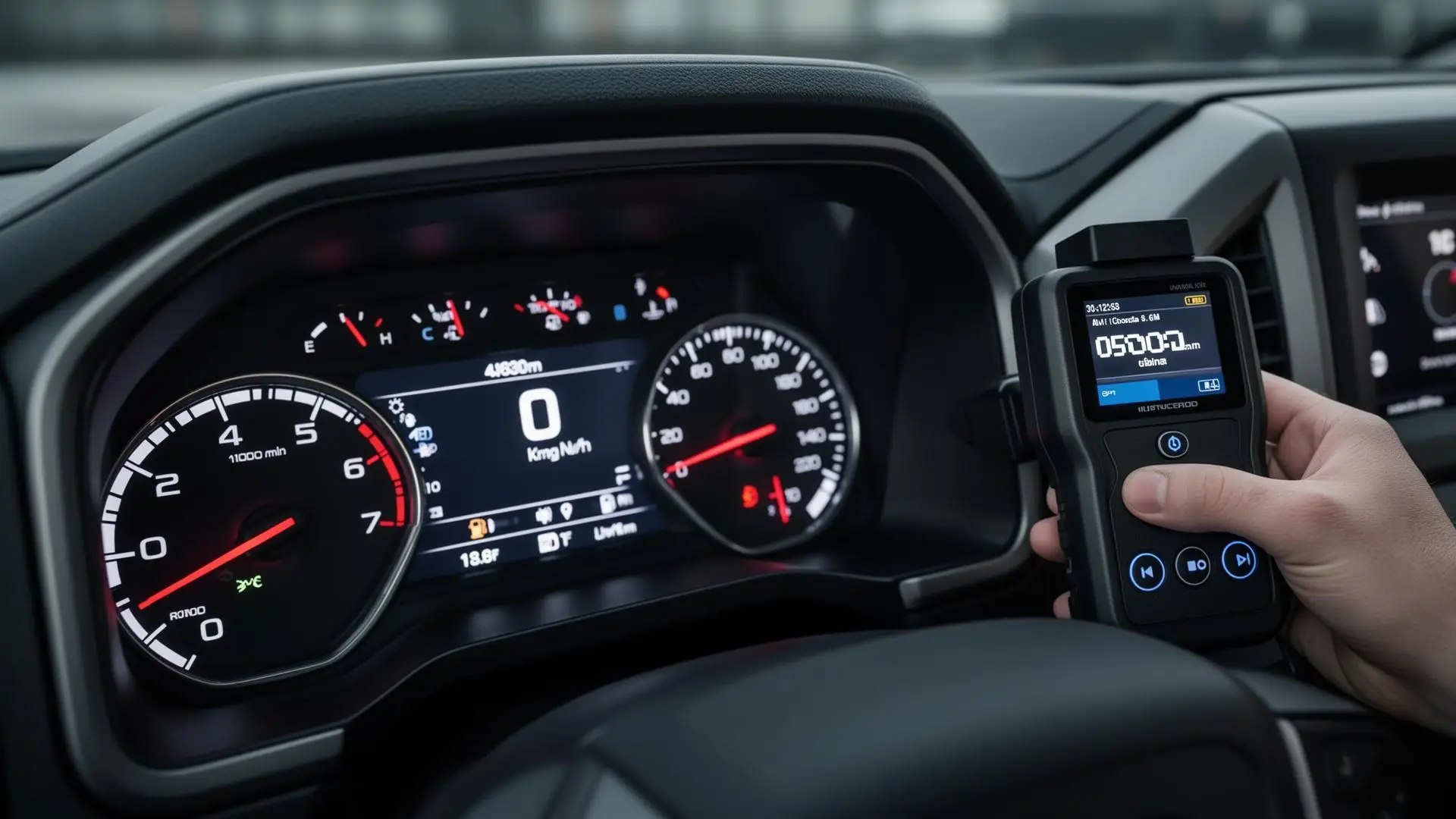
You installed bigger tires. Your truck looks incredible. But now your speedometer says 65 mph when you're actually doing 72, your odometer is racking up fewer miles than you're driving, and your transmission shifts at weird times.
Your speedometer is lying to you, and it's affecting more than just your speed reading.
Here's everything you need to know about why bigger tires throw off your speedometer, what systems are affected, and how to fix it with the right calibration method for your vehicle.
Why Bigger Tires Affect Your Speedometer
Your speedometer calculates speed based on how many times your wheels rotate per mile. The vehicle's computer is programmed for your stock tire diameter, it assumes a certain number of rotations equals a certain distance.
When you install larger tires:
- Each rotation covers more ground
- Fewer rotations happen per mile
- The speedometer thinks you're going slower than you are
- The odometer records fewer miles than you actually travel
The Math: How Far Off Is Your Speedometer?
Formula: ((New Tire Diameter ÷ Stock Tire Diameter) - 1) × 100 = % Error
| Tire Change | % Error | Indicated 70 mph = |
|---|---|---|
| 31" → 33" | +6.5% | 74.5 mph actual |
| 32" → 35" | +9.4% | 76.6 mph actual |
| 32" → 37" | +15.6% | 80.9 mph actual |
| 33" → 40" | +21.2% | 84.8 mph actual |
It's Not Just Speed
Systems Affected by Wrong Tire Size
- Speedometer/Odometer: Reads slow, logs fewer miles
- Transmission shift points: Shifts at wrong speeds, hunts for gears
- ABS: May activate incorrectly or too early
- Traction control: Can intervene when not needed
- Stability control: Calculations based on wrong wheel speeds
- Cruise control: Maintains wrong actual speed
- Fuel economy display: MPG calculations are inaccurate
- Tire pressure monitoring: May trigger false warnings
Calibration Options Compared
There are three main ways to correct your speedometer: performance tuners, inline calibrators, and dealer reflash. Here's how they compare:
Option 1: Performance Tuner/Programmer
Performance tuners like SCT, Superchips, Bully Dog, and DiabloSport plug into your OBD-II port and reflash your ECU with new calibration data.
| Pros | Cons |
|---|---|
|
|
Popular Tuner Options by Brand
| Brand | Best For | Price Range |
|---|---|---|
| SCT X4 / BDX | Ford trucks (F-150, Super Duty) | $350, $450 |
| Superchips Flashpaq | GM trucks, Jeeps | $300, $400 |
| DiabloSport Trinity | RAM trucks, Jeeps | $400, $500 |
| Bully Dog GT | Diesel trucks | $350, $500 |
| Tazer JL/JT | Jeep JL Wrangler, Gladiator | $350, $450 |
Best Value Pick
Option 2: Inline Speedometer Calibrator
Inline calibrators like the Yellow Box, SpeedoHealer, or Dakota Digital SGI-5E intercept the speed signal and modify it before it reaches your ECU.
| Pros | Cons |
|---|---|
|
|
Popular Inline Calibrators
| Product | Features | Price |
|---|---|---|
| Yellow Box | Simple, reliable, wide vehicle compatibility | $100, $130 |
| SpeedoHealer V4 | Precise calibration, easy programming | $130, $160 |
| Dakota Digital SGI-5E | Works with electronic and cable speedos | $100, $140 |
When Calibrators Fall Short
Option 3: Dealer Reflash
Some dealerships can reprogram your ECU with correct tire size information using factory tools.
| Pros | Cons |
|---|---|
|
|
Which Option Should You Choose?
Get a Tuner If:
- You want performance gains beyond just speedometer correction
- You have a modern truck (2015+) with CAN bus systems
- You plan to change tire sizes again in the future
- You want to adjust shift points, throttle response, or other parameters
- Budget isn't the primary concern
Get an Inline Calibrator If:
- You only need speedometer/odometer correction
- You have an older vehicle (pre-2015) with simpler electronics
- Warranty protection is critical
- You're on a tight budget
- You want to transfer it to another vehicle later
Ask for Dealer Reflash If:
- Your tire size is within factory-offered options
- You need 100% warranty protection
- Your dealer is modification-friendly
- You don't want any aftermarket devices
How to Calculate Your Correction Factor
Most calibration devices need you to enter a correction percentage or your old/new tire diameters. Here's how to calculate:
Step 1: Find Your Tire Diameters
Use a tire size calculator or measure actual diameter. For example:
- Stock 275/65R18 = ~32.1" diameter
- New 35x12.50R17 = ~35.0" diameter
Step 2: Calculate the Ratio
New ÷ Old = Correction Ratio
35.0 ÷ 32.1 = 1.090 (or 109%)
Step 3: Enter Into Device
Some devices want the percentage increase (9%), some want the ratio (1.09 or 109%), and some let you enter tire sizes directly. Check your device's manual.
Measure Actual Diameter
Installation Tips
For Tuners
- Read all instructions before starting
- Ensure battery is fully charged (flashing takes 10-20 minutes)
- Don't start the vehicle during the flash process
- Save your stock tune as backup first
- Disconnect any aftermarket electronics that might interfere
For Inline Calibrators
- Locate the vehicle speed sensor (VSS) signal wire
- Use proper wire splicing techniques (solder or quality connectors)
- Mount the calibrator in a protected, accessible location
- Test drive and verify accuracy with GPS
- Secure all wiring away from heat sources and moving parts
Verifying Your Calibration
After calibrating, verify accuracy:
- GPS speedometer app: Compare indicated speed to GPS speed
- Mile markers: Reset trip odometer and drive exactly between highway mile markers
- Radar speed signs: Those "Your Speed" signs are surprisingly accurate
Aim for within 1-2% accuracy. Perfect calibration is difficult due to tire wear, inflation, and load variations.
The Bottom Line
Don't ignore speedometer calibration after installing bigger tires. Beyond the obvious speeding ticket risk, uncorrected speed data affects dozens of vehicle systems and can cause real driveability issues.
- Best overall solution: Performance tuner ($350, $500)
- Budget-friendly: Inline calibrator ($100, $150)
- Warranty-safe: Dealer reflash ($50, $200)
Match your solution to your vehicle age, budget, and whether you want additional performance benefits. Either way, get it done, your speedometer, transmission, and driving record will thank you.