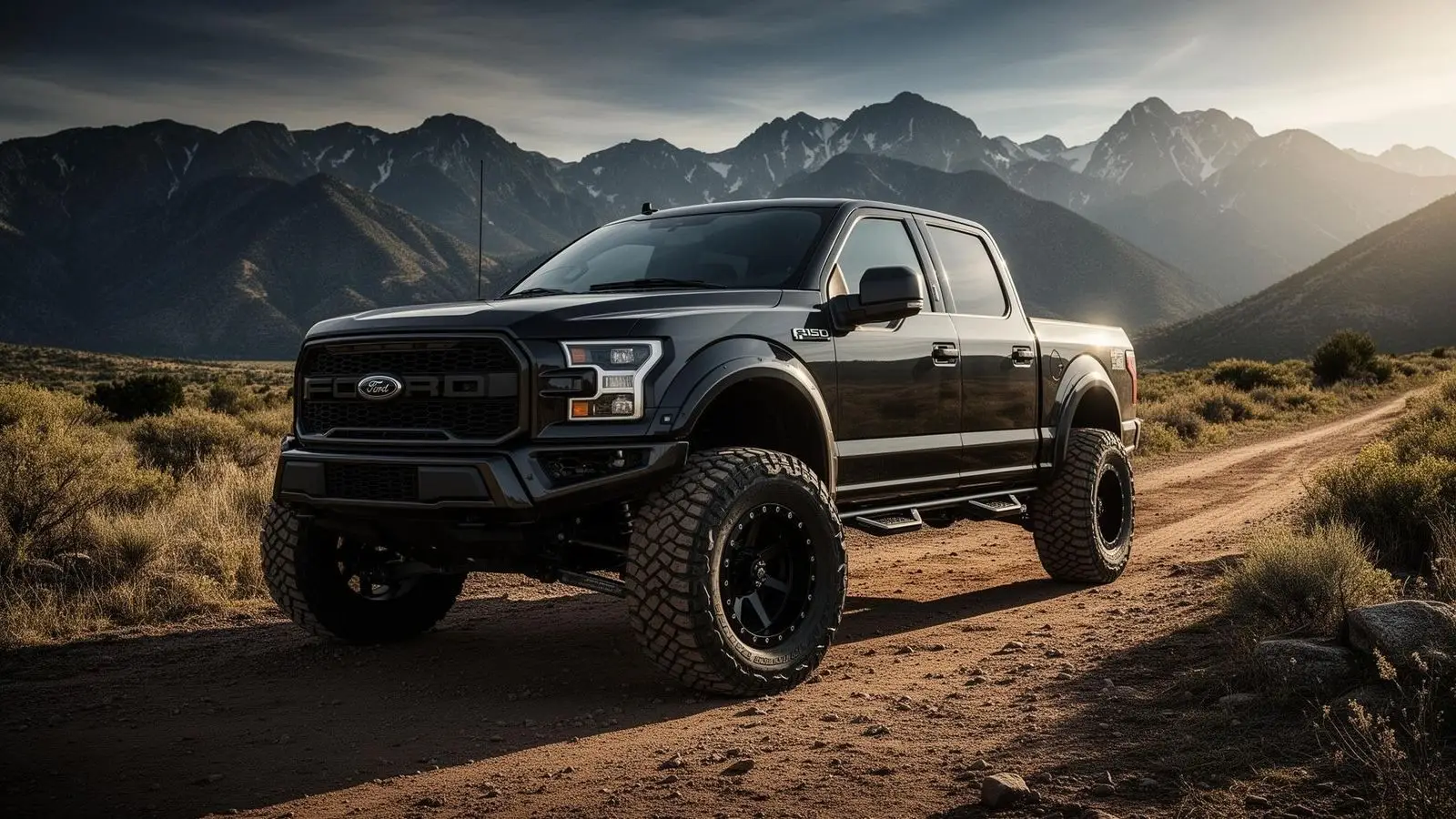
The Ford F-150 is the best-selling truck in America for a reason. It's capable, comfortable, and ready for upgrades. If you're looking to step up to 35-inch tires, you're making a solid choice for improved ground clearance and trail capability without going overboard.
But fitting 35s on an F-150 isn't as simple as bolting them on. Depending on your generation, trim level, and goals, you may need a leveling kit, new wheels, fender trimming, or regearing. This guide covers everything you need to know for a clean, functional 35-inch setup.
Generation Matters: 12th, 13th, and 14th Gen F-150s
Fitment requirements vary by generation. Here's the breakdown:
| Generation | Years | Stock Tire | Lift Needed for 35s |
|---|---|---|---|
| 12th Gen | 2009-2014 | 275/55R20 (31.9") | 2-3" minimum |
| 13th Gen | 2015-2020 | 275/55R20 (31.9") | 2" level or 3" lift |
| 14th Gen | 2021+ | 275/60R20 (33") | 2" level minimum |
The 14th-generation F-150s came with larger factory tires on certain trims, making the jump to 35s less dramatic. The Tremor package even comes with 33-inch tires from the factory.
Trim-Specific Considerations
Not all F-150s are created equal. Your trim level determines suspension geometry, fender design, and available clearance:
XL, XLT, and Lariat (Standard Suspension)
- Most common configuration for 35s builds
- Requires 2-inch leveling kit minimum
- May need fender liner trimming or crash bar modification
- Works well with 18x9 or 20x9 wheels at -12 to -24mm offset
FX4 Package
- Slightly stiffer suspension with off-road tuning
- Factory skid plates add protection
- Still needs leveling for 35s
- Rancho shocks can be reused or upgraded
Tremor
- Best factory starting point for 35s
- Comes with 33-inch tires and lifted suspension
- 35s may fit with minor modifications
- Trail Control and electronic locking rear diff included
Tremor Owners Take Note
Raptor
- Runs 35s from the factory on certain years
- Wider track and flared fenders designed for big tires
- Different suspension geometry than standard F-150
- 37s possible with modifications
Lift Options for 35s
You have several paths to clear 35-inch tires on your F-150:
Leveling Kit (2-2.5 inches)
The most common and affordable option. A front leveling kit raises the front end to match the factory rear rake, creating enough clearance for 35s in most cases.
- Cost: $50-300 for parts
- Install time: 2-4 hours
- Pros: Affordable, maintains ride quality, easy reversal
- Cons: No additional travel, may still need trimming
Strut Spacers vs. Coil Spring Kits
Suspension Lift (3-4 inches)
If you want more ground clearance or plan to use your truck off-road, a full suspension lift provides additional travel and flex:
- Cost: $800-2,500+ for parts
- Install time: 6-10 hours
- Pros: More clearance, better off-road performance, room for 37s
- Cons: Higher cost, affects ride quality, may need alignment work
Recommended Lift Brands
| Brand | Type | Price Range | Notes |
|---|---|---|---|
| Rough Country | Leveling/Lift | $100-1,200 | Budget-friendly, widely available |
| BDS Suspension | Lift | $1,200-3,000 | Quality mid-tier option |
| Icon Vehicle Dynamics | Lift/Coilovers | $2,000-5,000 | Premium performance |
| ReadyLift | Leveling | $100-500 | Solid mid-tier leveling |
| Fox | Shocks/Coilovers | $1,500-4,000 | Adjustable performance shocks |
Wheel Specs for 35s
Your wheel choice affects fitment as much as lift height. If you're shopping around, our guide to the best off-road wheel brands covers the options worth your money. Here are the key specifications:
Wheel Size
- 17-inch: Best for off-road (more tire sidewall, lighter)
- 18-inch: Good balance of looks and function
- 20-inch: Most popular, maintains truck aesthetics
- 22-inch: Possible but limits tire selection and adds weight
Width and Offset
| Wheel Size | Offset Range | Fitment Style |
|---|---|---|
| 17x9 | -12 to -24mm | Mild poke to flush |
| 18x9 | -12 to -24mm | Popular choice, good options |
| 20x9 | 0 to -24mm | Street-oriented look |
| 20x10 | -18 to -44mm | Aggressive stance |
Avoid Extreme Offsets
F-150 Bolt Pattern
All modern F-150s (2004+) use a 6x135mm bolt pattern with a hub bore of 87.1mm. Make sure your wheels are hub-centric or use proper hub rings to prevent vibration.
Tire Selection for 35s
The most common 35-inch sizes for F-150s:
- 35x12.50R17: Best for off-road, more sidewall protection
- 35x12.50R18: Good balance of off-road capability and street manners
- 35x12.50R20: Most common choice, wide tire selection
- 315/70R17: Metric equivalent, roughly 34.4 inches
Popular Tire Choices
| Tire | Type | Best For |
|---|---|---|
| BFGoodrich KO2 | All-Terrain | Daily driving with trail capability |
| Nitto Ridge Grappler | Hybrid | Balance of on-road comfort and off-road grip |
| Toyo Open Country M/T | Mud-Terrain | Serious off-road use |
| Falken Wildpeak AT3W | All-Terrain | Budget-friendly all-around performer |
| Cooper Discoverer STT Pro | Mud-Terrain | Aggressive looks with decent road manners |
Do You Need to Regear?
The F-150's 10-speed automatic transmission helps mask the effects of larger tires, but regearing is still worth considering depending on your rear axle ratio:
| Stock Gear | With 35s | Recommendation |
|---|---|---|
| 3.31 | Sluggish, poor towing | Regear to 4.10 or 4.56 |
| 3.55 | Acceptable for light use | Consider 4.10 for towing |
| 3.73 | Good daily performance | Optional, 4.10 for heavy use |
| 4.10 | Excellent | No regear needed |
Check Your Axle Tag
Regear Cost Estimate
- Parts: $400-800 per axle (ring and pinion)
- Labor: $400-600 per axle
- Total for front and rear: $1,600-2,800
If you're doing a full build, some shops offer package deals that include regearing with lift installation.
Additional Modifications You May Need
Fender Liner and Crash Bar Trimming
Even with a leveling kit, you may experience rubbing at full lock or during suspension compression. Common areas to address:
- Front fender liners: Trim the front edge for turning clearance
- Crash bars: Some F-150s have crash bars behind the bumper that contact the tire
- Mud flaps: May need removal or relocation
Speedometer Calibration
Going from 32-inch stock tires to 35s means your speedometer will read about 9% slow. Our tire diameter calculator shows the exact difference for your size. Options to fix this:
- Tuner: Devices like the SCT X4 or HP Tuners can recalibrate the speedometer
- Dealer programming: Some dealers can adjust this for a fee
- Phone apps: Use GPS-based speedometer as a temporary solution
UCA Upgrade
With lifts over 2.5 inches, you may need upgraded upper control arms (UCAs) to correct ball joint angles and prevent premature wear:
- When needed: Lifts 3 inches or higher
- Benefits: Better alignment, longer component life, improved handling
- Cost: $300-800 for quality aftermarket UCAs
Total Build Cost Estimate
Here's what a complete 35s setup typically costs for an F-150:
| Component | Budget | Mid-Tier | Premium |
|---|---|---|---|
| Leveling/Lift Kit | $100-300 | $500-1,200 | $2,000-4,000 |
| Wheels (4) | $600-1,000 | $1,200-2,000 | $2,500-4,000 |
| Tires (4) | $1,000-1,400 | $1,400-1,800 | $1,800-2,400 |
| Installation | $200-400 | $400-800 | $800-1,500 |
| Regearing (optional) | $1,600-2,000 | $2,000-2,800 | |
| Total | $1,900-3,100 | $5,100-7,800 | $9,100-14,700 |
Common Mistakes to Avoid
Don't Make These Errors
- Skipping alignment: Always get an alignment after lifting your truck
- Wrong offset: Extreme negative offset causes bearing wear and handling issues
- Ignoring speedometer: An uncalibrated speedometer affects odometer accuracy
- Cheap lift kits: Low-quality spacers can crack or cause clunking noises
- No test fit: Always test fit before fully committing to a setup
The Bottom Line
Running 35s on your F-150 is absolutely achievable with the right planning. For most owners, a quality 2-inch leveling kit, 18x9 or 20x9 wheels with -12 to -24mm offset, and a set of 35x12.50 tires will get the job done without major modifications.
If you tow frequently or want better off-road performance, consider regearing and upgrading to a full suspension lift. And always factor in speedometer calibration and alignment for lifted trucks costs when budgeting your build.
The F-150 is a versatile platform that handles 35-inch tires exceptionally well. With the right setup, you'll gain ground clearance, improved off-road capability, and a stance that stands out from the sea of stock trucks.