Why Offset and Backspacing Matter
Offset and backspacing determine where your wheels sit relative to your suspension and fenders. Understanding these measurements is crucial for proper fitment, handling, and avoiding rubbing issues.
What Is Wheel Offset?
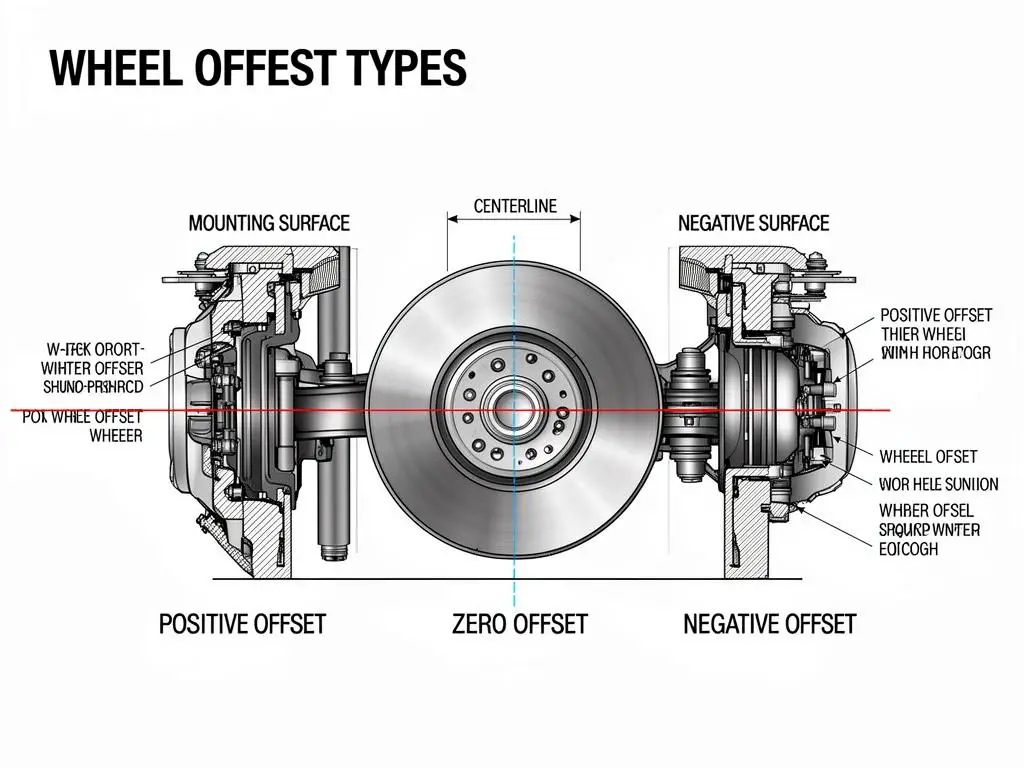
Offset is the distance from the wheel's mounting surface to its centerline, measured in millimeters. It determines how far in or out your wheels sit.
Offset Types
- Positive offset (+): Mounting surface is toward the outside of the wheel. Common on stock trucks. Wheels sit closer to suspension.
- Zero offset (0): Mounting surface is at the wheel's centerline.
- Negative offset (-): Mounting surface is toward the inside of the wheel. Wheels stick out further from the vehicle.
Typical Stock Offsets
- Full-size trucks: +15 to +44mm
- Jeep Wrangler: 0 to +44mm
- Off-road aftermarket wheels: -44 to +18mm
- Aggressive stance wheels: -44mm to -76mm
What Is Backspacing?
Backspacing is the distance from the back edge of the wheel to the mounting surface, measured in inches. It's an older measurement that's still commonly used, especially in the off-road community.
Backspacing vs. Offset
While offset measures from the centerline, backspacing measures from the back edge. They're related but not interchangeable – you need to know wheel width to convert between them.
Conversion Formula
Backspacing (inches) = (Wheel Width / 2) + (Offset / 25.4)
Example: A 9" wide wheel with +18mm offset: (9 / 2) + (18 / 25.4) = 4.5 + 0.71 = 5.21" backspacing
Effects of Different Offsets
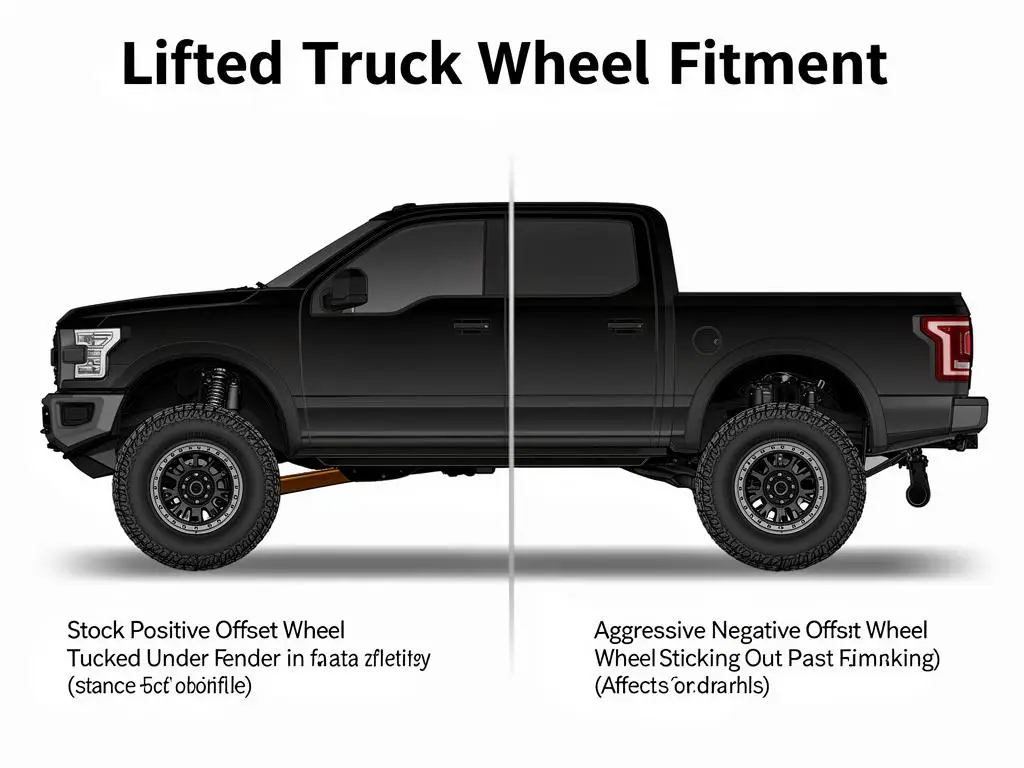
More Negative Offset (Wheels Out)
- Pros: Wider stance, aggressive look, more room for suspension
- Cons: Increased steering effort, more stress on wheel bearings, potential fender rubbing, throws more road debris
More Positive Offset (Wheels In)
- Pros: Better handling characteristics, less bearing stress
- Cons: Potential suspension/brake interference, narrower stance
Choosing the Right Offset
For Stock-Height Trucks
Stay within 15-20mm of stock offset to avoid rubbing and maintain proper handling. Going too far negative causes fender interference; too positive causes suspension interference.
For Lifted Trucks
Lifts allow significantly more negative offset options. Many enthusiasts run -12mm to -44mm offset with 4-6" of lift for an aggressive stance. Premium brands like American Force, Fuel Off-Road, and KG1 Forged offer offsets from -44mm to -76mm specifically designed for this purpose.
For Wide Tires
Wider tires need more clearance. Moving to a more negative offset helps prevent inner fender rubbing, but you may need fender flares for the outer edge.
Running Aggressive Offsets
Considerations for Deep Negative Offset
Aggressive negative offsets (-44mm and beyond) are popular for achieving that commanding stance. Brands like American Force, Fuel Off-Road, KG1 Forged, and Fittipaldi Off Road engineer their wheels specifically for these applications. Here's what to consider:
- Lift requirement: Generally need 4"+ lift for -44mm, 6"+ for more aggressive
- Fender modifications: Fender flares or trimming may be needed
- Wheel bearing upgrades: Consider upgraded bearings for peace of mind
- Steering feel: Slightly heavier steering, especially when aired down
Ignoring Suspension Travel
Wheels that fit at static ride height may rub during compression, turning, or both. Test fitment through full suspension travel before committing.
Forgetting Brake Clearance
Some wheel designs don't clear aftermarket brakes or even stock calipers. Always verify brake clearance, especially with positive offset wheels.
Measuring Your Current Setup
Finding Offset
- Measure total wheel width (in inches)
- Measure backspacing from back edge to mounting surface
- Calculate: Offset (mm) = (Backspacing - Width/2) × 25.4
Finding Backspacing
- Lay wheel face down on a flat surface
- Place a straight edge across the back of the wheel
- Measure from straight edge to mounting surface
Wheel Spacers: A Word of Caution
Wheel spacers effectively reduce backspacing and move wheels outward. While they can solve clearance issues, they:
- Add stress to wheel studs and bearings
- May be illegal in some jurisdictions
- Require high-quality hub-centric spacers for safety
- Are often a bandaid for improper wheel selection
If possible, buy wheels with the correct offset rather than using spacers.
Our Recommendations
- Daily drivers: Stay within 10-15mm of stock offset
- Lifted trucks (4-6"): -12mm to -44mm provides excellent stance
- Aggressive builds (6"+): -44mm to -76mm with proper supporting mods
- Show trucks: Go as aggressive as you want, premium forged wheels handle it
- Trail rigs: Balance clearance with desired stance
Try Our Fitment Calculator
Not sure what offset is right for your setup? Use our interactive calculator to get personalized recommendations based on your vehicle, lift height, and desired stance.