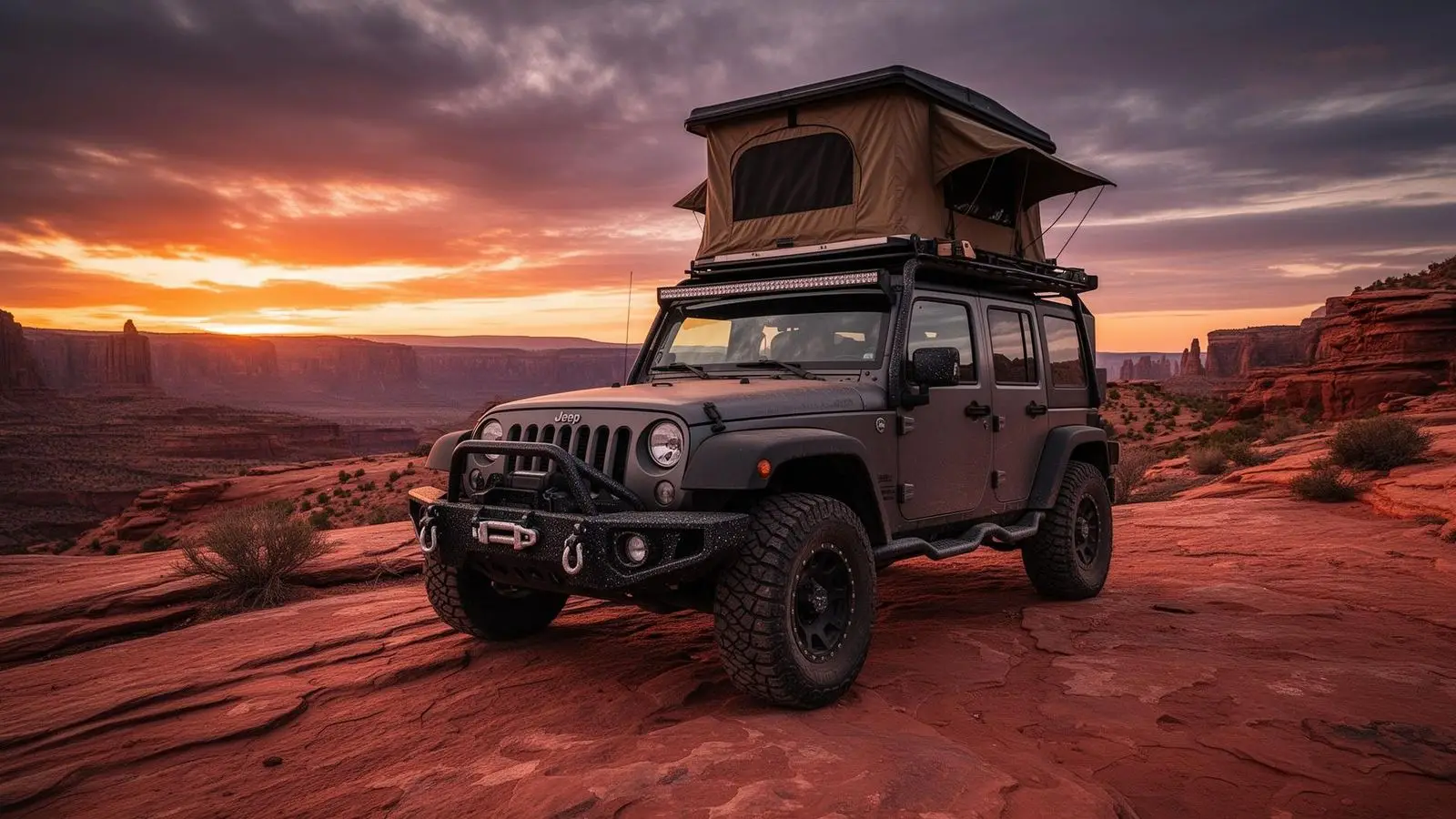
A stock Wrangler Sport will handle more trail than most owners expect, but the factory plastic bumpers, bare rockers, and light-duty roof rails are the first things rocks find. This guide covers what a Body Armor 4x4 armor build includes, what it costs at list price, and what to weigh before you buy.
If you don't have $15K for premium shocks and chromoly everything, a bolt-on armor package you can install in your own garage over a weekend is the realistic starting point.
The Problem: Stock Jeeps Are Compromises
Jeep builds Wranglers for the broadest possible audience. That means plastic bumpers that crack on the first rock, a roof rack that is more decorative than functional, and approach angles that are optimistic at best.
Once you start running technical trails, these are the usual gaps:
- Bumpers: Factory plastic front bumpers crack or spider on rock contact
- Roof rack: Stock rails are barely rated for crossbars, let alone a rooftop tent
- Protection: Without rock rails, your rocker panels take every hit on a technical trail
- Recovery points: Factory tow hooks work, until they don't
Price the same parts from the big-name brands and you'll typically see around $1,200 for a front bumper, $800 for rock rails, and $600 or more for a basic roof rack.
What Body Armor 4x4 Costs
Body Armor 4x4 sells steel bumpers, rails, and racks for roughly half the big-brand price. Owner reviews with trail photos are generally positive on fit and strength; the savings come mostly from the brand name, not from thinner steel.
Here is what a typical armor package looks like at list price:
| Part | Body Armor 4x4 | Big Brand Price | Savings |
|---|---|---|---|
| Front Bumper (with winch plate) | $579 | $1,199 | $620 |
| Rear Bumper (with tire carrier) | $649 | $1,299 | $650 |
| Rock Rails (pair) | $289 | $599 | $310 |
| Roof Rack System | $549 | $899 | $350 |
| Total | $2,066 | $3,996 | $1,930 |
That is nearly $2,000 you can put toward a winch, tires, or more trips to the trail.
The Install: A Weekend With a Helper
Bumpers
The front bumper is 3/16" steel plate in a textured black powder coat. It is heavy, which is the point.
Plan on about 3 hours with a helper. It bolts to factory mounting points, with no drilling or cutting.
The integrated winch plate is rated for up to 12,000 lbs, so you can add a winch later without swapping bumpers again.
The fog light housings accept factory JK/JL lights, and the D-ring mounts are welded rather than bolted on. Losing the factory plastic lip also improves your approach angle.
The rear bumper with tire carrier takes longer, about 4 hours, mostly because the tire carrier hinge tension needs careful adjustment.
The tire carrier uses a heavy-duty spindle with a grease fitting and is designed to swing a 35" spare. Integrated jerry can mounts let you carry extra fuel or water outside the cabin.
Protection and Storage
The rock rails are 2" x .120 wall steel tubing with integrated body mounts. They bolt to the frame, not the body, so they can support the Jeep's weight if you come down hard on a rock.
Installation is straightforward: two bolts per side, plus some minor trim removal.
When you shop roof racks, most options fall into one of three camps:
- Flimsy basket-style racks that rattle at highway speeds
- Overbuilt expedition racks that cost as much as a used car
- "Universal" racks that require sketchy adapter brackets
The Body Armor 4x4 rack bolts to factory hardtop mounting points with no drilling, and the modular design lets you add crossbars, a basket, or a full platform depending on the trip.
A common layout:
- Front crossbar: Recovery boards and MaxTrax mounts
- Rear crossbar: Rooftop tent
- Side rails: Shovel and hi-lift jack mounts
The rack is rated for 350 lbs dynamic load (moving) and 700 lbs static (parked). Add up your tent, gear, and sleepers and check them against both numbers, and against your hardtop's own rating.
Where the Armor Matters on the Trail
On slickrock trails like Moab's Fins & Things, a better approach angle lets you take lines that would otherwise need careful tire placement, and frame-mounted rock rails take the hits your rockers would.
On ledgy climbs like the Waterfall on Poison Spider Mesa, a high-clearance steel bumper scrapes and slides where a plastic one catches, which reduces the "hang and drop" that stock bumpers force.
On multi-day routes like the White Rim Road, a rated rack lets you carry a rooftop tent, water, recovery gear, and a camp kitchen outside the cabin. An accessible spare on the swing-out carrier is faster to reach than one buried under gear.
Trade-offs to Weigh
The Good
- Value. Steel construction and proven designs for about half what the boutique brands charge.
- Bolt-on installation. These parts use factory mounting points. If you can turn a wrench and follow a video, you can install them.
- Finish. The textured black powder coat is durable and matches across the bumpers and rails.
The "Could Be Better"
- Weight. A steel front bumper typically adds 75 to 100 lbs to the nose. If you run a 4-cylinder or care about MPG, factor that in.
- Tire carrier latch. Swing-out carrier latches can loosen on dusty, washboard trails. Check and adjust yours periodically.
- Powder coat thickness. The coating is durable, but deep scratches will show bare metal. Keep touch-up paint on hand.
The Verdict
Body Armor 4x4 is not the only option. If you have $10K for bumpers and you're building a show truck, the high-end brands are there.
But if you want to:
- Actually use your Jeep off-road
- Not worry about scraping a bumper
- Carry real gear on real trips
- Keep enough money for gas to get to the trailhead
Then Body Armor 4x4 belongs on your short list.
Parts cost at list price: $2,066, plus about a weekend of labor if you install it yourself
Your Turn: Build Your Rig
- Start with protection. Rock rails and bumpers should be your first mods.
- Plan your rack system. Think about what you'll actually carry (tent? kayaks? fuel?).
- Install yourself. Save the labor money for your first big trip.
Disclosure: 4x4Playground participates in affiliate programs. This article contains affiliate links to Body Armor 4x4 products. Recommendations are based on published specs, manufacturer data and owner reports. Affiliate links never change a verdict.