OVERLANDING

    Joshua Tree in a Jeep JL: An Overlanding Route Guide

    A route guide to overlanding Joshua Tree in a Jeep JL: Geology Tour Road, Black Eagle Mine Road and Berdoo Canyon, air-down pressures, where you can and cannot camp, fire rules, and official sources.

    Quick Answer: Joshua Tree works well in a Jeep Wrangler JL on 33 to 35-inch all-terrain or mud-terrain tires aired down to 12 to 15 PSI. Start with the 18-mile Geology Tour Road, then consider Berdoo Canyon or Black Eagle Mine Road for more remote driving. Inside the park you camp only in designated campgrounds; dispersed camping is on the surrounding BLM land. October through April is the best season to go.

    May 3, 2026
    8 min read
    Save to AIChatGPTClaude
    Joshua Tree in a Jeep JL: An Overlanding Route Guide

    Joshua Tree National Park is one of the most accessible desert overlanding areas in Southern California. You don't need a heavily built rig, but you do need to know which roads suit your vehicle and where camping is allowed.

    Setting Up Your JL

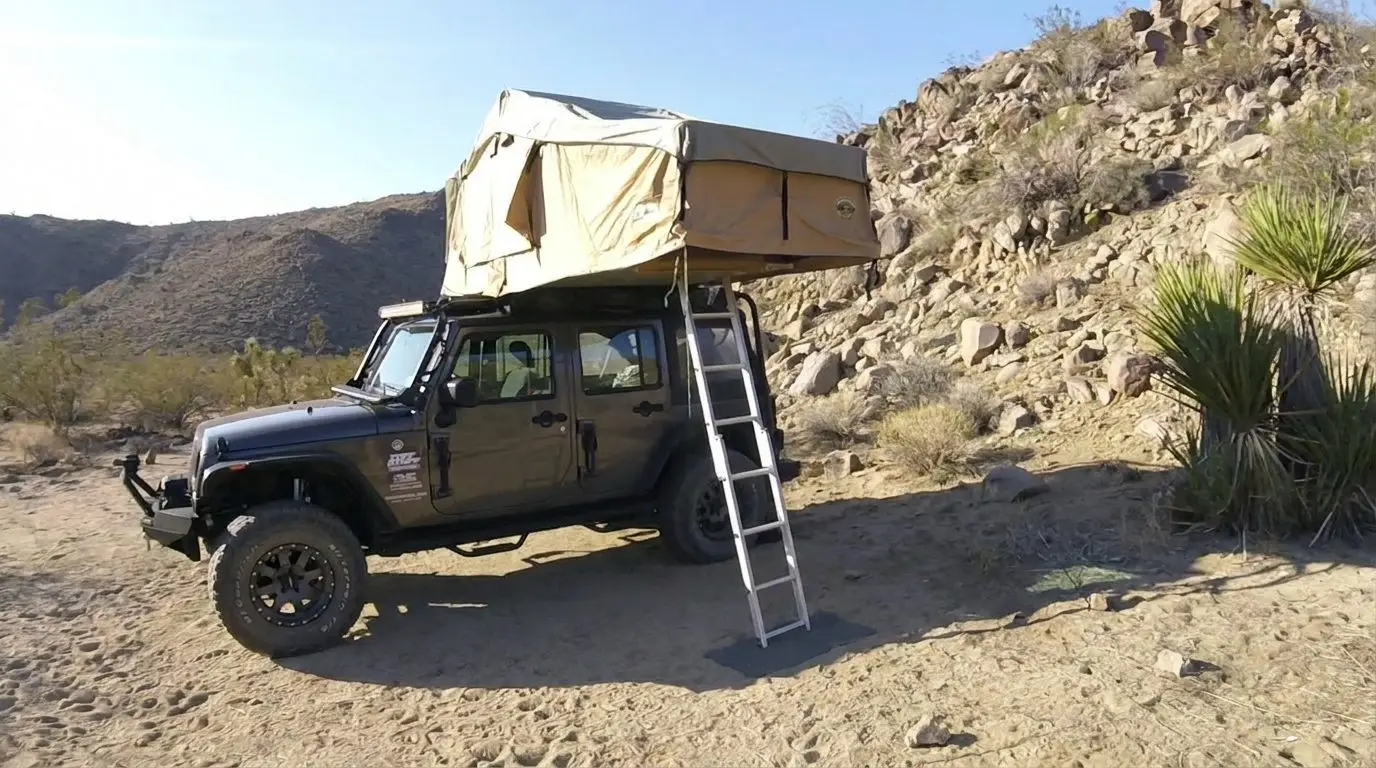
    A stock Wrangler handles the park's maintained dirt roads in dry conditions. For sandy washes and the rougher backcountry roads, a JL on a modest lift with 33 to 35-inch tires gives you more sidewall to air down and more clearance over rock. An example setup is Fittipaldi Offroad FBF803 wheels with Atturo Trail Blade M/T tires in 35 inches.

    Joshua Tree mixes three surfaces: sandy washes where you need flotation, granite slabs where you need bite, and loose rocky two-tracks where sidewalls take contact. A tire that handles all three at reduced pressure is the right choice here.

    Air-Down Range

    Air down before you leave the pavement. For a JL on 33 to 35-inch tires, 12 to 15 PSI is a common starting range for sand and rock; go toward the higher end if you run a lot of rocky sections or carry a heavy load. Bring a compressor and air back up before you return to the highway.

    Routes

    Geology Tour Road

    This 18-mile dirt road is the park's best-known backcountry drive, passing eroded rock formations, sandy washes, and dry lake beds. The National Park Service notes that the road becomes rougher and sandier past the early stops and recommends high-clearance four-wheel drive for the rest of the loop. Check current conditions with the park before you go.

    Berdoo Canyon Road

    Berdoo Canyon connects the park to the Coachella Valley and is rated by the park as a high-clearance, four-wheel-drive road. Washouts are common after storms, so confirm it is open.

    Black Eagle Mine Road

    Black Eagle Mine Road runs from near Cottonwood toward the park's southern boundary, where it continues onto BLM land. It is a rough, remote road; four-wheel drive and appropriate tires are recommended, and you should expect no services.

    Where You Can Camp

    Inside the national park, car camping is allowed only in designated campgrounds. Roadside camping along park roads is not permitted, and backcountry camping inside the park requires registering and hiking away from roads.

    Dispersed camping is available on the Bureau of Land Management land that borders the park, including areas south of the park along Black Eagle Mine Road. On BLM land, standard dispersed camping rules apply: use existing sites, stay no more than 14 days, and pack out all trash and human waste where required.

    If you want a fast camp setup at the end of the day, a hard-shell rooftop tent such as the Tuff Stuff Overland Alpha II deploys in under two minutes per the manufacturer and gets you off the desert floor. Desert nights in shoulder season often drop near freezing, so bring a sleep system rated for it.

    Fire Rules

    In Joshua Tree National Park, fires are allowed only in the fire grates at campgrounds and picnic areas, and gathering wood or vegetation is prohibited. Bring your own firewood. On BLM land, seasonal fire restrictions are common; check the current order from the BLM field office before you light anything.

    When to Go

    October through April is the best window. Spring can bring wildflowers; fall brings cooler temperatures and smaller crowds. Summer temperatures regularly exceed 100 degrees Fahrenheit at lower elevations and are dangerous for extended desert camping without shade.

    Before You Go

    • Bring more water than you think you need, at least a gallon per person per day.
    • Expect no cell service on most backcountry roads, and tell someone your route.
    • Stay on designated roads. Driving off established roads is prohibited in the park and damages fragile desert soil.
    • Sunset comes fast and temperatures drop quickly after dark. Reach camp with daylight to spare.

    Sources

    Frequently Asked Questions

    Is Joshua Tree good for overlanding?

    Yes. Joshua Tree National Park and the surrounding BLM land offer some of the most accessible and rewarding overlanding terrain in Southern California. Geology Tour Road is an 18-mile dirt road inside the park. Black Eagle Mine Road and Berdoo Canyon Road on the park boundaries offer more remote primitive camping with striking desert scenery. Most routes are suitable for a stock-height Wrangler or capable SUV aired down appropriately.

    Can you camp off-road at Joshua Tree?

    Primitive dispersed camping is available on BLM land surrounding the park. Inside the national park itself, camping is restricted to designated campgrounds. The BLM land adjacent to the park's north and east boundaries offers genuine dispersed camping, no facilities, no fees in most areas, and serious solitude if you drive far enough off the main roads.

    What tires should I run at Joshua Tree?

    For mixed desert terrain (sandy washes, granite slabs, rocky two-tracks) an all-terrain or mild mud-terrain tire in the 33 to 35 inch range is appropriate for a Jeep JL or similar platform. Airing down to 12 to 15 PSI for off-road sections makes a meaningful difference. A 35-inch mud-terrain such as the Atturo Trail Blade M/T fits a JL on a modest lift and covers the full terrain mix.

    Is a rooftop tent worth it at Joshua Tree?

    For overlanding trips of two or more nights, a rooftop tent is one of the highest-value upgrades you can make. Desert ground camping involves fine grit, scorpions, and temperature swings that a ground tent manages less comfortably. A hard shell RTT like the Tuff Stuff Alpha II deploys in under two minutes, keeps you elevated off the desert floor, and the hard shell construction handles desert wind significantly better than a soft shell.

    What is the best season for overlanding at Joshua Tree?

    October through April is the optimal window. Spring brings wildflowers and comfortable temperatures. Fall offers golden light, cooler temperatures, and smaller crowds. Summer temperatures regularly exceed 100 degrees Fahrenheit in the lower elevations and are genuinely dangerous for extended desert camping without shade infrastructure.

    Do you need 4WD for Joshua Tree overlanding?

    For Geology Tour Road and most maintained dirt roads inside the park, 4WD is not strictly required in dry conditions with a capable vehicle. For dispersed camping on BLM land, remote canyon roads, and any route with soft sand washes, 4WD with low-range and appropriate tires is strongly recommended. High-centered vehicles are a regular occurrence for rigs that overestimate what two-wheel drive handles in soft desert terrain.

    What is the Tuff Stuff HALO Bundle?

    The Tuff Stuff HALO Bundle pairs the Alpha II Hard Shell Rooftop Tent with the Halo Solar Light, a 700-lumen, 360-degree freestanding camp light with a built-in speaker that charges via solar. It is designed as a complete camp shelter and lighting system for overlanders who want fast setup without sacrificing quality. The Alpha II deploys in under two minutes; the Halo charges during the drive and is ready when you arrive at camp.