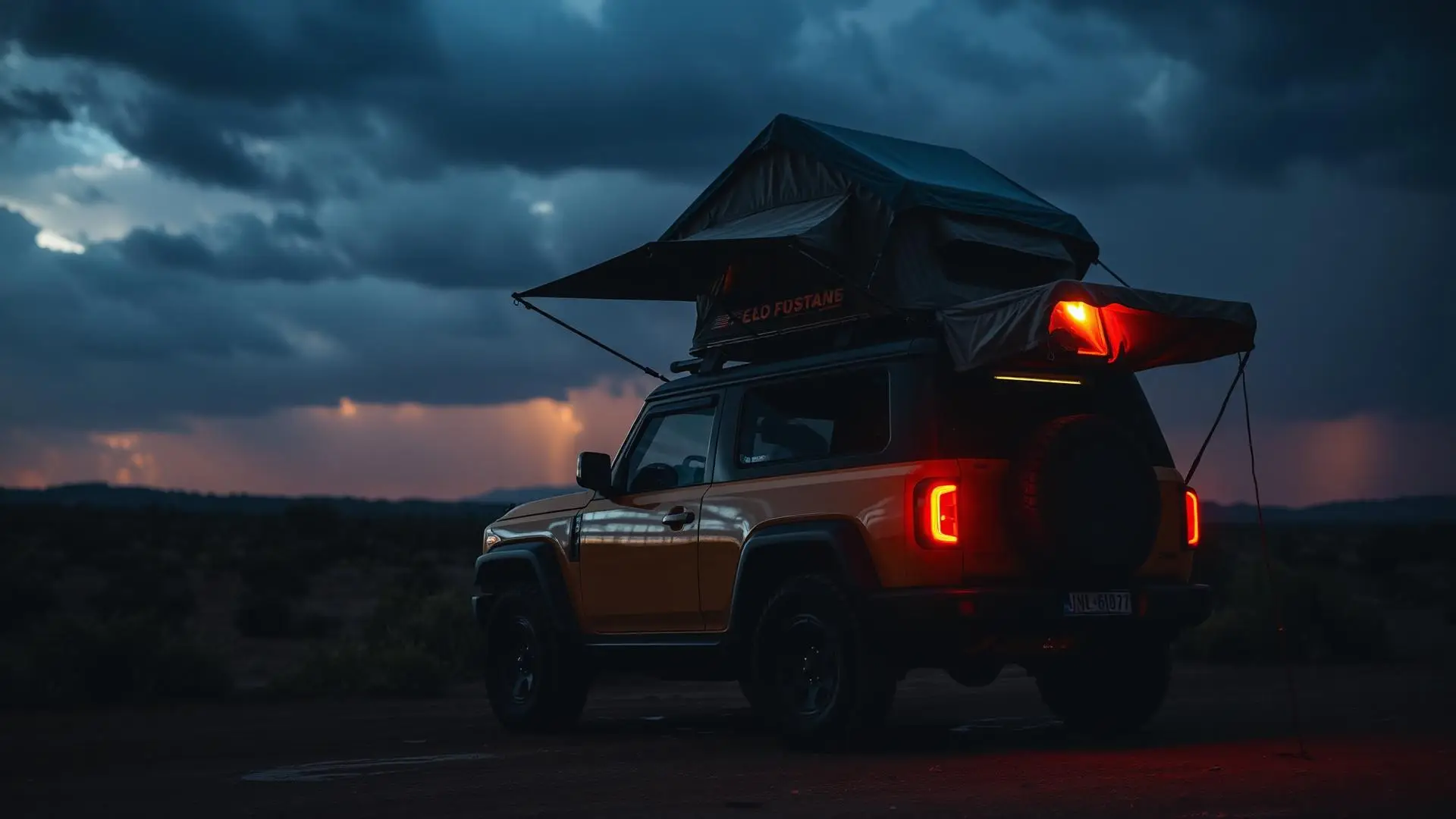
The forecast said the rain was holding until midnight. The first drops hit the windshield at 7:42.
That gap, between what the weather app promised and what the sky actually did, is where overlanding gear earns its money. Not in the drone shot. Not in the tailgate-coffee photo. In the twenty minutes when the temperature drops eleven degrees, the good camp spot is already taken, and you have to decide whether tonight is going to be miserable or fine.
A Ford Bronco is a fun place to test that question, because it is genuinely capable and genuinely limited at the same time. This is a look at a four-piece Tuff Stuff Overland build for the Bronco, soft-shell tent, 270 awning, Ascent wheels, and the bed rack, and where each piece actually helps versus where it just adds weight.
How a Ford Bronco Ends Up Here
A Bronco is a strange thing to build for overlanding, and anyone who tells you otherwise is selling something.
Off the showroom floor it is more capable than trucks costing twice as much. Sasquatch package, locking diffs, a disconnecting sway bar, an approach angle that embarrasses the competition. But it is also an SUV with a removable composite hardtop, and that hardtop has firm opinions about weight. Ford rates the factory Bronco roof at 110 pounds dynamic, meaning while you drive, and 450 pounds static, meaning parked at camp with people inside.
Those two numbers govern almost every decision you make about sleeping on top of this vehicle, and most build articles skip right past them. They are the whole reason this build looks the way it does. Tuff Stuff Overland is a reasonable place to start because the company runs direct-to-consumer, which cuts the retail markup and leaves room in the budget to get all four decisions right instead of just one or two.
The Roof: Why the Soft Shell Is the Right Call
Everybody wants the Tuff Stuff Alpha. It is the hard-shell hybrid that opens in under two minutes, sits low and aerodynamic on the highway, and lets you leave bedding inside when it folds down. It is the one in the photos.
It is also the wrong tent for a stock-roof Bronco, and the reason is that 110-pound dynamic number. A hard shell like the Alpha weighs well north of a hundred pounds empty, which puts you over the dynamic limit the moment you leave the driveway. You can fix that by bolting on an aftermarket rack rated for the load, and plenty of Bronco owners do. But if you are not ready to spend rack money on top of tent money on a first build, the honest move is the soft-shell Tuff Stuff Trailhead.
The Trailhead is the entry tent. Quick setup, mosquito-net windows, bolts to standard crossbars, and light enough to keep a loaded roof sane on the highway and well under the static limit at camp. It does not get the most likes. It gets you off the wet ground and dry before you are soaked, which is the entire job of a rooftop tent on the one night it matters.
The takeaway is the thing the whole brand is built on: the best tent is not the most impressive one. It is the one that matches what your roof can actually carry.
The Awning: Eighty Square Feet of Changing the Subject
A tent solves where you sleep. It does nothing for the four hours between arriving and sleeping, which in bad weather is where a trip is won or lost.
The Tuff Stuff 270 degree compact awning covers that gap. The spec sheet claims 80 square feet of shade and a roughly 30-second deploy, and both hold up in practice. It wraps a quarter-circle around one rear corner, covering the back door and the side at once, which is exactly the geometry you want for cooking and staging gear without any of it getting rained on. C-channel aluminum arms keep it to 53 pounds, and four telescoping poles store inside the arms so there is no bag of loose parts to lose.
At camp it becomes the living room. Stove under it, chair under it, wet jacket on the arm, rain rolling off the edge in a curtain. Eighty square feet does not sound like much until it is the only dry eighty square feet for a mile.
One honest note. A 270 awning mounts to a rack or crossbar, not bare sheet metal, and it hangs 53 pounds of cantilevered aluminum off one side. On a Bronco that means a mounting solution that can take it, and the same roof-load math applies. The awning is excellent. It is not weightless, and it is not a stick-on.
The Wheels: Where the Build Stops Being Cosmetic
You can tell a lot about a build by where the owner spent money they did not have to. Wheels are the tell.
Factory Bronco wheels are fine. They are also built to a budget and a showroom, not to the repeated lateral abuse of a loaded rig aired down to single digits on an off-camber climb. The Tuff Stuff Ascent, a 17x8.5, exists for that use case.
The spec that matters is the construction: A356 aluminum with a T6 heat treatment, the aerospace-derived process that turns a decent casting into a genuinely strong one, with a load rating up to 2,500 pounds. For an overlander that number is headroom, not bragging. A loaded Bronco weighs more than the one Ford put on the scale, and every trail impact loads the wheel harder than the brochure imagined. The 17-inch diameter is deliberate, since it allows a taller tire sidewall, and sidewall is what protects the wheel and lets you air down without folding the tire off the bead. The Ascent is TPMS compatible and carries a lifetime structural warranty, which is the kind of thing a company only offers after it has done the testing.
Wheels are not a weather solution. But the loose, wet climb to the spot happens on aired-down tires wrapped around wheels built to take it. The wheels are the part of the build you stop thinking about, which is the highest compliment you can pay one.
The Bed Rack: The Truck Owner's Path
The Bronco and a mid-size truck solve the same problem two different ways, and comparing them is the clearest lesson in matching a build to its platform.
The Bronco sleeps on its roof because that is the only flat real estate it has, and it pays for that with the 110-pound dynamic limit. A truck like the Gladiator, Tacoma, or F-150 sleeps on the Tuff Stuff adjustable truck bed rack, and the numbers explain why that is a different world: 800 pounds static and 650 pounds dynamic. Read that next to the Bronco's 110 dynamic. That is the difference between agonizing over whether you can run a hard shell and simply bolting on whatever tent you want.
The bed rack is a powder-coated steel system that installs over the bed rails with no-drill pinch plates, stands 14.5 inches tall, and adjusts out to 68 inches wide on a sliding center rail. That range fits everything from a full-size F-350 down to a mid-size Tacoma, and it comes in a 40-inch two-bar or a 51-inch three-bar version for larger tents. The bed underneath stays usable for the recovery kit, the fridge, and the firewood.
So which is right? Neither, and that is the point. If you have a bed, the rack is the stronger, simpler, higher-capacity answer, and it keeps your roofline low. If you have a Bronco, you build smart around the roof you have and accept that soft-shell-on-stock or aftermarket-rack-plus-hard-shell are your two honest options. Pretending a Bronco roof is a truck bed is how people crack composite tops.
Why the Four Pieces Work Together
The build works not because any single piece is the most premium option on the shelf, but because each one is matched to the job and the vehicle.
The soft-shell tent matches the Bronco's roof limit instead of fighting it. The awning matches the reality that most of camp life happens standing up, in the weather. The wheels match the loads a real loaded rig sees. And the bed rack, on the truck that has a bed for it, matches a capacity the Bronco roof could never touch. Tuff Stuff's direct-to-consumer pricing is what makes getting all four right at once affordable, which is the actual difference between a night in an early storm being a disaster or a Tuesday.
A capable vehicle gets you to the spot. A matched build lets you stay.
Verdict: The Four-Piece Tuff Stuff Bronco Build
| Component | Tuff Stuff product | Key spec | Best for the Bronco when |
|---|---|---|---|
| Rooftop tent | Trailhead soft shell | Light weight, fast setup, bolts to crossbars | You run a stock composite roof and respect the 110 lb dynamic limit |
| Rooftop tent (alt) | Alpha hard shell | Under 2-minute setup, aerodynamic, bedding stays inside | You have added an aftermarket rack rated for the load |
| Awning | 270 degree compact | 80 sq ft shade, ~30 sec deploy, 53 lbs | You want wraparound weather cover for the camp kitchen |
| Wheels | Ascent 17x8.5 | A356 T6 aluminum, rated to 2,500 lbs, TPMS compatible | Always. The upgrade you stop thinking about |
| Bed rack | Adjustable truck bed rack | 800 lb static / 650 lb dynamic, no-drill, 40 in or 51 in | You own the truck in the convoy, not the Bronco |
The Bottom Line
A capable vehicle gets you to the spot. The right build is what lets you stay, sleep, cook, and roll out the next morning already planning the next trip.
The Tuff Stuff Bronco build works because every piece respects the same hard limit: the roof. The soft-shell tent stays under it, the awning mounts within it, the wheels handle the loads that have nothing to do with it, and the bed rack is the reminder that on a truck, that limit barely exists. Match the gear to the platform and the early storm becomes a non-event. That is the whole point.
Building a Bronco or any rig from the ground up? Start with the foundation: Wheels, Rubber, and a Roof: The Overlanding Build That Actually Finishes the Job and the Best Overlanding SUVs of 2026. New to all of this? Read How to Plan Your First Overlanding Trip. Official product lines: Tuff Stuff Overland Roof Top Tents | Awnings | Wheels | Truck Bed Racks