What Is Soft-Roading?
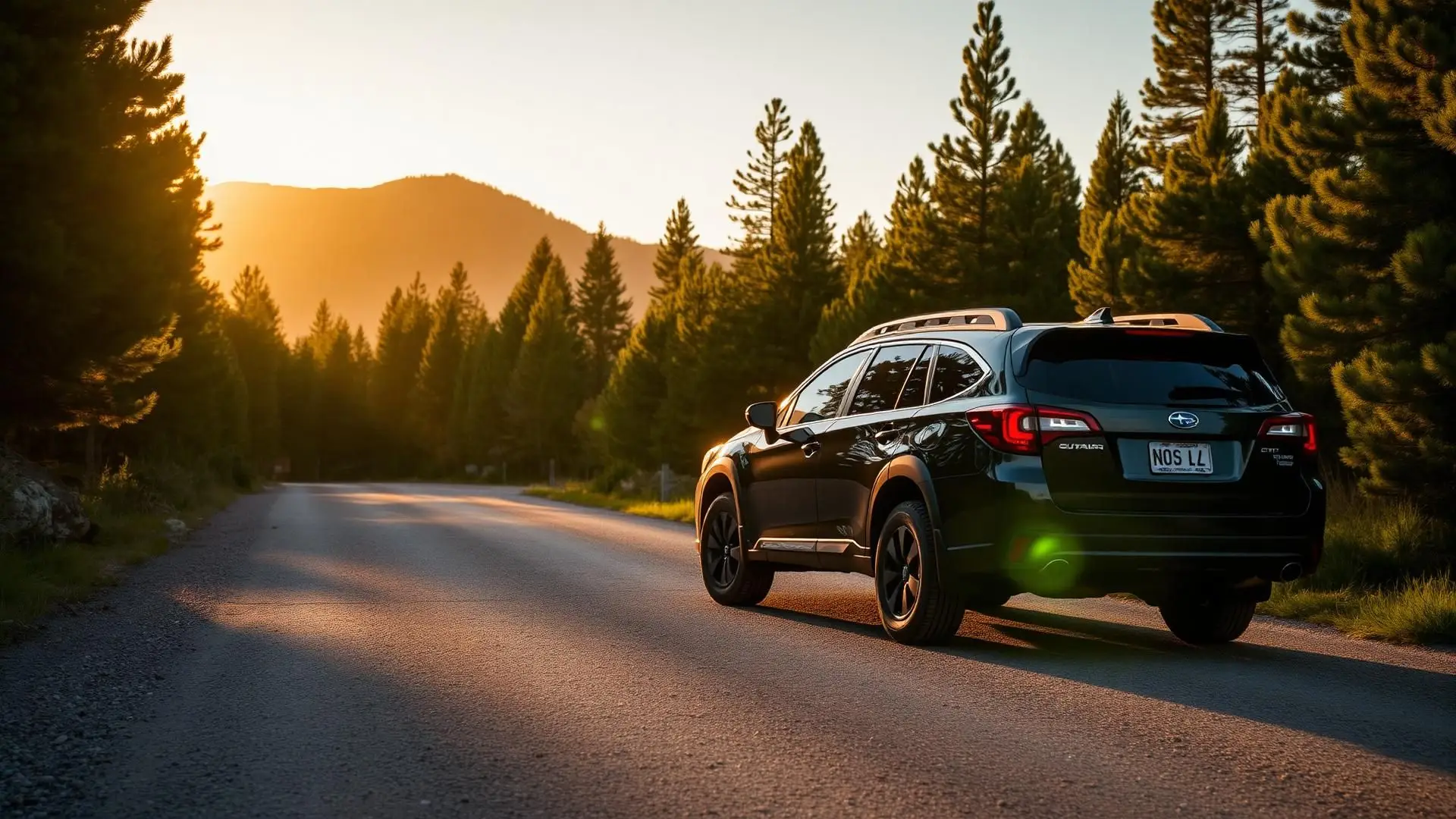
Soft-roading is light off-road driving on dirt roads, gravel forest routes, and easy two-tracks in a vehicle that was never meant to crawl Moab. Think Subaru Outback on a washboard forest service road. Think Toyota RAV4 Woodland at a dispersed camping pull-off. Think lifted Crosstrek with all-terrain tires running a fire road to a trailhead that the Tesla in the driveway can't reach.
It is not rock crawling. It is not Rubicon. It is the eighty percent of off-road travel that does not require lockers, low range, or a $70,000 rig. And in 2026, it is the fastest growing segment in the outdoor world, because more people have realized that you do not need a Wrangler to camp where the cell signal dies.
Soft-roading sits between pavement and serious off-road. The vehicle stays mostly stock. The trail stays mostly graded. The driver gets ninety percent of the experience for thirty percent of the money.
Why Soft-Roading Exists (And Why It Is Booming)
For a decade, the off-road world was binary. You either bought a built truck, or you stayed home. The aftermarket sold lift kits and steel bumpers as if everyone needed to ford a river. Magazines covered Baja prerunners. The implied message was clear: if your rig cannot rock crawl, your rig does not count.
That changed when a few things happened at once.
Crossover sales overtook sedans. Subaru built an entire identity around the Outback as an adventure vehicle. Toyota added "Woodland" trims to the RAV4 and Sienna. Honda launched TrailSport. Hyundai launched XRT. Kia launched X-Pro. Almost every manufacturer noticed that buyers wanted the look and the capability of off-road without the fuel economy hit, the harsh ride, or the parking nightmare of a full size 4x4.
Then the trail apps got smart. Gaia GPS and OnX Offroad started rating roads by surface and difficulty instead of by vehicle class. Suddenly a Honda Passport owner could see that yes, the route to that alpine lake is graded gravel the whole way. The barrier dropped.
Soft-roading is the result. It is real off-road access for the rig in the driveway.
The Honest Truth Nobody Says About Soft-Roading
Here is the thing serious off-road forums will not tell you. Most people who own a built Wrangler use it on graded gravel ninety percent of the time. They overbuilt for an edge case they hit twice a year. A well-prepped soft-roader handles that ninety percent at half the cost and twice the fuel economy.
The other thing nobody says: a stock Outback Wilderness on quality all-terrain tires will outrun a stock Wrangler on a long washboard road. The Subaru rides better, sits lower so it does not pitch, and has independent rear suspension. The Wrangler driver will not admit this. Owners of both will.
What soft-roading is not: a substitute for a real 4x4 when the trail turns technical. The moment you hit a step, a deep rut, or a long off-camber section, the limits of a unibody crossover with modest ground clearance become real fast. Knowing where that limit lives is the entire skill of soft-roading.
Who Soft-Roading Is For
Soft-roading is for the person who wants to camp at a trailhead, not on it.
It is for the family with one vehicle and a budget that has to cover daycare, the mortgage, and a few weekends of camping. The crossover is already there. The mods are affordable. The trip happens this summer, not in the imagined future when the truck fund finally gets there.
It is for the climber, the photographer, the angler, the mountain biker, the trail runner, and the bird watcher. People whose actual hobby is at the end of a dirt road, not on it. The vehicle is a way to get to the experience, not the experience itself.
It is for the retiree who wants to do six months in the southwest without buying a Class B van. A subtle build on a Toyota Sienna Woodland will sleep two, get 26 mpg highway, and pull into any Trader Joe's without drama.
It is for the new overlander who is one good first trip away from deciding whether to go deeper or stay light. Either answer is fine. Soft-roading lets the trip happen first, so the decision is informed.
Who it is not for: anyone whose actual use case involves rock crawling, deep mud, water crossings above hub height, or technical trails rated four out of ten or harder. If that is the trip, buy the truck.
Best Vehicles for Soft-Roading (2026)
The soft-road segment has more good options than ever. Here are the platforms that actually deliver, grouped by category.
Wagons and Lifted Crossovers (The Heart of the Segment)
- Subaru Outback Wilderness (9.5 in clearance), Best-in-class. Suspension tuned for dirt, factory skid plates, 17-inch wheels with Yokohama Geolandar tires standard.
- Subaru Forester Wilderness (9.2 in), Shorter wheelbase than Outback, better approach angle. Great for tight forest roads.
- Subaru Crosstrek Wilderness (9.3 in), Smallest of the three. Closest to a true light off-roader. Limited cargo, but legendary tire and trim package.
- Volvo V60 / V90 Cross Country (8.3 in), The European answer. Underrated for fire roads, beautiful interior, holds value.
Crossover SUVs with Real Off-Road Trims
- Toyota RAV4 Woodland (8.6 in), Honest light-duty trim. All-terrain tires standard, hybrid option for fuel economy.
- Honda Passport TrailSport (8.3 in), Wider track than CR-V, more capable than it looks, real recovery points.
- Mazda CX-50 Meridian (8.6 in), Wagon proportions in an SUV. Quiet pavement ride, surprisingly composed on dirt.
- Hyundai Santa Fe XRT (8.3 in), New for 2026, factory all-terrains, sleeper pick for families.
- Kia Telluride X-Pro (8.4 in), Three rows that actually fit adults, tow rating 5,500 lbs. The family soft-roader.
- Ford Bronco Sport Badlands (8.8 in), Most capable of the small crossover crowd. True low-range simulation, locking rear diff.
AWD Minivans and Family Sleepers
- Toyota Sienna Woodland (6.9 in), 36 mpg combined, 1500 watt inverter, lift available aftermarket. The stealth overlander.
- Chrysler Pacifica AWD (5.5 in, lift recommended), Massive interior. Add a 1.5 inch lift and AT tires and suddenly it is a backcountry hotel.
The pattern is consistent. The best soft-road vehicles are not pretending to be trucks. They are honest about what they are: comfortable, efficient daily drivers with enough ground clearance, tire room, and electronic traction help to handle real dirt.
Soft-Roader Mods That Actually Matter
Most soft-road builds get ruined by the wrong order of operations. People buy a roof rack before they buy tires. They install LED bars before they have skid plates. Here is the order that actually works, ranked by return on every dollar spent.
Tier 1: Tires First, Always
Nothing changes a vehicle more than the right tires. A stock Outback on Falken Wildpeak AT Trail tires is a different vehicle than an Outback on the original highway compound. Better grip on wet roots, dirt, gravel, and snow. Modest mpg hit, usually one to two miles per gallon.
For pure soft-roading, look at hybrid all-terrain tires designed for daily driving with light off-road capability. Falken Wildpeak AT Trail, Yokohama Geolandar AT G015, BFGoodrich Trail-Terrain, and General Grabber ATX are all good calls. Avoid aggressive mud-terrain tires. They are loud, wear fast, and you do not need them.
Budget: $800 to $1,400 for a set of four, mounted and balanced.
Tier 2: Skid Plates and Recovery Points
The undercarriage of most crossovers is a parade of exposed plastic and aluminum. Aftermarket skid plates from Crawford Performance, RalliTek, Primitive Racing, or LP Aventure protect the oil pan, transmission, and rear differential for around $400 to $900 depending on coverage.
Pair this with real recovery points. Many crossovers do not have proper tow points rated for kinetic recovery. A bolt-on tow hook setup from the same brands runs $80 to $200 and is the difference between a smooth strap pull and a torn bumper.
Tier 3: Modest Lift
Notice this is third, not first. A one to one and a half inch lift on most crossovers improves approach and departure angles, lets you fit slightly taller tires, and helps with washboard absorption. More than two inches usually creates CV angle problems and pushes the suspension geometry out of its design envelope.
Good lift kits for soft-roading come from LP Aventure, Anderson Design, Roadmaster, ReadyLift, and RalliTek. Expect to spend $300 to $1,200 depending on platform and component choice.
Tier 4: Roof Storage Done Right
A roof rack adds wind noise and kills fuel economy. A roof basket loaded with gear adds more of both. The honest version: only put on the roof what does not fit inside, and choose a low-profile platform like a Front Runner Slimline II or a Yakima LockN'Load over a high-rise basket.
Better for most soft-roaders: a hitch-mount cargo carrier. Lower center of gravity, easier loading, less aerodynamic penalty. Brands like Yakima, Kuat, and Rough Country make solid options for $200 to $600.
Tier 5: Lighting and Auxiliary Power
A single set of pod lights aimed properly will outperform a thirty inch light bar that blinds oncoming drivers. Look at Baja Designs, Diode Dynamics, or KC HiLites for honest products with real beam patterns. Budget $200 to $600 for a clean install.
For power, a portable lithium battery like a Jackery, Bluetti, or EcoFlow handles fridge, lights, and device charging for two to four nights without touching the vehicle's electrical system. Easier to install than a dual-battery setup, easier to move between vehicles, and works for emergencies at home.
Tier 6: Storage and Sleeping
For multi-day soft-roading trips, a flat sleeping platform turns the cargo area into a livable bedroom. Plenty of plywood DIY plans exist online. Companies like Forsyth Creative, Goose Gear, and Plug-In Adventures sell premade systems for $400 to $2,500.
Skip the rooftop tent unless you are sure. They are heavy, add height that limits trail clearance, and on a soft-road build they tend to push the vehicle past its comfort zone. Ground tents and interior sleeping platforms are usually the better answer.
Soft-Roading vs. Overlanding vs. Off-Roading
These three terms get blurred constantly. Here is the clean separation.
- Soft-roading, Crossover or AWD wagon on dirt, gravel, and easy two-tracks. Day trips to long weekends. $1,000 to $5,000 in mods.
- Overlanding, Built SUV, truck, or van on mixed multi-day routes. Full camp, recovery, water. $5,000 to $50,000 build.
- Off-roading, Modified 4x4 with low range on technical obstacles. Hours to a day. $10,000 to $100,000+.
Soft-roading and overlanding overlap heavily. A soft-roader doing multi-day trips with a sleeping platform and recovery gear is functionally a light overlander. The line between them is mostly about how much commitment, gear, and remoteness the trips involve, not about whether the vehicle has a winch.
Where to Actually Go Soft-Roading
The trails that reward soft-roading are not the famous ones. The famous ones tend to be rated for full 4x4 trucks. The good soft-road network is quieter and bigger.
National Forest service roads are the workhorses. Most are graded dirt or gravel, maintained for logging and fire access, and rated for passenger vehicles. The Motor Vehicle Use Map for any National Forest, free from the USDA, shows every legal route by surface type.
Bureau of Land Management roads in the western states open up enormous dispersed camping options. Most are passable in any AWD vehicle with decent tires. Apps like OnX Offroad rate them honestly.
State and county dirt roads, especially scenic byways, are often spectacular and almost always crossover-friendly. Examples include the Alpine Loop in Colorado (the maintained sections), the Mojave Road's easier stretches, the Magruder Corridor in Idaho, and most of the Sierra National Forest in California.
For the new soft-roader: start with any USDA Forest Service road within an hour of home. Drive it. Find a dispersed camping pullout. Spend a night. That is the entire entry point. The skills compound from there.
The Bottom Line: Soft-Roading Is the Honest Off-Road
The marketing photos of off-road life show a built Wrangler on a sandstone ridge or a Sprinter van in Iceland. The reality is a Subaru on a Forest Service road at golden hour with two camp chairs and a cooler. Both are real. Only one is what most people actually do.
Soft-roading is the off-road that fits real lives. Real budgets, real garages, real fuel economy, real driveways. It is the doorway that lets people who would never buy a Bronco discover that camping by a river they had to drive a dirt road to reach is, in fact, the entire point.
Start with the vehicle you have. Put real tires on it. Find a Forest Service road within an hour of home. Drive it. Camp at the end of it. The rest of the off-road world will open up from there, or it will not, and either answer is fine.
The road less paved does not require a tow rig. It just requires showing up.