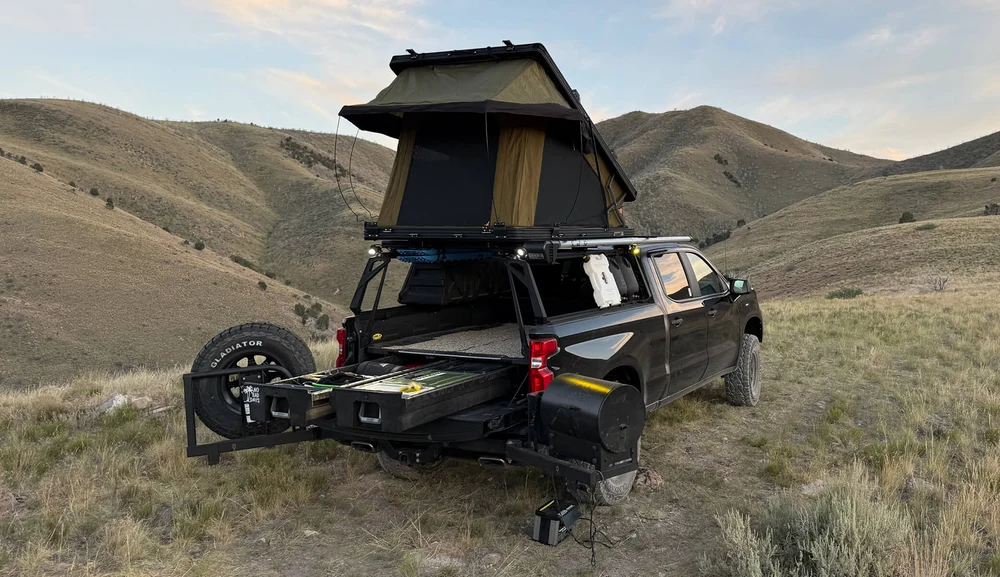
Independent buying guide for overlanding truck bed drawers. Not a parts cart, not a brand podium, not a press rewrite.
Picture a midsize truck at a trailhead after three nights out. Tailgate drops. The weekend avalanches: recovery boards, a dusty fridge crate, a loose shovel, wet shoes under the tote, and a wrench nobody can see. Somebody climbs the bed in muddy shoes and digs. That is the stock story of an open bed used as a closet.
Now picture the same truck two months later, same trailhead. Two sealed drawers roll out at bumper height. Tools live left. Soft goods live right. The fridge sits on the flat deck. Nobody climbs. The mess is gone. So is about 180 to 230 lb of empty plastic and steel, plus roughly twelve inches of bed height you will not get back without a wrench. Organization is real. Free payload is not.
Night one teaches the problem. Driveway Saturday teaches the install pride. The next trip teaches the quiet catches. Specs still decide the buy.
Why Overlanding Truck Bed Drawers Became the Default Instagram Flex
Between the messy trailhead and the proud roll-out, most owners watched a clean deck on Instagram and ordered before they weighed anything. Truck overlanders turned the bed into a living room: canopy or soft topper for weather walls, a fridge that does not bounce into the cab wall. The Tacoma Trailhunter vs 4Runner Trailhunter piece already priced that reality: a solid canopy-and-platform setup commonly lands in the roughly $1,500 to $4,000 band before other trail mods.
A tonneau is a bed cover that sits near the rails (hard folding, soft roll-up, or retractable). A soft topper or hard canopy rises higher and turns the bed into a room. Drawer height eats the same vertical budget either way.
Two more terms before the money talk. Payload is how much people and cargo your specific truck can carry before you exceed the label on the driver door jamb. GVWR (Gross Vehicle Weight Rating) is the absolute max the truck is rated to weigh as a complete package: truck plus people plus fuel plus every bolt-on. Drawers sit on the wrong side of that sticker. They are cargo the second they bolt in.
Disclosure, said once: 4x4 Playground is independent. We do not sell drawer systems, we do not rank sponsored products, and this is product discussion, not a dealer pitch.
The 2,000 lb Deck Rating Is Not Your Payload
Back in that Saturday driveway, the box is open and the product page still feels like a win. This is the sentence that page softens.
DECKED's technical specs rate a full-size drawer deck at 2,000 lb evenly distributed, with 200 lb per drawer. Midsize systems list a 1,000 lb deck and a 400 lb MegaDrawer. Those numbers describe what the plastic-and-steel platform can support when the load is spread. They do not mean your truck gained 2,000 lb of carrying capacity.
Your truck's door-jamb sticker still wins. A Trailhunter-class Tacoma brochure payload often sits near about 1,425 to 1,475 lb depending on bed length, and options already ate some of that before you opened the catalog. Drop a ~177 to 204 lb midsize DECKED system in empty, add a fridge, water, recovery boards, and two adults, and the napkin math gets loud fast. The same honesty belongs next to the live payload and GVWR overland weight guide: weigh the empty system, then weigh the trip.
DECKED is clear that the 2,000 lb figure assumes even distribution, and concentrated loads need plywood to spread the stress. An ATV on the deck is a "spread the load" problem, not a free pass past the door jamb. The deck rating protects the product. The sticker protects the springs and brakes. On the next trip, that sticker stands next to the proud drawer pull-out.
What a Drawer System Actually Buys You
Sealed, model-specific systems (DECKED-class smart default)
DECKED Drawer Systems start at $1,699.99 for the current lineup as researched. Construction is recycled HDPE co-molded to a galvanized steel subframe, with stainless hardware and cast aluminum handles. Full-size short systems weigh about 208 lb at 12.2 in tall; standard and 8 ft packages run about 233 lb. Midsize short lists about 177 lb at 12.3 in; midsize standard about 204 lb.
What that means on Saturday: you stop climbing the bed in wet shoes to find a ratchet, and the top deck becomes a flat work surface for a fridge slide or sleeping pad. Weatherproofing handles rain and road spray, but DECKED's own FAQ still warns that mist, dust, and fine snow can sneak in. Close the drawers. Full-size installs often use existing tie-downs with no drilling; some midsize trucks need new mounts or a few holes. Expect a driveway afternoon with a second person. DECKED builds to a specific bed contour, so a secondhand system from another make will not drop neatly into your wheel wells.
Proud first roll-out: tools at bumper height, soft goods dry, no avalanche. Bill: empty weight and the height you just spent.
Aluminum modular camp systems (Goose Gear-class)
Goose Gear sells aluminum camper modules that bolt to a required Camper Bed Plate System, not a one-box DECKED clone. A midsize driver-side rear double drawer module lists at $1,695. A full-size driver-side rear double drawer module lists at $2,095, with a refrigerator slide bay at 15 in W x 28 in D x 20 in H. Midsize drawer module dimensions publish as 11 in W x 23.5 in D x 18.25 in H. Frames use MaxLite 6063-T6 aluminum extrusion.
You are buying a modular camp interior with fridge geometry, not only two ammo-can drawers. Budget the bed plate and sibling modules separately. Height is a canopy conversation, not a low tonneau conversation. If the next trip is a full canopy camper build, this is the lane.
DIY plywood plus heavy-duty slides
DIY works when the bed is weird, the budget is tight, or you refuse a sealed plastic footprint. Realistic bills land roughly $200 to $700 in materials for a simple two-drawer plywood build if you already own tools. Forum builds in the under-$200 class usually mean used slides and scrap wood, not a finished sleep deck.
Slide ratings are where DIY honesty lives. Accuride's 9301E pair is commonly sold as a "500 to 600 lb" slide in marketing shorthand. Accuride's own product page cuts that for real use: about 360 lb in mobile / vehicular applications for drawers up to 32 in wide, 480 lb for frequent use, 600 lb for moderate stationary use, and only 180 lb when flat-mounted. COREAX-class lock-in / lock-out slides in the roughly $24 to $64 per size band solve the "drawer flies open on a bump" problem if you mount them square.
Build for the mobile rating, not the Amazon title. Parallel sides, lock-in / lock-out, and a dust plan matter more than Instagram birch. Trailhead dust finds DIY slides faster than a sealed commercial box.
Payload Napkin Math (Do This Before You Click Buy)
Do this math in the driveway before the Instagram cart, not after the sticker already lost.
| Line item | Example midsize | Example full-size short |
|---|---|---|
| Door-jamb payload (read yours) | ~1,200 to 1,475 lb class | ~1,400 to 1,900 lb class |
| Empty drawer system | ~177 to 204 lb (DECKED midsize) | ~208 to 233 lb (DECKED full-size) |
| Fridge + slide | ~60 to 110 lb | ~60 to 110 lb |
| Recovery + tools in drawers | ~40 to 80 lb | ~40 to 100 lb |
| Two adults | ~350 lb | ~350 lb |
| Remaining for water, fuel, soft goods, canopy | Often thin | Better, still finite |
Numbers above are framing ranges, not a promise for your VIN. Subtract roof load next via the roof load capacity guide, and count fuel cans with the same honesty as the overland fuel storage guide.
Height Tax: Tonneau, Soft Topper, Canopy, Sleep Deck
Next trip: drawers win the wrench hunt, then the soft topper fold kisses the new deck. Height tax, on schedule.
DECKED publishes about 12 to 12.3 inches of system height from the bed floor to the deck. Soft toppers that fold on pivots need clear air above the rails; owner threads commonly report Softopper-plus-DECKED installs that needed a second pivot hole because the deck blocked the stock fold. Hard canopies usually clear a 12-inch deck, then trade headroom when you sleep on top of it.
Sleep-on-deck is the quiet wart. Raising the mattress twelve inches shrinks sit-up room under a low canopy. Pick the job: locked drawers for tools, or maximum sleep height. Sealed dual-drawer systems want the fridge on the deck or a deck slide; Goose Gear-style modules carve a dedicated fridge bay.
Honest Warts
Same truck, four ways the story sours after the proud roll-out. First, the weekly lumber hauler. A full system is awkward to yank for sheet goods. Marketing talks about quick removal; real owners still describe a two-person, tools-out job. If the bed must stay empty most weekdays, skip permanent drawers or build modular DIY you can unbolt.
Second, the sleep-height maximizer. Twelve inches under a low topper turns "sit up in bed" into "army crawl." Measure mattress plus you plus canopy bows first.
Third, the dust absolutist. Weatherproof is not hermetic. Fine dust finds gaps, and sticky slides after mud season are a maintenance bill. Expect to service DIY harder than a sealed commercial system.
Fourth, the payload denier. An $1,800 drawer system is still a weight tax before the first ammo can. If the door jamb is already skinny, crates or a cargo glide may be the smarter next dollar. Model-specific systems hug the wheel wells; universal plywood boxes fight them.
Overlanding Truck Bed Drawers Verdict
| Job | Smart pick | Trap | Verdict |
|---|---|---|---|
| Daily organized overland bed | Model-specific sealed system (DECKED-class) | Buying by Instagram before payload math | Best default for most trucks |
| Full camp interior under a canopy | Aluminum modular (Goose Gear-class) + bed plate | Assuming one module is a complete system | Budget the plate and fridge module |
| Odd bed / tight budget / removable | DIY plywood + mobile-rated locking slides | Trusting the Amazon "500 lb" title as mobile truth | Use Accuride-class mobile ratings |
| Mixed weekly cargo | Soft bags, crates, or a cargo glide | Permanent drawers you resent every Monday | Skip drawers |
| Sleep-max under a low topper | Lower platform or open bins | 12 in deck + thick mattress + low bows | Measure sit-up height first |
| Fridge access | Deck slide or modular fridge bay | Fridge buried in a shallow drawer | Plan the fridge path before the cut |
Smart default: measure the bed and the door-jamb sticker, then buy sealed model-specific drawers for a dedicated overland bed, or DIY only if you accept maintenance and a known sleep height. Trap: drawer porn before weighing the empty system against payload and canopy clearance.
Who Should Buy Overlanding Truck Bed Drawers (and Who Should Wait)
Buy a sealed model-specific system if the truck is primarily camp and trail (the trailhead-avalanche truck), you want lockable weather-resistant drawers, and the door jamb still has room after the empty system weight.
Buy aluminum modular if you are already building a canopy camper interior with a fridge bay and kitchen slide, and you want components that bolt to a real bed plate.
Build DIY if you will sleep on a height you measured, you can mount locking slides square, and you want removable panels for weekday cargo.
Skip drawers if you haul mixed cargo weekly, your payload is already gone to armor and a roof tent, or a soft topper pivot will hit the deck.
Do not treat a deck load rating as free GVWR. The 2,000 lb number is a platform rating. Your springs still read the door sticker.
Bottom Line
Buy overlanding truck bed drawers to end the trailhead avalanche, not to invent payload. That midsize truck went from muddy shoes hunting a buried wrench to a proud bumper-height roll-out, then learned the quiet catches: door-jamb math, soft-topper pivot clearance, dust in the slides, and sleep height under a low canopy. A sealed DECKED-class system near $1,700 and about 208 to 233 lb empty (full-size) is the smart default for most dedicated overland trucks after sticker math and canopy height clear. DIY is honest when you accept slide maintenance and a measured sleep deck. Goose Gear-class aluminum fits canopy campers who need modules, not only drawers. The trap is Instagram before the scale. The 2,000 lb deck rating is a platform number. Your GVWR sticker is the law of the driveway.
Keep building the bed
- Payload and GVWR Overland Weight Guide (door-jamb math before bolt-ons)
- Roof Load Capacity Rooftop Tent Guide (roof tax stacked on bed tax)
- Overland Fuel Storage Guide (cans are payload too)
Use first-party tools on 4x4playground.com for the next bed build. No cart required.