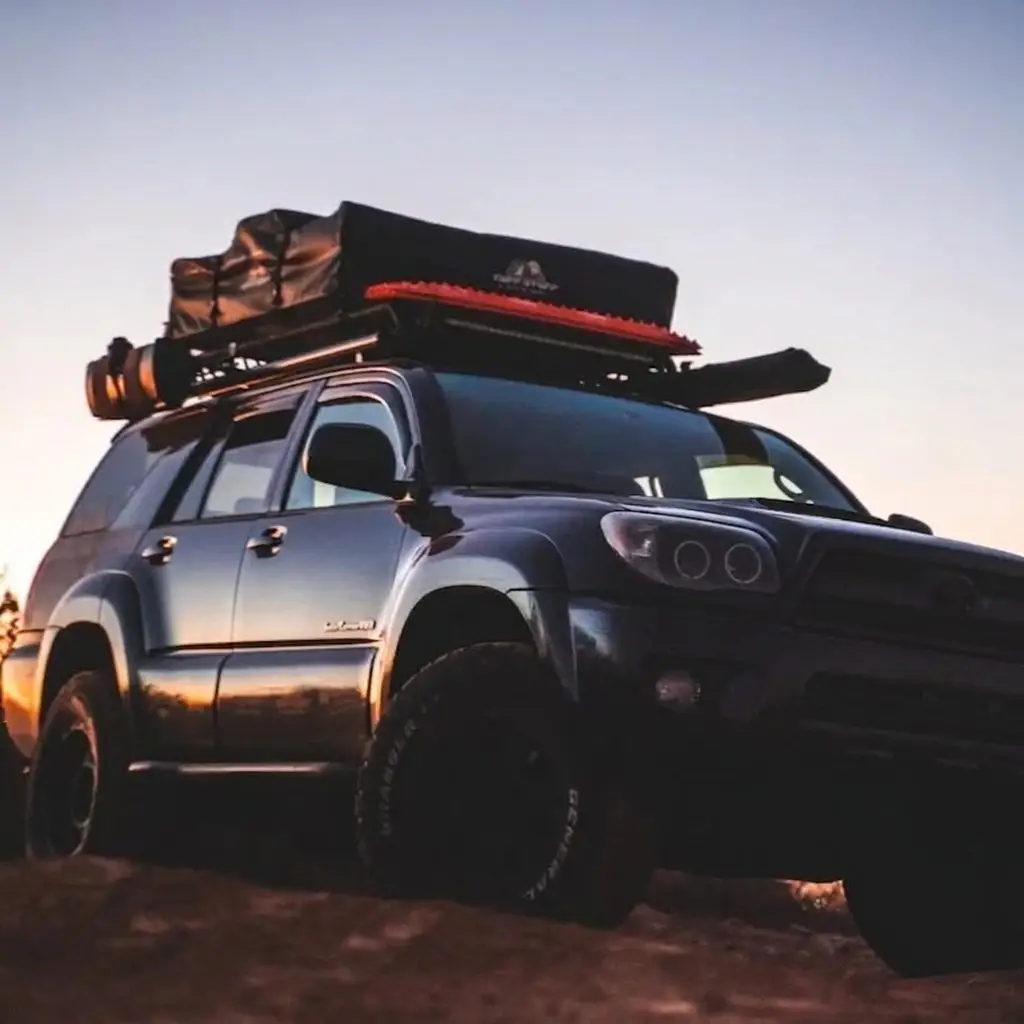
The campfire was barely glowing when my buddy leaned back and asked the question. "If you had fifteen thousand bucks to start over, what would you build?"
I didn't even need to think about it.
Because here's the truth nobody on Instagram wants to admit: the best overland rig isn't the one with the biggest tires or the loudest sponsors. It's the one that starts every time, fits in your garage, and still has fuel money left over for the next trip. So I'm going to tell you exactly how I'd spend that fifteen grand. Every dollar. Every bolt. And I promise you, by the end of this, you'll be checking Facebook Marketplace before you finish your coffee.
The Vehicle: A 4th Gen Toyota 4Runner (2003 to 2009)
Pick the V6. Find one with the 1GR-FE engine, a clean Carfax, and ideally the Sport Edition with X-REAS or KDSS suspension. Budget around $9,000 to $10,500 for a solid one with 150K to 180K miles. That sounds like a lot of miles. It isn't. These motors routinely cross 300,000 with nothing more than oil, coolant, and the occasional belt.
Why this rig and not a Tacoma, not a Jeep, not a Xterra?
Because the 4th gen 4Runner is the unicorn nobody talks about. It has body-on-frame construction like a truck, a real low-range transfer case, and full independent front suspension that handles washboard roads without rattling your fillings loose. The interior is roomy enough to sleep in if your tent gear fails. The aftermarket is enormous. And unlike the Tacoma, which has been hunted to extinction by every weekend warrior on the West Coast, the 4Runner still flies just under the radar. You can find them. You can afford them. And once you own one, you understand why people get tattoos of them.
There's also the small matter of resale value. Spend fifteen grand building this thing, drive it for five years, and you'll likely sell it for more than you paid. Try that with a new truck payment.
The Build: Where Every Remaining Dollar Goes
You've got roughly $5,000 left after the vehicle. That sounds tight. It's plenty. Here's the order I'd buy in, because sequence matters when you're working with real money instead of fantasy money.
Sleep First, Wheel Second: Tuff Stuff Ranger 65 Roof Top Tent ($1,700)
The Tuff Stuff Ranger 65-inch is the first thing on the truck, and there's a reason. Comfort dictates how often you actually use this rig. A bad tent means a tired you, and a tired you sells the truck in eighteen months.
Tuff Stuff took the original Ranger and added an extra 10 inches to the footprint. What you get is a true 3-person, 65-inch rooftop tent with enough sleeping area for three full-sized adults on a thick 2.75-inch foam mattress that comes pre-installed. The 600D ripstop fabric shrugs off rain, the aluminum poles laugh at wind, and the integrated LED strip means you're not fumbling for a headlamp at three in the morning. It deploys in about sixty seconds and packs down into a low-profile shell that won't murder your fuel economy.
Everything stores inside the tent so you don't sacrifice vehicle cargo space. The included shoe bag slides into the tent railing for outdoor storage, and the under-tent storage hammock can be mounted inside or outside depending on how you want to organize your gear. Tuff Stuff includes all mounting hardware and brackets right in the box, fitting cross bars up to 3.25 inches, plus a sliding ladder, rainfly, and PVC cover. Tuff Stuff has been building overlanding gear in California since 2012, and their tents have a reputation for outlasting the vehicles they sit on.
Mount it directly to factory crossbars with the included hardware, or upgrade to a full rack later. Either way, the tent is the heart of the build. Treat it that way.
Suspension That Actually Works ($900)
Bilstein 5100s up front, set to the middle perch. Old Man Emu medium-duty rear springs. Total lift around 2 inches, which is the sweet spot for clearance without ruining geometry or eating CV joints. This combo will outride your friend's $4,000 long-travel kit on every road that isn't a Baja race course, and you'll have cash left for fuel.
Skip the body lifts. Skip the spacers. Buy real shocks.
Tires That Get You Home ($1,200)
275/70R17 BFGoodrich KO2s, or the new KO3 if you can stretch the budget. These are the tires that have been on more successful expeditions than any other rubber compound on Earth. They're not the lightest. They're not the cheapest. But they get traction in mud, sand, snow, and rocks, and they last 50,000 miles doing it.
Pro tip nobody tells you: buy the load range C version if you can find it. Lower weight, better ride, and you don't need load range E unless you're carrying a small house in the bed.
Wheels That Don't Cost a Mortgage ($600)
Method Race Wheels MR701 Bead Grips in 17 inch, or if you want to save money, factory FJ Cruiser steel wheels off Marketplace for $300 a set. The steelies look better than any aftermarket wheel under $1,000 and they bend back into shape with a hammer when a rock has a different opinion. Function over flash. Every time.
A Roof Rack, A Recovery Kit, and a Few Lights ($800)
Front Runner Slimline II if your bank account is feeling spicy. Sherpa Equipment Co. if you want American-built. Or honestly, just bolt your tent to the factory rails and add a Prinsu later when you have more money. Recovery wise, you need a kinetic rope (not a yank strap), two soft shackles, a pair of MaxTrax knockoffs, and a tire deflator. That's it. Skip the snorkel until you know what you're doing in water.
For lighting, a single Baja Designs S2 pod on each A-pillar will outperform a $700 light bar at half the price.
What You Just Built
Let's add it up. Truck at $10,000. Tent at $1,700. Suspension at $900. Tires at $1,200. Wheels at $600. Rack and recovery at $800. That's $15,200, give or take a tank of gas.
What you have now is a rig that can sleep three adults anywhere in North America, cross any forest service road in the lower 48, and still get you to work on Monday without a check engine light. It will start at minus ten degrees. It will idle in heat that melts asphalt. It will, with any reasonable maintenance, still be running when your kids are old enough to inherit it.
The Real Reason This Build Wins
There's a moment that happens about three days into every trip in a rig like this. You're somewhere with no signal. The sun is sliding behind a ridge you can't pronounce. You're cooking something on a tailgate that costs less than the chef's knife you're using. And you realize, suddenly and completely, that you don't need anything else.
That's the build. That's the point. Not the badge on the hood, not the brand of the recovery gear, not the price tag on the wheels. Just you, a vehicle that works, a tent that opens, and a road that goes wherever you point it.
Fifteen grand. One trail. Zero regrets.
Now go check Marketplace.