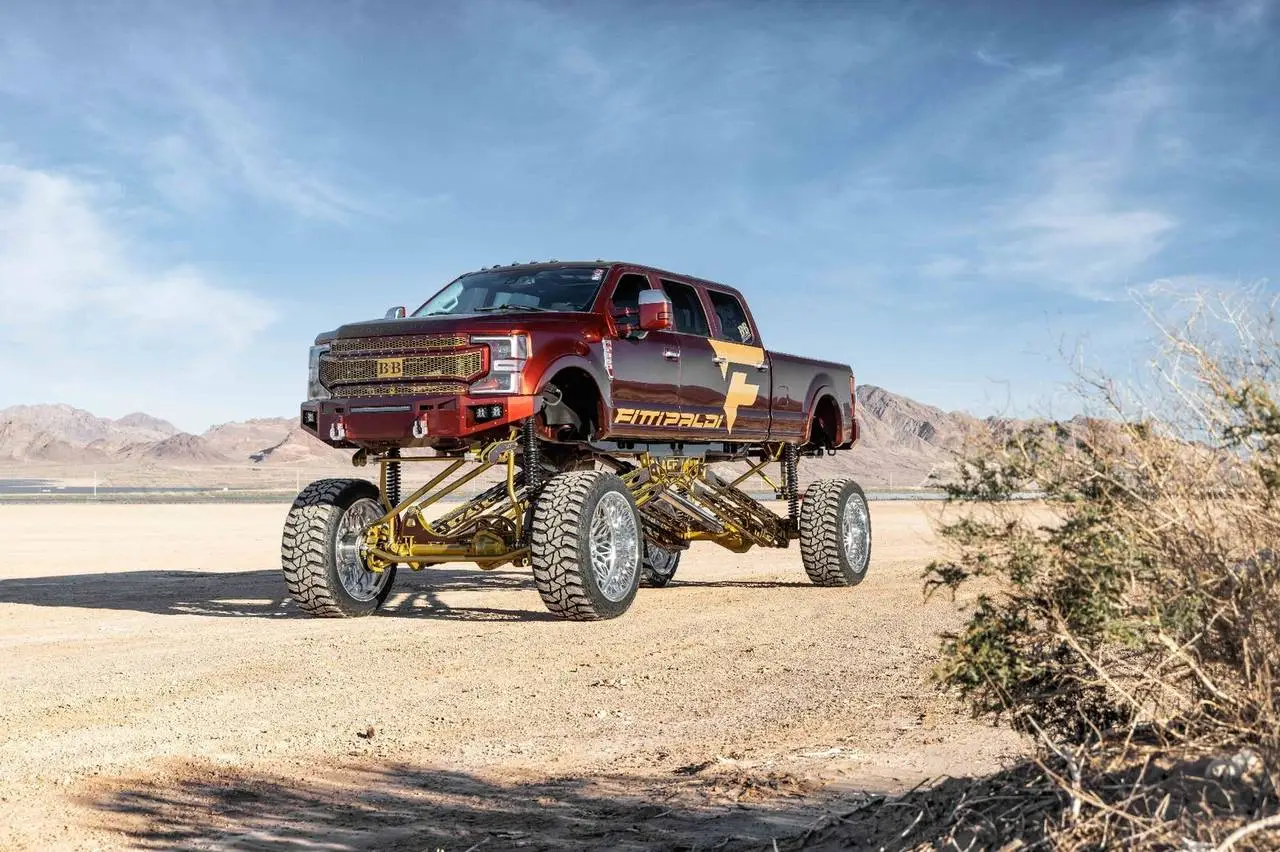
We've talked to hundreds of lifted truck owners. The same mistakes come up again and again. Here are the most expensive lessons learned, so you don't have to learn them the hard way.
Mistake #1: Buying the Cheapest Kit
The $400 eBay lift kit looks identical to the $2,000 name-brand kit. Same height, same basic components. Why pay more?
Because that cheap kit uses inferior materials, lacks proper geometry correction, and will cause problems within the first year. Ball joints wear out. Shocks blow. Welds crack. You'll spend more replacing failed components than you saved upfront.
REAL COST EXAMPLE
One owner shared his first-year expenses after installing a budget lift:
- • Budget lift kit: $450
- • Replacement shocks (6 months): $380
- • Ball joint replacement: $420
- • Two alignments trying to fix handling: $240
- • Finally upgrading to quality control arms: $650
- Total first year: $2,140
A quality complete kit would have been $1,800-2,200 with none of these issues.
Mistake #2: Not Budgeting for Tires
You lifted your truck. Now those stock tires look ridiculous in the wheel wells. Of course you need bigger tires. But did you budget for them?
A set of quality 35" all-terrain tires runs $1,200-1,800. Mud-terrains? $1,400-2,200. Add mounting, balancing, and TPMS sensors, you're looking at $1,500-2,500 that many first-timers forget to include.
"I lifted my truck and drove around on stock 31s for six months because I blew my entire budget on the lift. Looked absolutely stupid. Should've waited until I could afford both."
, First-time builder confession
Mistake #3: Ignoring the Need for Regearing
Bigger tires = lower effective gear ratio. Your truck's computer doesn't know you changed tire size. It thinks you're going slower than you are, shifts wrong, and the engine works harder to move those bigger tires.
The result? Sluggish acceleration, poor fuel economy, transmission stress, and an engine that always seems to be working too hard.
WHEN DO YOU NEED TO REGEAR?
- • 33" tires: Usually okay on stock gears, some power loss
- • 35" tires: Regearing recommended, especially with automatics
- • 37"+ tires: Regearing essentially mandatory
Budget $1,500-2,500 for regearing both axles. Yes, it's expensive. No, you can't skip it.
Mistake #4: DIY Without the Right Tools or Knowledge
"How hard can it be? It's just bolts." This attitude has destroyed trucks.
Installing a lift kit properly requires:
- •Spring compressors (coilovers will kill you without these)
- •Proper torque specs and a calibrated torque wrench
- •Ball joint press and tie rod tools
- •Understanding of suspension geometry
- •Patience (this is a 6-12 hour job done right)
Professional installation adds $500-1,500 to your cost but ensures it's done correctly. For most first-timers, this is money well spent.
Mistake #5: Lifting More Than You Need
6 inches looks awesome on Instagram. But do you need 6 inches? More lift means:
- •More stress on components
- •Worse fuel economy
- •Higher center of gravity (less safe)
- •More difficult daily driving
- •Higher cost to do correctly
A 3-4 inch lift with 35s gives you serious capability and presence without the extreme trade-offs of a 6+ inch setup. Be honest about what you actually need versus what looks cool in photos.
Mistake #6: Forgetting About Alignment
You install the lift, take it for a spin, feels great. Six months later you're buying new tires because they're worn to the cords on the inside edge.
Every lift requires an alignment immediately after installation. Not eventually. Not when you get around to it. Immediately. And not at the quick lube place, find a shop that specializes in lifted trucks and understands the geometry changes.
Mistake #7: Not Updating the Speedometer
Bigger tires mean your speedometer reads wrong. Typically, you're going faster than it shows. This means:
- •Speeding tickets when you think you're under the limit
- •Incorrect odometer readings (affects resale and maintenance schedules)
- •Transmission shifting at wrong speeds
Speedometer recalibration costs $50-150 with a programmer. It takes five minutes. Do it.
Mistake #8: Buying Parts Piecemeal
"I'll just start with spacers, then add control arms later, then upgrade shocks when I can afford them..."
This approach costs more in the long run and means your truck drives poorly for months or years while you piece things together. Worse, mixing components from different brands can create compatibility issues.
Save up and do it right the first time. A complete kit from a reputable manufacturer is designed to work together and will serve you better than a Frankenstein setup.
Mistake #9: Forgetting About Headlight Aim
You lift your truck. Your headlights are now blinding oncoming traffic and lighting up the treetops instead of the road. It's illegal in most states, dangerous, and makes everyone hate lifted truck drivers.
Adjust your headlight aim after lifting. It takes 15 minutes with a screwdriver and a wall. There's no excuse for not doing this.
Mistake #10: Not Researching Your Specific Truck
Every truck platform has its quirks. IFS trucks have different needs than solid axle trucks. Some years have weak points that show up after lifting. Certain combinations of mods create problems unique to specific models.
Before you buy anything, spend time in forums and Facebook groups specific to your truck. Learn from people who've built what you want to build. Ask questions. The research phase is free, the mistakes are expensive.
THE TAKEAWAY
The common thread through all these mistakes? Rushing, underspending, and not doing enough research.
The formula for success: Research thoroughly. Budget realistically (then add 30%). Buy quality components. Install correctly. Align immediately. Enjoy your truck for years instead of constantly fixing problems.
That's why we built this site. So you can learn from others instead of making these mistakes yourself. Keep reading, keep learning, and build smarter.