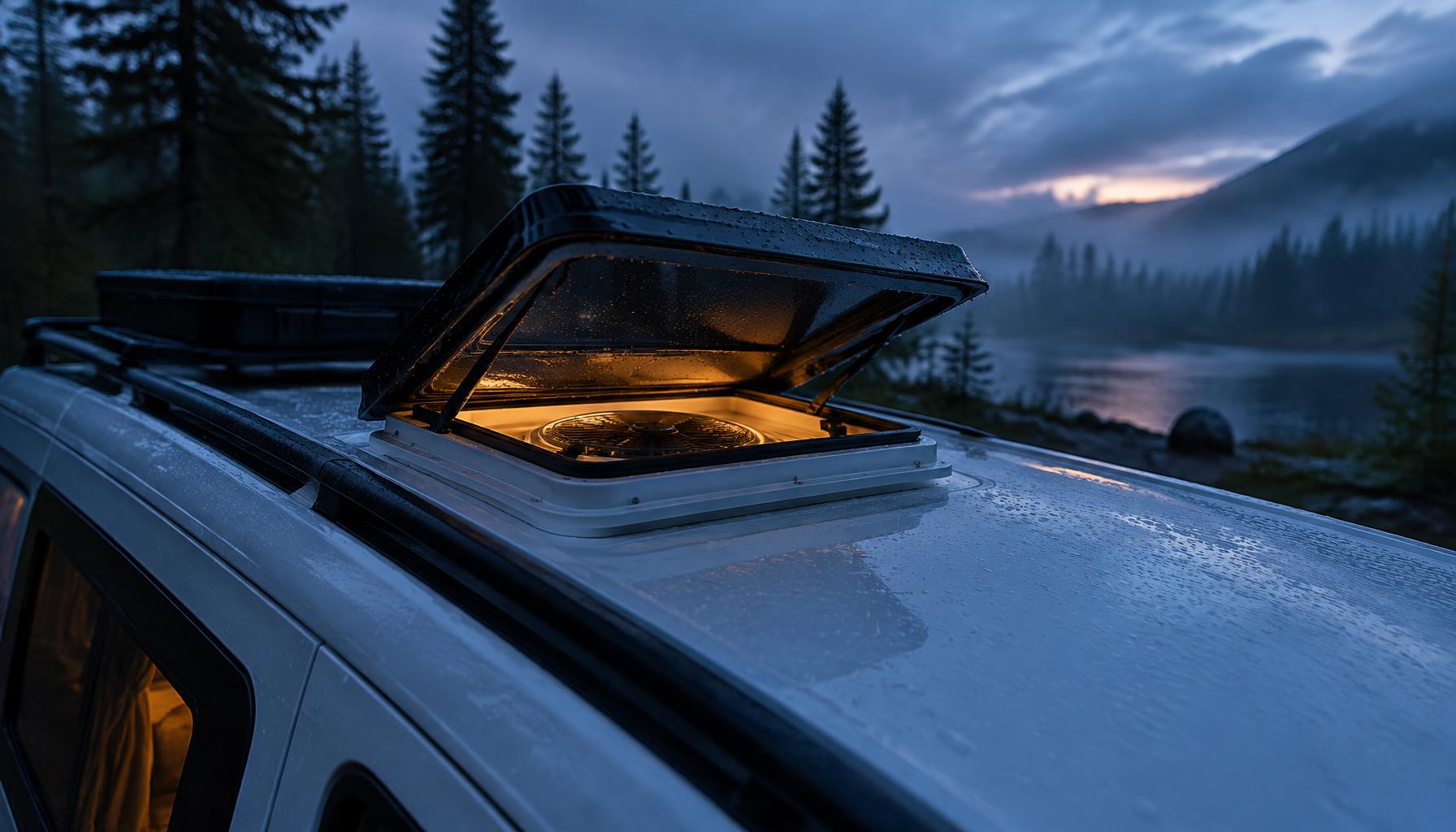
Quick Answer: The smart overlanding roof fan for enclosed sleepers (van, topper, canopy, truck camper) is a MaxxFan Deluxe-class unit with a rain-open lid on low overnight exhaust. The trap is paying for remote trim as the deciding feature, or cutting a 14x14 when cracked windows plus a USB fan already cover weekend truck camping. Speed 1 to 2 overnight is about 2 to 3 amp-hours.
Not a vanlife affiliate podium. A cut-the-roof decision system for condensation, diesel heat, and whether a $20 USB fan already covers the weekend.
The canopy is quiet enough to hear the fridge cycle. Outside, a cold front is wringing moisture out of the canyon. Inside, two people and a wet dog have been breathing for six hours. The windows are cracked a thumb-width because rain is tapping the glass. By morning the ceiling foam is damp, the bedding smells like a boat locker, and the diesel heater has been fighting wet air it never created. That is the night an overlanding roof fan stops being Instagram hardware and becomes the difference between a dry cabin and mildew that outlives the trip.
Why an Overlanding Roof Fan Shows Up After Heat and Power
A diesel heater warms sealed combustion heat into the cabin. A dual battery or power station keeps the fridge and lights honest. Neither removes the water vapor people, dogs, wet layers, and cooking put into a closed box. Crack the windows and you trade moisture for rain, bugs, and wind roar. Skip ventilation and you wake to beads on the ceiling and a sleeping bag that never fully dried.
That is why roof fans sit next to climate and power in real builds. Van people treat a 14x14 cut as standard. Truck and Jeep owners with toppers arrive later, usually after one humid shoulder-season weekend. Same physics in a Transit, Sprinter, Leer shell, or truck camper: move moist air out, pull drier air in, and keep doing it when the sky is wet.
Sort heat and power first with the overlanding diesel heater guide and dual battery vs power station. A fan does not replace either. It makes both less miserable.
A Roof Fan Is a Moisture Tool First, a Cooler Second
This is the sentence the summer product photo hopes you skip.
Marketing sells CFM and cooling. Overnight camping sells condensation control. Two sleeping adults can put roughly a liter of water into the air over a night through breath and skin alone, before wet boots and a damp dog join in. In a sealed van or canopy that moisture condenses on cold metal and glass, then drips into insulation. A diesel heater warms the box, but combustion exhaust is already outside. The cabin still needs an exit for humid air and an intake for replacement air. That is a fan job, not a thermostat job.
Cooling still matters in desert heat. High-speed exhaust with a shaded window as intake helps when the sun is off the roof. It will not replace air conditioning in a black van at noon in July. Buy the overlanding roof fan for the damp 40-degree night and rainy shoulder season. Treat summer cooling as a bonus.
A lid that stays open in rain keeps exhausting moisture when you need it most. A rain sensor that slams the dome shut protects from drips and also stops the tool you bought for humid weather. That difference beats another remote in the drawer.
MaxxAir MaxxFan vs Fantastic Fan: What Actually Differs
Both families fit a standard RV 14x14 cutout, move on the order of 900 CFM at the top end, run on 12V, and offer reverse, multi-speed control, and thermostat options. The decision is not brochure CFM. It is rain behavior, profile height, and how much electric lid you will actually use.
Rain-open lid vs rain-closing sensor
Maxxair's MaxxFan Deluxe builds a rain shield into the lid so the fan can stay open and run in rain, sun, or while rolling, as long as the lid is fully open or fully closed. Partial open while driving is a damage risk. Humid nights and all-day drizzle are exactly when you want continuous low exhaust.
Dometic's Fan-Tastic Vent 7350 uses a rain sensor that closes the dome when wet. Clever when you are away from the rig. Poor for the overnight rain that created the condensation problem. Some owners report the sensor reacting to roof mist and closing when the cabin still needs airflow. If rack clearance or a lower profile matters more than rain-open runtime, Fantastic stays in the conversation. For most enclosed overlanders in real weather, MaxxFan Deluxe-class rain-open operation is the smarter default.
Models worth knowing (Sept 2026 street ballpark)
| Model class | What you get | Street ballpark | Who it fits |
|---|---|---|---|
| MaxxFan Deluxe manual lid (5100K white / 6200K smoke) | 10-speed reversible, thermostat, rain shield, hand knob for lid | About $330 to $360 | Smart default for most vans and toppers; same airflow as remote trims |
| MaxxFan Deluxe remote / electric lid (7000K white / 7500K smoke) | Same fan and rain shield, plus electric lid and remote | About $380 to $475 | Worth it if the fan sits over a tall cabinet or you open/close from bed often |
| Fantastic Fan 7350 class | Multi-speed, reverse, thermostat, remote, rain sensor closes lid | About $410 to $455 | Lower profile / rack clearance priority; accept no rain-open exhaust |
| Basic 4-speed MaxxFan (no thermostat / limited features) | Cheaper fan, often needs a separate rain cover for wet runtime | Under the Deluxe band | Budget only if you understand the cover tradeoff |
The remote does not buy more CFM. FarOutRide's MaxxFan measurements show manual and electric Deluxe units share the airflow story; electric lid is convenience, not capability (FarOutRide MaxxFan review). Pay for remote when reach justifies it. Do not let the remote decide the brand.
CFM, Amps, and Overnight Math in Plain English
Roughly 900 CFM means about 900 cubic feet of air per minute at full chat with a real intake. A typical campervan free-air volume is on the order of 300 to 500 cubic feet, so high speed looks like a fast air swap on paper. Furniture, a closed cab, and a tiny window choke that number. Without an intentional intake, high CFM is a brochure figure pushing a sealed box.
Power is the friendlier math. Independent shunt measurements on a MaxxFan Deluxe (near 13.2V) land roughly here:
| Speed | Approx amps | 8-hour overnight amp-hours | Real-world use |
|---|---|---|---|
| 1 | 0.2 A | 1.6 Ah | Quiet moisture exhaust; default sleep speed |
| 2 | 0.4 A | 3.2 Ah | Still quiet; warm humid nights |
| 4 | 1.0 A | 8 Ah | Cooking odors, warmer days |
| 5 | 1.3 A | 10.4 Ah | Noticeable whoosh; needs a real intake |
| 10 | 3.4 A | 27 Ah | Ludicrous mode; noise and draw climb fast |
Translation: overnight condensation control at speed 1 to 2 costs about 2 to 3 amp-hours, a rounding error next to a fridge. Cranking speed 8 to 10 all night invents a power problem the fan did not need. Fuse for manufacturer guidance (often a 5A-class circuit). On lithium banks that sit high during charge, owner threads about regulators and older boards are worth reading before you blame a green-light shutdown on bad luck.
A thumb-width window crack moves some air when wind cooperates. It also invites rain, dust, and bugs, and it fails in dead-calm humid air. The fan makes a predictable exhaust path. Windows become controlled intakes, not the whole plan.
Install Reality: 14x14 Cuts on Vans, Toppers, and Truck Campers
The cutout is a nominal 14x14. The hard part is roof structure, sealant, and wiring, not the hole saw brand.
Vans (Transit, Sprinter, ProMaster) often need a roof adapter for ribs and curvature. DIY fan, adapter, and sealant commonly land in the mid hundreds before labor. Shop labor varies from a few hundred upward when reinforcement and interior finish are included. Ribs, wiring, and solar compete for the same panel. If you are still choosing a platform, put roof estate next to drivetrain in the Transit vs Sprinter vs ProMaster pillar.
Truck canopies are often flatter and simpler, which is why the upgrade shows up after one wet trip. Thin fiberglass still wants reinforcement. Wire to a fused house circuit, not a lighter tap. Keep the lid fully open or fully closed when driving. A half-open lid on washboard is how hinges earn hate threads.
Do not cut until condensation math says you must. Weekend truck camping with open windows and a $20 USB fan is still valid. A permanent 14x14 is for enclosed sleepers that stay closed in weather, run a heater, and wake damp without forced exhaust. Instagram roof jewelry is not a use case.
Honest Warts (Where Fans and Installs Fail)
Highway wind noise is real. An open roof fan is a hole with a shroud. Some owners wire a dash switch just to kill the roar on pavement.
Washboard rattle and squeaks show up on Expedition Portal and van forums (MaxxAir problems thread). Plastic lids hate UV, hail, and harsh cleaners. Mild soap only. Replacement lids exist; match the exact model and color.
Circuit boards and "green light of death" complaints are the recurring MaxxAir wart, especially on older revisions and high-voltage charging. Know the fuse location at 2 a.m. Consider a simple regulator if lithium charge voltage sits above what the board likes.
Fantastic's rain sensor is both pitch and wart: it closes when wet, which protects interiors and kills rain-night ventilation. Roof mist can false-trigger it. Know which failure mode you prefer.
A fan with every window sealed is a paperweight. High CFM needs an intake. Snow and ice favor a fully closed lid for driving; manual knobs still matter when electric lids freeze.
Verdict Table: What to Buy
| Decision for an overlanding roof fan | Smart default (Sept 2026) | Skip |
|---|---|---|
| Primary job | Overnight moisture exhaust with rain-open lid | Buying for noon desert AC replacement |
| Default unit | MaxxFan Deluxe manual lid (5100K / 6200K class) | Paying $50 to $100+ more only for remote if you can reach the knob |
| When remote is worth it | Fan over tall cabinets / bed reach / frequent open-close | Remote as the reason to pick the brand |
| When Fantastic 7350 wins | Roof-rack height, lower profile priority | Assuming rain sensor equals rain ventilation |
| Power plan | Speed 1 to 2 overnight (~2 to 3 Ah / 8 h) | Speed 10 all night on a thin battery |
| Install trigger | Enclosed sleeper that wakes damp with heater + closed weather | Cutting a hole for a weekend shell that already vents with windows |
| Intake plan | Cracked window or second vent as intentional intake | Sealed cabin, fan on high, wondering why nothing moves |
Who Should Buy an Overlanding Roof Fan (and Who Should Not)
Buy one if you sleep in a van, canopy, topper, or truck camper that stays buttoned up in rain or cold; you run a diesel heater and still wake damp; you cook inside; or mildew already ruined a trip. MaxxFan Deluxe rain-open lid is the default.
Skip the cut if you mostly tent or rooftop-tent camp, weekend trips stay dry with windows cracked, or heat and house power are still unsolved. A USB fan costs less than a bad fiberglass repair.
Prefer Fantastic-class only if rack clearance is the binding constraint and you accept that rain closes the dome.
Pay for electric lid only if reach justifies it. Same CFM and rain story on MaxxFan Deluxe. Different convenience tax.
Bottom Line
Buy an overlanding roof fan as a moisture tool with a rain-open lid, not as a cooler or a remote collection. For most vans, toppers, and truck campers, a MaxxFan Deluxe manual lid is the smart default; add remote only for reach, and pick Fantastic only when profile beats rain-open runtime. Overnight low speed is a couple of amp-hours. The expensive mistake is cutting a 14x14 for Instagram when windows already cover your weekends, or paying the remote tax while ignoring rain behavior.
Keep Building the Comfort Stack
- Overlanding diesel heater guide for cabin heat that pairs with exhaust ventilation
- Dual battery vs power station for the amp-hour budget a fan barely touches
- Best overland van: Transit vs Sprinter vs ProMaster when roof estate and platform choice still compete