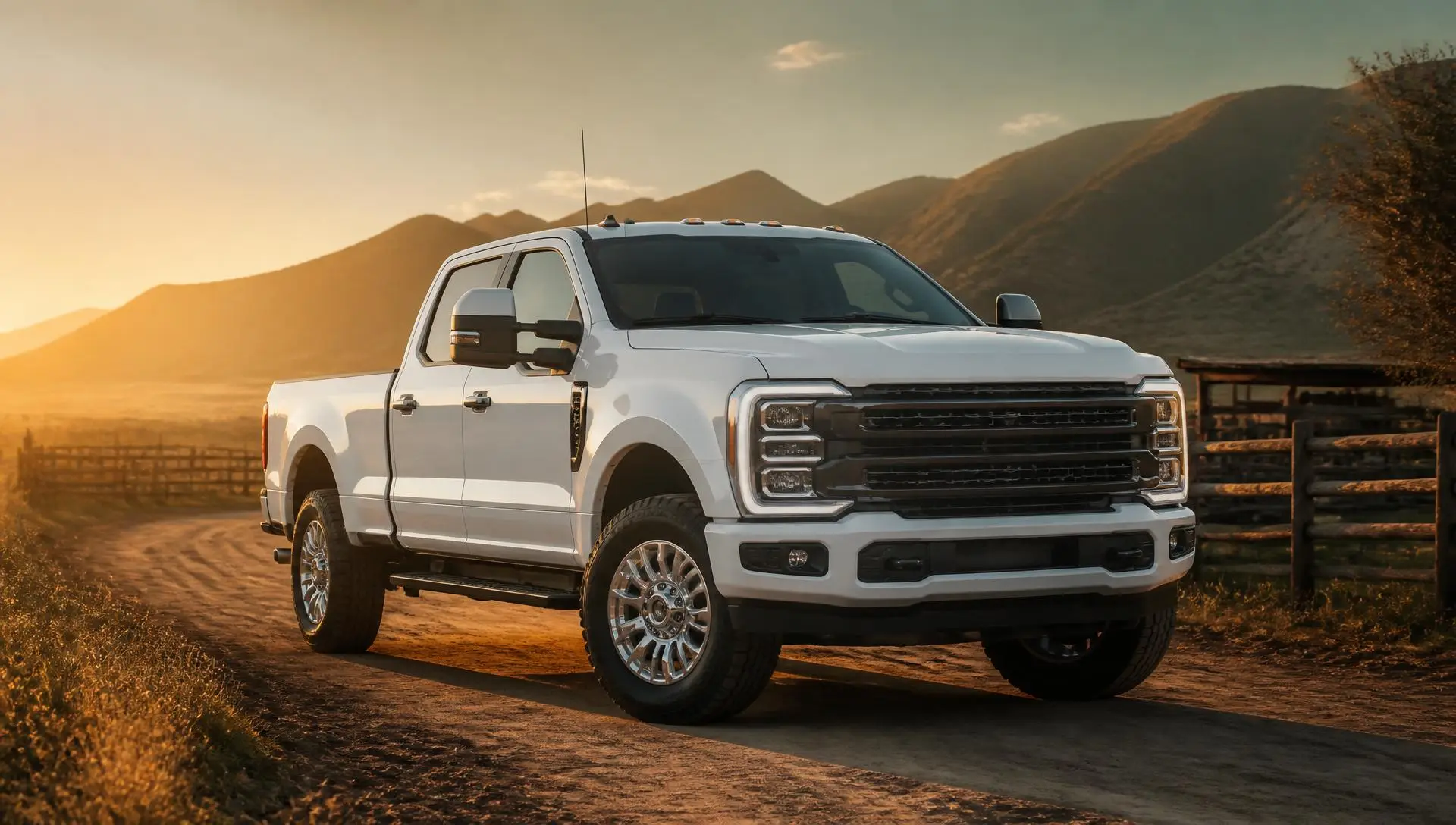
Every spring, our inbox fills with the same question from readers shopping for a new heavy-duty pickup: should I check the box for the diesel? It is a more interesting question in 2026 than it has been in years. Emissions rules that defined the last decade have been rewritten, diesel fuel is sitting roughly a dollar above gasoline, and the electric trucks that were supposed to make diesels obsolete are quietly losing ground.
So instead of giving you the usual "it depends," we ran the actual numbers and looked at what changed this year. Here is the objective case for and against a diesel truck in 2026, and a clear way to figure out which side of the line you fall on.
Quick Answer
A diesel truck is worth it in 2026 if you tow heavy regularly, drive high annual mileage, or plan to keep the truck well past 150,000 miles. For most people who use a truck for commuting, light hauling, and the occasional trailer, a modern gas V8 makes more financial sense. The diesel premium is large enough that you have to use the engine hard to earn it back.
What the diesel option actually costs in 2026
The single biggest factor is the upfront price, and it is not small. The diesel engine is an option package, not a free upgrade, and the gap has widened.
On the 2026 Ford Super Duty, the high-output 6.7-liter Power Stroke adds about $12,995 over the base gas engine. On the Chevrolet Silverado HD, the 6.6-liter Duramax ran roughly $9,500 as a recent option price. Ram's 6.7-liter Cummins sits in a similar range depending on trim. Call it $9,000 to $13,000 before you have bought a single gallon of fuel.
That premium is the hurdle every other advantage has to clear. You do not start saving money with a diesel. You start in a hole and dig your way out through fuel efficiency, longevity, and resale value.
Fuel: better mileage, more expensive fuel
Diesel engines are genuinely more efficient, and that has not changed. The complication in 2026 is the price at the pump.
As of early June 2026, the national average for on-highway diesel was about $5.21 per gallon, while regular gasoline averaged around $4.15. Diesel has been running roughly a dollar a gallon higher all year, the product of higher federal fuel taxes, strong commercial demand, and competition with heating oil for refinery output.
A real-world test this spring put the two side by side. On the same 121-mile loop, a gas Silverado HD 2500 returned 16.1 mpg while the diesel version managed 20.9 mpg. The diesel used less fuel, but because diesel costs more per gallon, the actual savings came to about $2.50 for the trip. Extrapolate that and the math is sobering: at that rate, recovering a $9,500 engine premium on fuel savings alone would take roughly 460,000 miles.
That number sounds absurd, and in pure unloaded driving it is. But it makes an important point. Light, empty highway miles are the worst case for a diesel's payback. The efficiency advantage only turns into real money when you put the engine under load, which brings us to towing.
Towing: where diesel earns its keep
If there is one job that justifies a diesel, it is heavy towing. This is not marketing, it is physics.
A diesel produces its torque low in the rev range, exactly where you need it to get a heavy trailer moving and hold speed up a grade. The 2026 Cummins in the Ram 2500 makes 1,075 lb-ft of torque. The high-output Power Stroke in the Super Duty hits 1,200 lb-ft. The Duramax delivers 975 lb-ft. Those figures translate into a truck that pulls a 15,000-pound trailer without drama and without the engine screaming to keep up.
The fuel gap also flips under load. A gas engine's efficiency falls off a cliff once you hook up a heavy trailer, while a diesel holds its mileage far better. The owners who tow weekly, especially with fifth-wheels and large RVs, are the ones for whom a diesel starts paying for itself on the highway rather than at 460,000 miles. If you tow heavy more than a few times a month, the diesel case gets strong quickly.
For occasional towing, say a boat or a small camper a handful of weekends a year, a modern gas V8 handles the work fine and you keep the $10,000.
Longevity and resale: the long game
Two factors work in the diesel's favor over a long ownership horizon, and both matter if you keep your trucks.
Diesel engines are built heavier and routinely outlast their gas counterparts. A diesel pickup at 150,000 miles is still considered mid-life, where a gas truck at the same odometer reading is closer to its later years. Well-maintained diesels regularly pass 300,000 miles, and some reach 500,000 or more. If you are the kind of owner who runs a truck into the ground over fifteen years, that durability is real value.
Resale follows the same pattern. Diesel trucks hold their value better, typically retaining somewhere in the range of 60 to 75 percent after five years depending on the source and model, compared with roughly 55 to 60 percent for gas versions. On a $60,000 truck, that resale edge can be worth $3,000 to $6,000 when you sell. That recovered value effectively shrinks the original engine premium, which is why the long-term math looks far kinder to diesel than the fuel-only breakeven suggests.
The takeaway: if you trade trucks every three or four years and stay under 100,000 miles, you will likely never see the diesel's longevity payoff. If you keep them long and pile on miles, it is one of the strongest arguments in the diesel's column.
What actually changed in 2026
This is the part that makes 2026 different from a 2022 version of this article, and it cuts in diesel's favor.
The regulatory pressure eased considerably. The EPA rescinded the 2009 finding that underpinned federal greenhouse-gas rules for vehicles, which removed the basis for a federal EV mandate on heavy trucks. The agency also rewrote the rules around diesel exhaust fluid systems, the single most complained-about part of modern diesel ownership. New guidance means a DEF fault now triggers a warning period and only a mild power reduction rather than the harsh derate that used to strand trucks, and manufacturers can move to simpler sensor setups. Starting with model year 2027, new diesels must be designed to avoid sudden severe power loss when DEF runs out.
For owners, this is meaningful. The emissions hardware that gave late-model diesels a reputation for expensive, frustrating faults is being made less punishing by regulation. It does not eliminate the systems, and it does not make a diesel maintenance-free, but it removes one of the biggest reasons buyers shied away.
One important caveat: California and the states that follow its standards keep their own stricter rules through CARB. If you live or operate there, the federal rollback does not change what applies to your truck.
Meanwhile, the alternative that was supposed to replace diesel is struggling. Electric pickup sales fell about 15.6 percent in 2025, the federal EV tax credit expired, and Ram canceled its REV electric pickup in favor of hybrids. Long-distance towing range, cold-weather performance, and charging gaps continue to keep buyers in combustion trucks. For the heavy-duty, work-and-tow buyer, diesel remains the default rather than a fading option.
The honest case against diesel
Objectivity cuts both ways, so here is the other side clearly.
The upfront premium is real money that you may never fully recover. Diesel fuel costs more per gallon than gas in 2026, which erodes the efficiency advantage during normal driving. Maintenance is more expensive: larger oil capacity, fuel filters, DEF refills, and pricier repairs when something does go wrong. Diesels reward being driven and worked, so a diesel that lives on short trips around town never gets up to temperature the way it wants to and can develop emissions-system problems as a result.
For a buyer who commutes, hauls mulch a few times a year, and tows a small trailer occasionally, a modern gas V8 is quieter to own, cheaper to buy, cheaper to fuel at the pump, and perfectly capable. There is no shame in skipping the diesel, and for the majority of truck buyers it is the smarter financial call.
How to decide for your situation
Strip away the brand loyalty and the diesel-versus-gas tribalism, and the decision comes down to three honest questions.
How much do you tow, and how heavy? If you regularly pull more than about 10,000 pounds, or tow most weeks, the diesel's torque and under-load efficiency justify the cost. If you tow light and rarely, gas wins.
How many miles do you drive, and how long will you keep the truck? High annual mileage and long ownership let the longevity and resale advantages pay off. Low mileage and frequent trades do not.
Where and how do you drive? Lots of highway miles and open road suit a diesel. Mostly short, cold, stop-and-go trips around town work against it, both for efficiency and for the health of the emissions system.
If you answered "a lot" to those, buy the diesel and do not look back. If you answered "not really," keep the money.
The bottom line
In 2026, diesel trucks are worth it for the people they were always meant for: heavy towers, high-mileage drivers, and long-term owners. What changed this year actually strengthens that case. Friendlier emissions rules take the sharpest edges off diesel ownership, and a stalling EV market leaves diesel as the obvious choice for serious work.
What did not change is the math for everyone else. The five-figure premium and dollar-a-gallon fuel gap mean a diesel still has to be used hard to make sense. Be honest about how you actually use your truck, run your own numbers against the figures above, and the right answer tends to make itself obvious.
Sources: U.S. Energy Information Administration fuel price data; EPA emissions and DEF guidance (2026); Edmunds, Kelley Blue Book, CarBuzz, and The Fast Lane Truck for 2026 model specifications and pricing; Cox Automotive and industry reporting on EV pickup sales. Figures reflect data available as of June 2026 and will shift with fuel prices and model-year pricing.