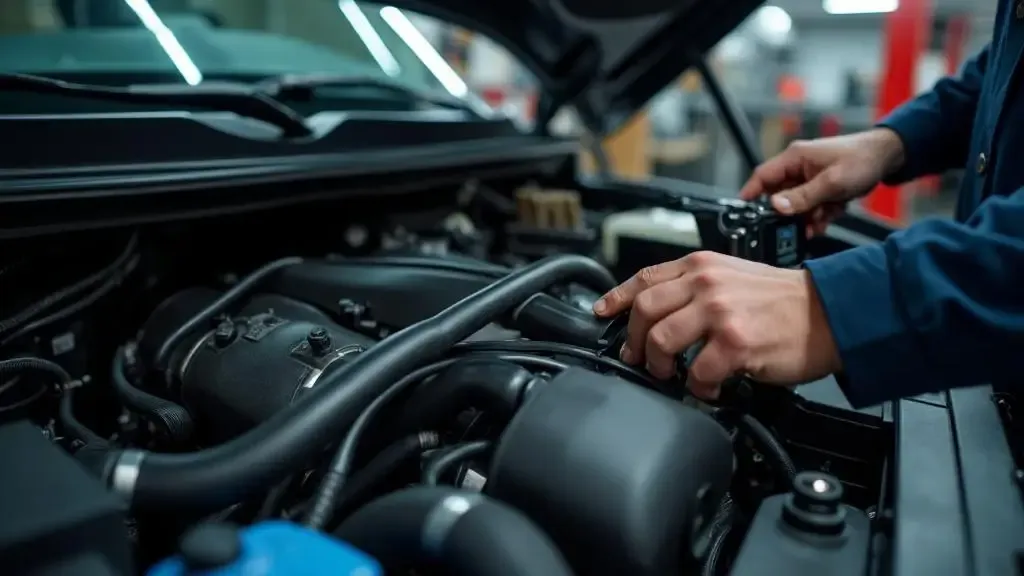
"It'll void your warranty" is the most common scare tactic in the tuning world. But the reality is more nuanced, and knowing the law can save you from making expensive decisions based on bad information.
The Magnuson-Moss Warranty Act: Your Protection
The federal Magnuson-Moss Warranty Act of 1975 is the most important thing to understand. Here's what it says:
"A warrantor cannot require that only branded parts be used in order to keep the warranty in effect... The burden is on the warrantor to prove that the aftermarket equipment caused the failure."
In plain English: A dealer can't blanket-deny your warranty claim just because you have a tune. They must prove the tune caused the specific failure.
What Dealers CAN Deny
If your tune is discovered and they can reasonably link it to a failure, these claims are at risk:
- Engine internals: Pistons, rods, bearings, head gaskets
- Turbocharger/supercharger: Bearing failure, shaft play, boost leaks
- Transmission: Clutch packs, torque converter, valve body
- Fuel system: Injectors, high-pressure fuel pumps
- Emissions equipment: Catalytic converters, DPF, EGR
- Sensors: O2 sensors, MAP, MAF, knock sensors
What Dealers CANNOT Deny
Under Magnuson-Moss, these should remain covered regardless of tune status:
- Suspension components: Ball joints, control arms, shocks
- Brake system: Pads, rotors, calipers, lines
- Body/interior: Seats, trim, paint, glass
- HVAC: AC compressor, heater core, blend doors
- Electrical: Window motors, locks, lights (non-ECU related)
- Steering: Rack, pump, tie rods (unless tune affects steering angle)
How Dealers Detect Tunes
Flash Counts
Every time an ECU is reprogrammed, a counter increments. Factory vehicles have 0-3 flash counts (factory updates). A vehicle that's been tuned and returned to stock might show 5-10+ flash counts.
TD1 Flag (BMW, Some Others)
Some manufacturers flag vehicles in their central database when modification is detected. This flag is permanent and follows the VIN.
Module Communication Logs
The ECU communicates with other modules. Some tunes don't update all modules, leaving discrepancies that dealers can find.
Physical Inspection
Aftermarket intakes, exhausts, or delete pipes are obvious signs that often prompt deeper ECU inspection.
Minimize Your Risk
1. Keep Records
Document all maintenance meticulously. If a failure occurs, showing that you've followed service schedules strengthens your position.
2. Choose Tunes Wisely
Conservative tunes from reputable tuners are less likely to cause failures than aggressive "max power" tunes. A 50 HP gain is safer than a 200 HP gain.
3. Understand the Hierarchy
- Intakes/exhausts: Low risk, rarely denied
- Piggyback tuners: Moderate risk, easier to hide
- ECU flash tunes: Higher risk, detectable
- Delete tunes: Highest risk, illegal in many states
4. Consider Extended Warranties
Some aftermarket extended warranty companies are modification-friendly. Research before buying, some explicitly cover modified vehicles.
The Delete Tube Reality
DPF, EGR, and catalytic converter deletes are in a different category. These modifications:
- Violate federal EPA regulations
- Can result in $5,000+ fines
- Are illegal to perform by any shop
- Will absolutely void emissions-related warranty claims
- May affect registration/inspection in many states
We're not going to tell you what to do, but understand that delete tunes carry legal risk beyond just warranty concerns.
Real-World Scenarios
Scenario 1: Tuned Truck, AC Compressor Failure
Result: Should be covered. AC system has no relationship to engine tune. If denied, cite Magnuson-Moss and escalate.
Scenario 2: Tuned Truck, Turbo Failure
Result: Likely denied. Dealer will argue increased boost/heat from tune caused premature failure. Difficult to fight.
Scenario 3: Tuned Truck, Transmission Failure at 40,000 Miles
Result: Depends. If you have a conservative tune and the failure mode is consistent with a known defect, you might win. If you have an aggressive tune that increases torque 30%+, unlikely.
When to Tune
Tune Now If:
- You have a backup vehicle for when repairs are needed
- You can afford out-of-pocket repairs
- Your warranty is almost expired anyway
- You're buying a used vehicle with no warranty
- Performance is more important than peace of mind
Wait Until Warranty Expires If:
- This is your only vehicle
- You can't afford a $5,000-15,000 engine/trans repair
- You have 3+ years of powertrain warranty left
- You're financing and gap coverage is important
The Bottom Line
A tune doesn't automatically void your warranty, but it does put certain claims at risk. Understand what you're giving up, what you're gaining, and make an informed decision. The "it'll void your warranty" crowd is oversimplifying, but the "Magnuson-Moss protects everything" crowd is too.
The truth is somewhere in between, and your specific situation determines where you should land.