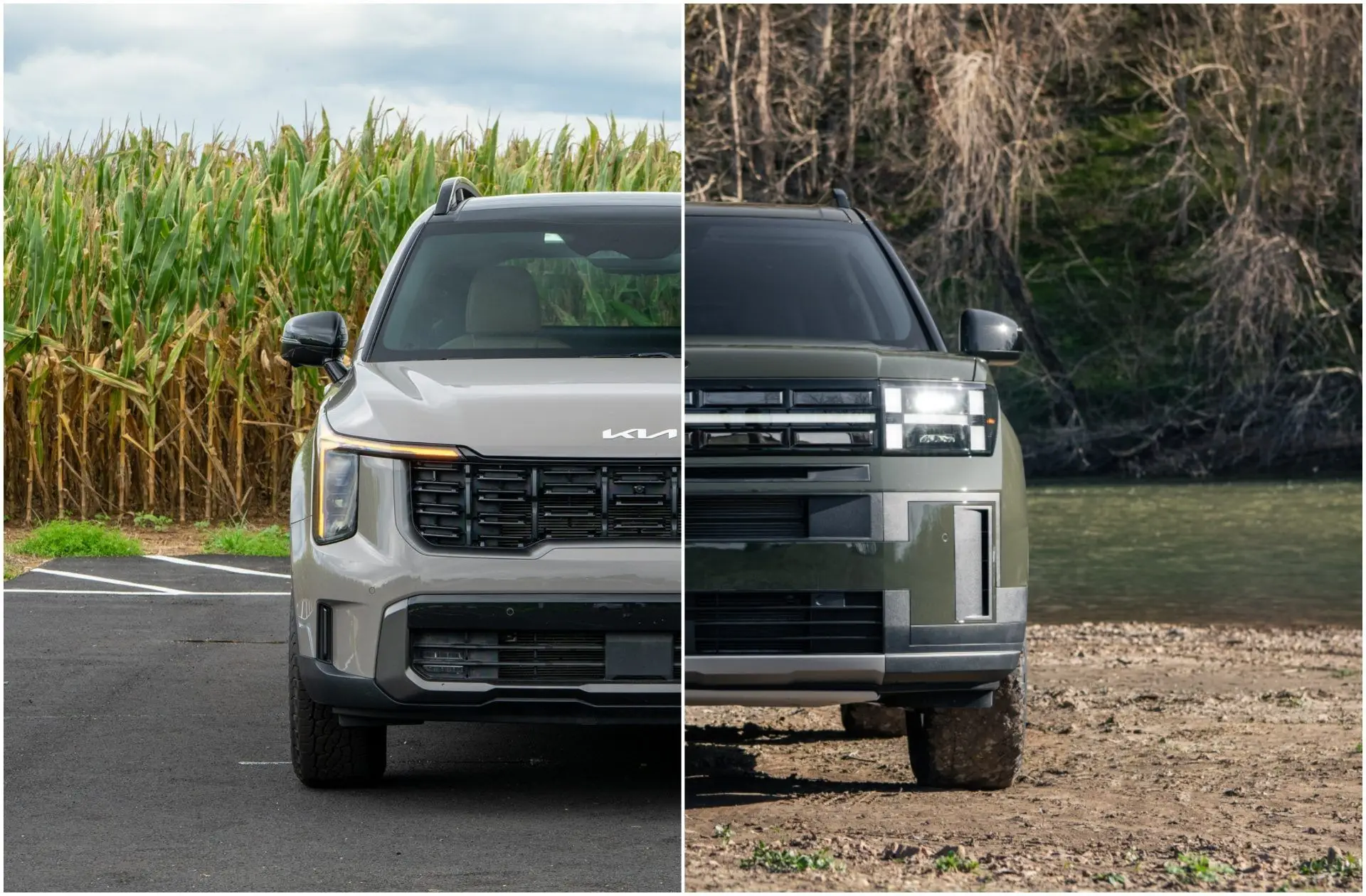
Watch a popular trailhead long enough and the pattern shows up. The most underrated overland SUVs in America right now are not Land Cruisers or Defenders. They are the new XRT and X-Pro trims that Hyundai and Kia quietly built for families.
A column of 4Runners. A handful of Wranglers. A couple of Tacomas with bed racks. Then a Hyundai Santa Fe XRT rolls past the cattle guard with a roof basket, a roof tent, a couple of kids in the second row, a labrador in the back, and a family who is clearly two days into a five-day trip. Nobody at the trailhead notices, because the Santa Fe is wearing the brand badge of a grocery store SUV.
This is the part of the overlanding world the algorithm does not show you. They are not winning at Rebelle. They are not crawling the Hammers. They are doing the job for the eighty percent of overland trips that involve a paved highway, a forest service road, a dispersed campsite, and a Monday morning return to work.
This is the case for the Hyundai Santa Fe XRT and the Kia Sorento X-Pro. The honest version. With the warts.
Why Nobody Talks About These as Overlanders
The Santa Fe and the Sorento share a platform, share Hyundai-Kia powertrains, and share a Korean engineering philosophy that prioritizes family comfort, tech, and value over the kind of off-road specs that show up in YouTube thumbnails. Until recently they did not deserve an overland conversation. They were soft crossovers wearing crossover tires on crossover suspensions.
That changed when the XRT and X-Pro trims arrived with real suspension lifts, factory all-terrain tires, locking center differentials in the Sorento, terrain modes in both, and ground clearance numbers that finally cross the 8-inch threshold most overland buyers consider table stakes.
The overland press, predictably, has barely covered them. The SERP for Santa Fe overlanding is owned by Hyundai dealer blogs. The SERP for Sorento overlanding is owned by Kia dealer blogs. Nobody is publishing the honest take. So buyers shopping these as adventure family vehicles end up reading a brochure dressed up like a review, and they have no idea where the real ceiling sits.
We are going to fix that.
The Two SUVs Side by Side
| Spec | Hyundai Santa Fe XRT (2026) | Kia Sorento X-Pro (2026) |
|---|---|---|
| Engine | 2.5L turbo I4, ~277 hp / 311 lb-ft | 2.5L turbo I4, ~281 hp / 311 lb-ft |
| Transmission | 8-speed dual-clutch | 8-speed dual-clutch (wet DCT) |
| AWD | HTRAC AWD with Terrain Mode | Torque-vectoring AWD with center-locking diff |
| Ground clearance | 8.3 inches (with AT tires) | 8.2 inches |
| Tires (factory) | Continental TerrainContact A/T | BFGoodrich All-Terrain |
| Terrain modes | Mud, Snow, Sand (new for 2026) | Snow, plus general Terrain Mode |
| Towing | 4,500 lbs | 4,500 lbs |
| Seating | 2-row available, 3-row available | 3-row standard (6 or 7) |
| Max cargo | 79.6 cu ft | 75.5 cu ft |
| Skid plates | Not standard | Not standard |
| Low range | None | None |
| Starting MSRP (XRT/X-Pro) | ~$41,790 | ~$46,000 (X-Pro SX Prestige) |
Within the spec sheet, these vehicles are functionally siblings. They share a corporate parent, the powertrain numbers are within four horsepower of each other, and the ground clearance numbers differ by one tenth of an inch. The differences that matter for an overland buyer are smaller than the marketing makes them sound, and they show up in three places. The Sorento gets BFGoodrich tires from the factory. The Sorento has a center-locking AWD option for low-speed traction control. The Santa Fe has a boxier body shape with more cargo volume and a wider rear opening for gear loading.
The Honest Truth About Underrated Overland SUVs Like These
Here is the part most family-SUV reviews skip.
The Santa Fe XRT and the Sorento X-Pro are real overland tools for a specific kind of trip. They are not real overland tools for every trip. The honest version draws a line in three places.
First, neither vehicle has factory skid plates. The XRT and X-Pro packages add suspension, tires, and terrain modes, but the underbody is still a unibody crossover floor pan. Aftermarket protection exists for both, but it has to come from the owner. Hit a rock with the oil pan and the trip stops.
Second, neither vehicle has a low range. This is not a critique of Korean engineering. It is a category fact. These are family SUVs with off-road suspension and tires bolted on. The transmission ratios are tuned for highway efficiency and acceleration, not for crawling a thousand feet up a loose climb with a roof tent and a fridge in the back. On steep loose climbs with a loaded vehicle, the DCT will tell you it does not want to be there.
Third, neither vehicle has the kind of departure angle a real trail SUV needs. The XRT cleaned up the angles relative to the standard Santa Fe, but it is still a long-wheelbase family crossover. Rear bumper hangs are still rear bumper hangs.
What both vehicles do extremely well is everything else. Washboard road comfort. Snow road tracking. Dispersed campsite floor mats. Highway range. Family seating. Rear cargo flexibility. A factory warranty that the aftermarket Tacoma build down the road can only dream of. And the kind of total monthly cost that lets a couple actually save for the trips, instead of spending the trip budget paying down the rig.
If your version of overlanding is "drive to a national forest, find an empty spot down a maintained dirt road, sleep there for two nights, drive home," these vehicles do that job at a higher comfort level than half the trail rigs in the parking lot. If your version of overlanding is the Rubicon, these are not your tools and never were.
Hyundai Santa Fe XRT: The Family Hauler That Grew Up
The 2026 Santa Fe was redesigned with a boxier silhouette that finally gives it some visual presence. The XRT trim adds 1.3 inches of clearance via taller all-terrain tires, recalibrates the suspension, and unlocks a new Terrain Mode with dedicated Mud, Snow, and Sand settings. HTRAC AWD does the traction work invisibly. The 2.5L turbo is the only engine and it pulls well from a stop.
The case for the XRT comes down to four things. The cargo volume is class-leading at 79.6 cubic feet. The wide-opening tailgate is the most usable rear hatch in the segment. The optional second-row captain's chairs and reclining function turn the cabin into a comfortable mobile basecamp. The factory Continental TerrainContact tires actually have meaningful tread.
The case against the XRT also comes down to four things. No skid plates. No low range. A long wheelbase that limits breakover angles on broken terrain. And a brand badge that does not invite trail solidarity, which matters more than people admit when you are the only Santa Fe at the campsite.
Starting MSRP is roughly $41,790. That is real money for a family SUV. It is not real money for an overland-capable family SUV with a factory warranty.
Kia Sorento X-Pro: The Quiet Trail Pick
The Sorento X-Pro is the trim that surprised the most reviewers when it shipped. Kia put real BFGoodrich all-terrain tires on it from the factory. The torque-vectoring AWD with center-locking differential is a more capable traction system than the Santa Fe's setup on low-grip surfaces. The 281-horsepower turbo and 8-speed DCT pull cleanly. Ground clearance lands at 8.2 inches, within a tenth of the XRT.
The case for the X-Pro is that it feels like Kia actually consulted somebody who drives off-road. The tire choice alone is telling. BFGoodrich AT tires on a family SUV at this price point is a real commitment, not a cosmetic upgrade. The matte black wheels and badging are subtle enough that the vehicle does not look like a cosplay. The center-locking AWD gives the driver more confidence on the kind of mud, gravel, and snow that ends most family-SUV trips early.
The case against the X-Pro is that the cargo space lags the Santa Fe by 4 cubic feet, the price tag for a properly equipped X-Pro SX Prestige climbs past $46,000, and the third row is the same family-SUV third row everyone in the segment ships. Same lack of skid plates. Same lack of low range. Same long wheelbase realities.
For buyers who want the off-road bias of the X-Pro without the family hauler footprint, the Sorento is also offered with a hybrid and PHEV powertrain on lower trims, but the X-Pro is gas only.
Where Each One Disappoints
The Santa Fe XRT's biggest disappointment is the missing skid plates. For a trim that markets itself on off-road readiness, leaving the underbody exposed feels like a finishing touch the engineering team ran out of budget for. The dual-clutch transmission is also a personal preference issue. On dry highway it shifts cleanly. On loose surfaces with throttle modulation, the DCT logic can hunt in ways a traditional torque converter would not.
The Sorento X-Pro's biggest disappointment is the price ladder. The cheapest X-Pro trim that includes the full off-road package starts at the X-Line SX, and the most capable version is the X-Pro SX Prestige AWD which lands around $46,000 with options. That is Toyota 4Runner TRD Off-Road money. Buyers cross-shopping at that price point are going to feel the gravity of the more traditional trail SUV pulling at them.
Both vehicles share the structural disappointment of the category. They are family crossovers wearing off-road jewelry. They do real work within a real ceiling. The ceiling is lower than the brochure implies and higher than the snobs at the trailhead assume.
Verdict: Which Underrated Overland SUV Should You Actually Buy
| Buyer profile | Best pick | Why |
|---|---|---|
| Family of four, dispersed camping, packs everything | Hyundai Santa Fe XRT | Cargo volume wins, captain's chairs make the cabin livable, terrain modes cover most conditions |
| Family of six or seven, mixed-condition driving | Kia Sorento X-Pro | Third-row standard, BFG tires standard, center-locking AWD is the real differentiator |
| Snow country driver who does occasional dirt | Either, slight edge to Sorento | The factory all-terrain tires and locking diff handle snow with more confidence than the Santa Fe |
| Buyer cross-shopping a 4Runner TRD Off-Road | Reconsider the category | A 4Runner is a 4Runner. If you want a 4Runner, buy a 4Runner |
| Buyer who needs a daily driver that also does occasional overland trips | Either | This is the segment these vehicles were built for |
| Buyer who wants a rock-crawling trail rig | Neither | These are forest-road family SUVs, not Hammers vehicles |
If we had to pick one for the average family asking the underrated overland SUV question, the Sorento X-Pro wins on the merits and the Santa Fe XRT wins on the lifestyle fit. The Sorento has the better traction system and the better factory tire. The Santa Fe has the better interior, the better cargo flexibility, and the lower price of entry. Both will deliver a family to a quiet campsite and back, year after year, with a warranty that the trail rig at the next site does not have.
Bottom Line