If you own or lease some land, you already know how trails die. A spring storm cuts a gully across the climb. A low spot holds water until it turns into a mud hole nobody can get through. A culvert plugs and the creek starts running over the track instead of under it.
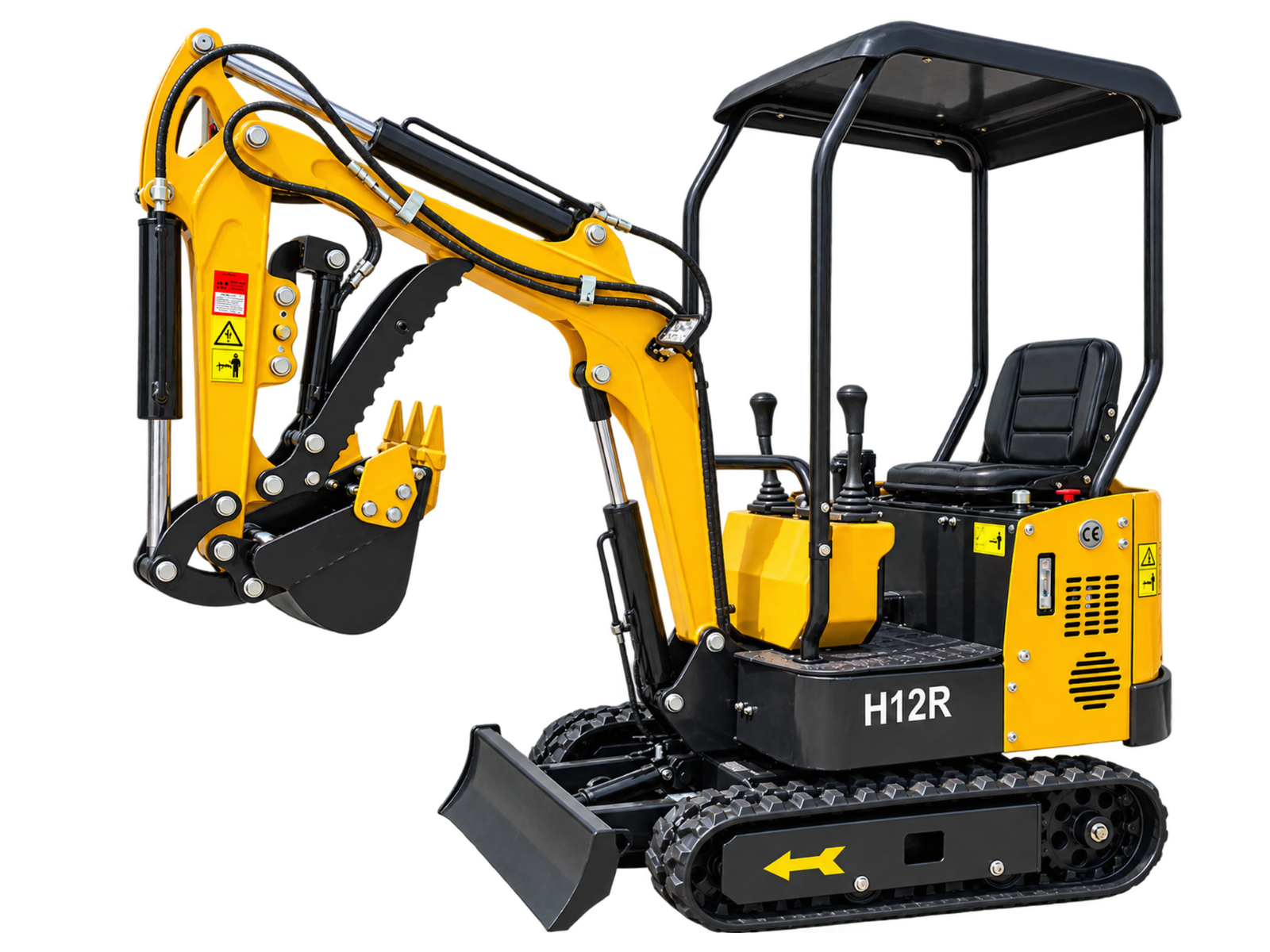
You can fix most of that with a shovel and a lot of weekends. Or you can do it in an afternoon with a mini excavator. We sell compact excavators in northeast Oklahoma, and a surprising number of the people who buy them are not contractors. They are landowners who want to build and keep up their own trails. Here is what we have learned from them about picking the machine, getting it there, and using it well.
Pick the smallest machine that does the job
Mini excavators are sized by operating weight. For trail work you will mostly look at two groups:
- About 1 to 1.5 tons. Narrow enough to fit between trees and through most gates, light enough to tow behind a half-ton. This size handles drainage ditches, water bars, small culverts and general cleanup.
- About 3 tons and up. More reach and digging force for big washouts, larger culverts and moving rock. It also needs a heavier trailer and more truck.
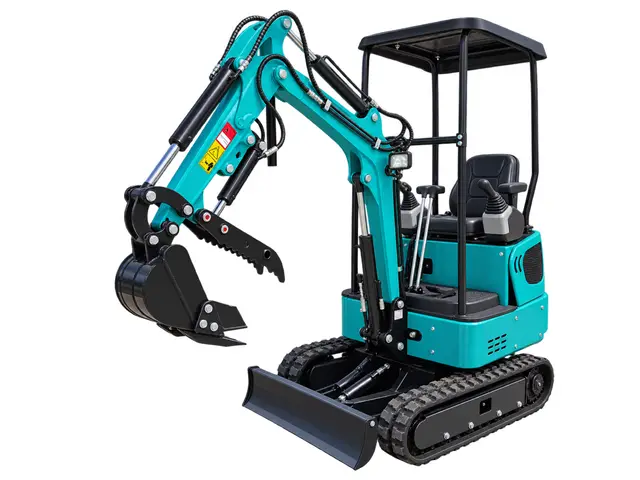
For most private trails the small machine is the right call. A trail is narrow by design, and a small excavator works inside that width without knocking down the trees that make the trail worth driving. You can always dig twice in a hard spot. You cannot make a big machine fit between two oaks.
Fixing washouts
A washout is a symptom. Water found the trail and used it as a channel. If you just fill the gully, the next storm cuts it again.
- Find where the water comes onto the trail. Walk it during or right after a rain. The washout usually starts uphill of the damage.
- Clean out the gully down to firm ground and pull out loose rock and roots.
- Fill in layers. Put the bigger rock at the bottom, then smaller material on top. Pack each layer with the back of the bucket and by tracking over it slowly.
- Turn the water off before it gets there, with a water bar or a drain dip (below).
Step 4 is the one people skip, and it is the one that makes the repair last.
Water bars and drain dips
A water bar is a shallow ridge dug across the trail at an angle, so water running down the track gets turned off to the side. A drain dip is the same idea with a gentler shape, so a rig can roll through it without slamming.
With a mini excavator, cut a shallow trench at about a 30-degree angle across the trail and pile the spoil on the downhill side to form the berm. Make sure the low end actually lets out onto ground that slopes away, or you have just built a pond. On a steep climb you may need one every 50 to 100 feet. On a gentle grade, far fewer.
A bucket around 12 inches wide is handy here. It cuts a clean trench without moving more dirt than you need.
Drainage ditches along the trail
Where a trail runs along a hillside, a shallow ditch on the uphill side keeps runoff from crossing the track. Most of these only need to be a foot or two deep. A 1-ton machine with a narrow trenching bucket can cut a long ditch quickly, and because it is light it will not rut up the trail while it works.
Slope the ditch so the water keeps moving, and give it somewhere to go: a culvert, a turnout into the woods, or a rock-lined spillway.
Putting in a culvert
When a trail crosses a creek bed or a low swale that runs after every rain, a culvert is usually the long-term fix.
- Dig the trench along the natural flow line, not straight across the trail if the water runs at an angle.
- Set the pipe slightly downhill so it drains and does not hold sediment.
- Bed it on gravel, then backfill in layers and pack each one.
- Cover it with enough fill that your heaviest rig will not crush it. The pipe maker lists a minimum cover depth; follow it.
- Armor both ends with rock so the water does not cut around the pipe.
A thumb on the excavator arm makes this job much easier. You can pick up a section of pipe, set it in the trench and nudge it into line without a second person holding it.
Getting it there with a half-ton
This is the part to take seriously. A trail machine is no help if hauling it is unsafe.
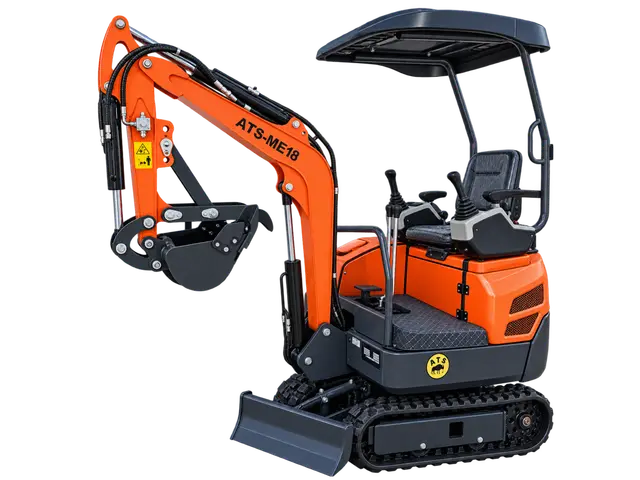
- Know the real weight. A 1-ton class mini excavator usually weighs roughly 2,000 to 2,600 lbs. Add the trailer, often 1,500 to 2,500 lbs for a small equipment trailer, plus a bucket or two. Weigh it if you can.
- Read your truck's door-jamb sticker and owner's manual. Towing capacity depends on the engine, axle ratio and cab, so two half-tons can be thousands of pounds apart. Payload counts too: tongue weight is usually about 10 to 15 percent of the trailer's weight and it comes out of your payload. Our payload calculator shows how much is left after tongue weight, passengers and gear.
- Trailer brakes. Many states require brakes on trailers above a set weight, often around 3,000 lbs. Check your state's rule, and use a brake controller either way.
- Chain it at four points. Use rated chain and binders at all four corners, lower the boom and bucket onto the deck, and check the chains after the first few miles.
- The 3-ton class is a different trip. With a trailer you are often near or past what a half-ton should pull. Plan on a three-quarter or one-ton truck.
What to check on a used machine
A lot of people start with a used excavator. Before you buy one:
- Hour meter and service records. Hours alone do not tell you much, but no records at all is a question to ask.
- Hydraulic leaks. Look at cylinders, hoses and fittings. Wet, dirty spots are the giveaway.
- Pins and bushings. Raise the boom and wiggle the bucket. Lots of play at the joints means wear and cost.
- Tracks and rollers. Look for cracks in rubber tracks and worn sprockets.
- Auxiliary hydraulics. If you want an auger, thumb or breaker later, make sure the machine has an auxiliary circuit.
- Run it cold. Ask the seller not to warm it up first. A machine that starts and runs smooth from cold is a good sign.
A few habits that save trails
- Work when the ground is dry enough. Tracks on wet clay make ruts that become the next washout.
- Keep the spoil off the trail. Pile it on the downhill side or haul it out.
- Call 811 before you dig, even out in the country. Buried lines run in places you would not expect.
- Walk the trail after the next big rain. That is the real test of every fix you made.
A small excavator will not build a trail for you. But it turns the jobs that used to take a crew and a summer into something one person can do in a weekend, and that means the trail gets fixed instead of waiting another year. When the work is done, browse our trail directory for public routes to test your rig on.
About the author: Braden Chupp works with his family's business, Chupp Industrial, in Chouteau, Oklahoma, which sells mini excavators, skid steer attachments and other compact equipment to landowners and contractors. See their mini excavators at chuppindustrial.com/products/mini-excavators.